Banner
Here's Where Your Backyard Was 300 Million Years Ago

We may use terms like "grounded" and terra firma to mean stability and consistency but geology...

Convergent Evolution Cheat Sheet Now 120 Million Years Old

One tenet of natural selection is a random walk of genes but nature may be more predictable than...

Synchrotron Could Shed Light On Exotic Dark Photons

There are many hypothetical particles proposed to explain dark matter and one idea to explore how...

The Pain Scale Is Broken But This May Fix It

Chronic pain is reported by over 20 percent of the global population but there is no scientific...

User picture.
News StaffRSS Feed of this column.

News Releases From All Over The World, Right To You... Read More »

Blogroll

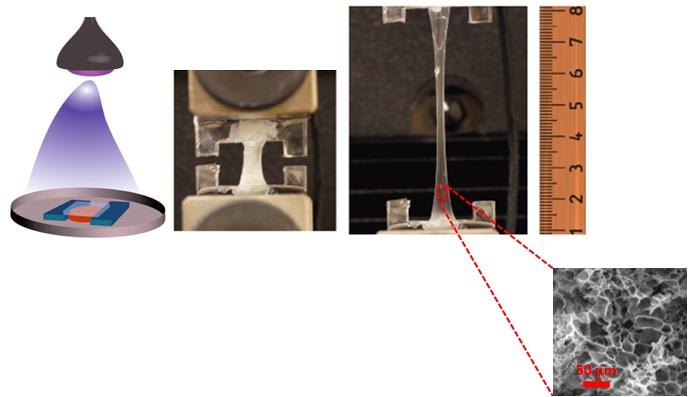
A team of bioengineers at Brigham and Women's Hospital (BWH), led by Ali Khademhosseini, PhD, and Nasim Annabi, PhD, of the Biomedical Engineering Division, has developed a new protein-based gel that, when exposed to light, mimics many of the properties of elastic tissue, such as skin and blood vessels. In a paper published in Advanced Functional Materials, the research team reports on the new material's key properties, many of which can be finely tuned, and on the results of using the material in preclinical models of wound healing.

Pink salmon that begin life in freshwater with high concentrations of carbon dioxide, which causes acidification, are smaller and may be less likely to survive, according to a new study.

The risks of ocean acidification on marine species have been studied extensively but the impact of freshwater acidification is not well understood. The study is one of the first to examine how rising carbon dioxide levels caused by climate change can impact freshwater fish.

Cancer cells play it dirty to get what they want. They are survival artists with a strong criminal streak. They surround themselves with a protective shield of extra-cellular material and then secure supply lines by attracting new blood vessels.

To achieve both of these aims, they set immune cells a honey trap by releasing attractants in the form of messenger molecules which lure immune cells to growing tumours. At the cancer site, the abducted immune cells release growth hormones to guide new blood vessels to the tumour and help build a protective shield.

For the first time gene therapy for cystic fibrosis has shown a significant benefit in lung function compared with placebo, in a phase 2 randomized trial. The technique replaces the defective gene response for cystic fibrosis by using inhaled molecules of DNA to deliver a normal working copy of the gene to lung cells.

“Patients who received the gene therapy showed a significant, if modest, benefit in tests of lung function compared with the placebo group and there were no safety concerns,” said senior author Professor Eric Alton from the National Heart and Lung Institute at Imperial College London. “Whilst the effect was inconsistent, with some patients responding better than others, the results are encouraging.”

Every time you put on bug spray this summer, you're another front in the ongoing war between humans and mosquitoes - and being a citizen scientist in a complex evolutionary experiment.

Scientists have found that between 5 and 20 percent of a mosquito population's genome is subject to evolutionary pressures at any given time, creating a strong signature of local adaptation to environment and humans. This means that individual populations are likely to have evolved resistance to whatever local selection pressures are typical in their area, and that understanding the genomes of those populations could one day help inform agencies about which pesticides are likely to be most effective against them.

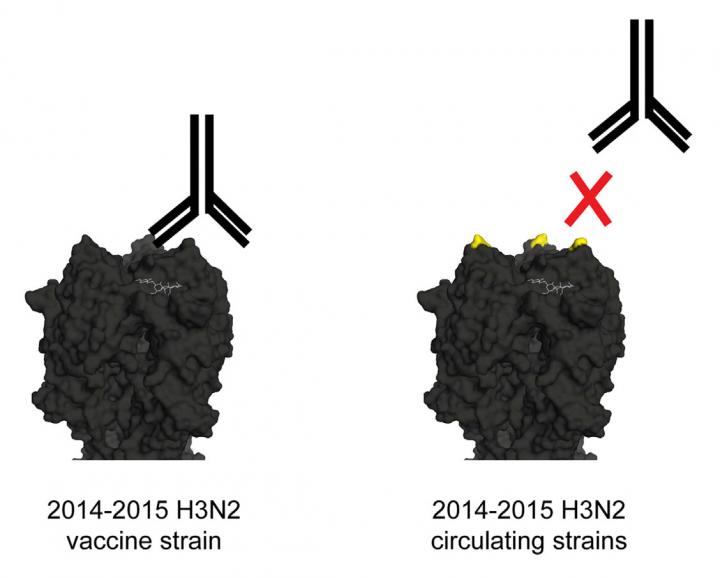
The 2014-2015 flu vaccine didn't work as well compared to previous years because the H3N2 virus recently acquired a mutation that concealed the infection from the immune system. A study published on June 25 in Cell Reports reveals the major viral mutation responsible for the mismatch between the vaccine strain and circulating strains. The research will help guide the selection of viral strains for future seasonal flu vaccines.