Banner
Object-Based Processing: Numbers Confuse How We Perceive Spaces

Researchers recently studied the relationship between numerical information in our vision, and...
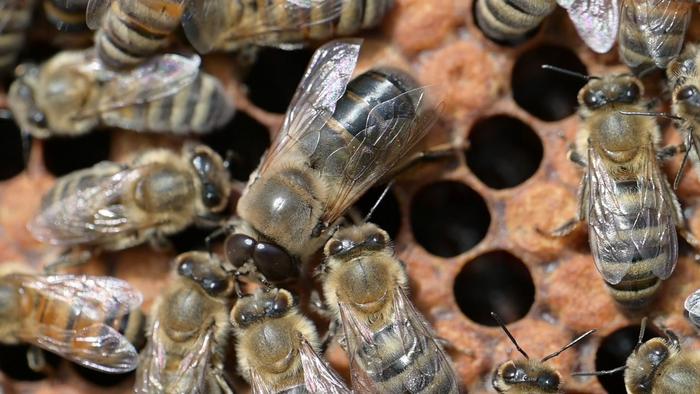
Males Are Genetically Wired To Beg Females For Food

Bees have the reputation of being incredibly organized and spending their days making sure our...

The Scorched Cherry Twig And Other Christmas Miracles Get A Science Look

Bleeding hosts and stigmatizations are the best-known medieval miracles but less known ones, like ...

$0.50 Pantoprazole For Stomach Bleeding In ICU Patients Could Save Families Thousands Of Dollars

The inexpensive medication pantoprazole prevents potentially serious stomach bleeding in critically...

User picture.
News StaffRSS Feed of this column.

News Releases From All Over The World, Right To You... Read More »

Blogroll

Amyotrophic lateral sclerosis (ALS) is a disease that breaks down tissues in the nervous system. ALS is a disease of the motor neurons leading to a progressive loss of the ability to move virtually any of the muscles in the body.

The ALS research team at Umeå University in Sweden details that a gene that is involved in communication between nerve cells is strongly associated with non-hereditary (sporadic) ALS.

To try to identify the pathogenic genes involved in ALS, the Umeå scientists, in collaboration with Dutch and Belgian researchers, compared DNA samples from 1,337 patients with non-hereditary ALS (sporadic ALS, SALS) with DNA samples from 1,356 healthy individuals.

The medication tamoxifen, best known as a treatment for breast cancer, dramatically reduces symptoms of the manic phase of bipolar disorder more quickly than many standard medications for the mental illness, a new study shows. Researchers at the National Institutes of Health’s National Institute of Mental Health (NIMH) who conducted the study also explained how: Tamoxifen blocks an enzyme called protein kinase C (PKC) that regulates activities in brain cells. The enzyme is thought to be over-active during the manic phase of bipolar disorder.

By pointing to PKC as a target for new medications, the study raises the possibility of developing faster-acting treatments for the manic phase of the illness.

An enriched peanut-butter mixture given at home is successfully promoting recovery in large numbers of starving children in Malawi, according to a group of researchers at Washington University School of Medicine in St. Louis.

Malnutrition affects 70 percent of all Malawian children with an estimated 13 percent of children dying from it before the age of five.

Mark J. Manary, M.D., professor of pediatrics and an emergency pediatrician at St. Louis Children's Hospital, has spent several years researching the use of the enriched peanut-butter mixture, called Ready-to-Use Therapeutic Food (RUTF) with small groups of severely and moderately malnourished young children in the sub-Saharan African country.

Attention Deficit Hyperactivity Disorder (ADHD) is a prevailing issue in the United States, with millions of children getting diagnosed every year. A new study reveals that Pycnogenol, an antioxidant plant extract from the bark of the French maritime pine tree, reduces ADHD in children. The study shows it balances stress hormones, which lowers adrenaline and dopamine, resulting in a decrease of ADHD.

“Pycnogenol’s ability to naturally treat symptoms of ADHD is what makes this extract exceptionally pleasing to parents who may be uneasy about medicating their children with stimulant medications,"said Dr. Peter Rohdewald of the Institute of Pharmaceutical Chemistry at Germany’s University of Munster and one of the authors of the study.

New Scientist has written an article stating that new quantum technology can run a routine called Shor’s algorithm and that means the most dangerous threat posed by quantum computing, the ability to break the codes that protect our personal data, is now a step closer to reality.

Worse, they report this feat has been performed by not one but two research groups, acting independently; one led by Andrew White at the University of Queensland in Brisbane, Australia, and the other by Chao-Yang Lu of the University of Science and Technology of China, in Hefei. Both teams have built laser-based quantum computers that can implement Shor’s algorithm and defeat today’s most common encryption systems.

Full article: http://www.newscientist.com

The AIDS virus (HIV) attacks immune system cells and once inside them it multiplies. In some of these immune cells, viral stocks are not very accessible to antiviral therapy. CNRS, Institut Curie and Institut Pasteur researchers investigating how HIV avoids being destroyed by immune cells have discovered that HIV alters the pH of the cellular compartments where it accumulates, thus stopping the activation of the very enzymes that would normally degrade it.

When viruses or infectious bacteria enter our body, the immune system is triggered to eliminate them, through a process involving various types of white blood cells. Some viruses target the immune system.