Banner
Object-Based Processing: Numbers Confuse How We Perceive Spaces

Researchers recently studied the relationship between numerical information in our vision, and...

Males Are Genetically Wired To Beg Females For Food

Bees have the reputation of being incredibly organized and spending their days making sure our...

The Scorched Cherry Twig And Other Christmas Miracles Get A Science Look

Bleeding hosts and stigmatizations are the best-known medieval miracles but less known ones, like ...

$0.50 Pantoprazole For Stomach Bleeding In ICU Patients Could Save Families Thousands Of Dollars

The inexpensive medication pantoprazole prevents potentially serious stomach bleeding in critically...

User picture.
News StaffRSS Feed of this column.

News Releases From All Over The World, Right To You... Read More »

Blogroll

More than a billion people worldwide lack access to clean drinking water. Diseases caused by unsafe drinking water are among the world's most serious public health threats.

The Global Health and Education Foundation provided funding to the Marian Koshland Science Museum of the National Academy of Sciences to develop "Safe Drinking Water Is Essential" ( http://www.drinking-water.org), a resource devoted to providing international decision makers with peer-reviewed scientific information about enhancing the safety of drinking water supplies.

More than 125 academies worldwide are disseminating information about the Web resource, which is available in five languages.

In the September issue of the journal Stem Cells, researchers from the Georgia Institute of Technology and Emory University write that moderate physical movement of embryonic stem cells in fluid environments, similar to shaking that occurs in the womb, improves their development and suggests that different types of movement could some day be used to control what type of cell they become.

“Embryonic stem cells develop under unique conditions in the womb, and no one has ever been able to study the effect that movement has on that development process,” said Todd McDevitt, assistant professor in the Wallace H. Coulter Department of Biomedical Engineering at Georgia Tech and Emory University and head of the project.

Researchers at UT Southwestern Medical Center are reporting in the September issue of the American Heart Journal that women with a family history of heart disease are less likely than men to change habits such as smoking and infrequent physical activity.

They also are more likely to engage in lifestyle choices that increase their risk of heart disease than are women who did not report a history of heart disease.

“A family history of heart disease is as important an indicator of future cardiovascular health in women as it is in men – perhaps more important,” said Dr. Amit Khera, assistant professor of internal medicine and senior author of the study.

A new study says that salt-saturated brine moving through floating sea ice follows “universal transport properties” and that this new understanding can help anticipate the effects of global warming on the polar oceans and the microbial communities existing there.

According to this new model, similar porous materials – including ice on other worlds, such as Jupiter’s icy ocean-covered moon Europa – should follow the same rules.

“It means that almost the exact same formulas describing how water flows through sedimentary rocks in the Earth's crust apply to brine flow in sea ice, even though the microstructural details of the rocks are quite different from sea ice,” says University of Utah math Professor Ken Golden.

The AIDS Healthcare Foundation (AHF) today called on Gilead Sciences and Merck to immediately register and distribute the three-in-one, once daily lifesaving HIV treatment, Atripla, in developing countries.

When Atripla first received approval from the Food and Drug Administration (FDA) in July of 2006, advocates like AHF applauded the production of a single, once-a-day drug as a landmark step in treating HIV. However, since its approval, little progress has been made in expanding the availability of the treatment in the developing world, where only 28% of those in need of treatment were able to access it as of December 2006.

"This treatment is a standard therapy in the United States.

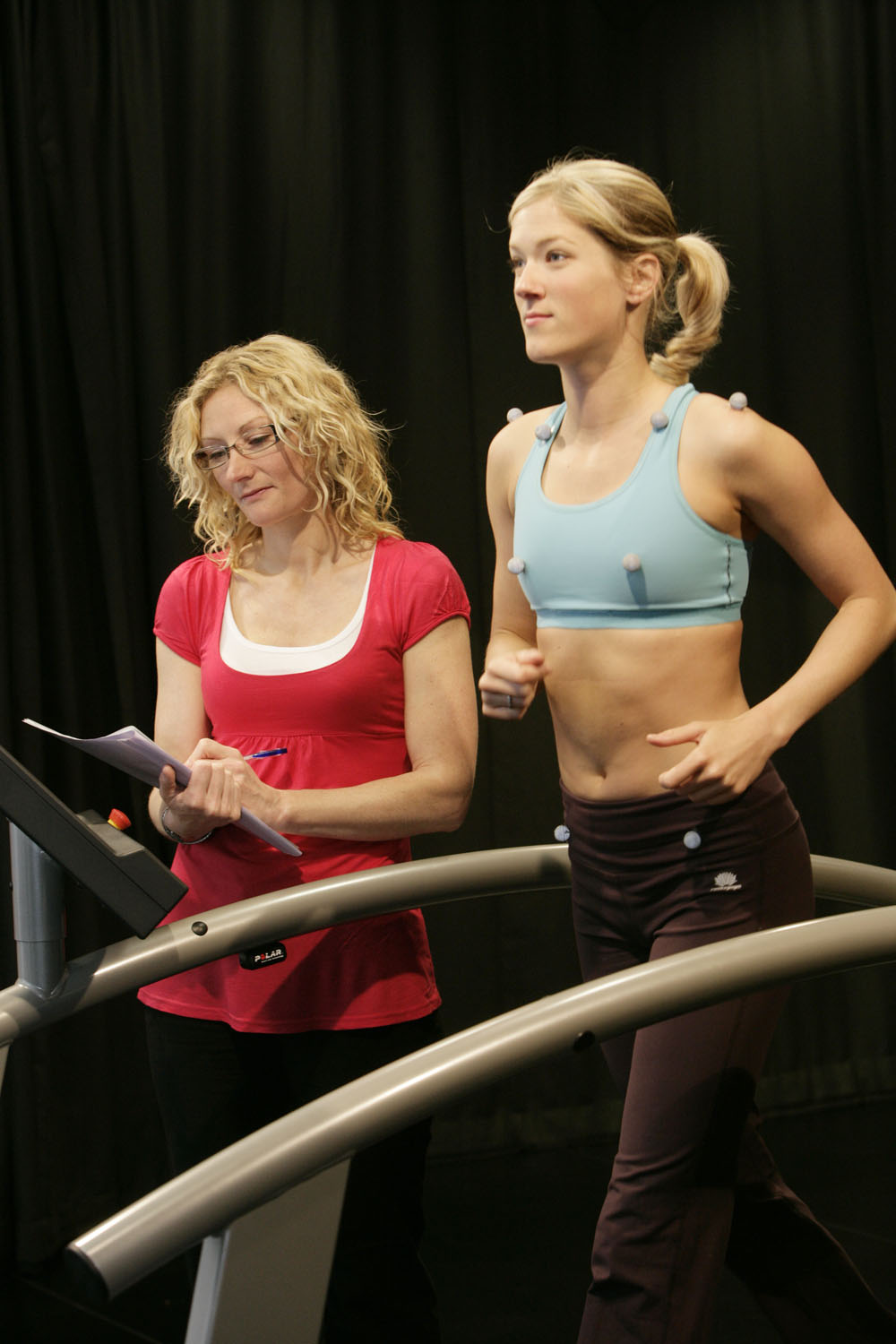
Breasts move far more than ordinary bras are designed to cope with and they also bounce more during exercise – up to 21 cm rather than the maximum 16 cm bounce measured in past studies, according to new research.

Ordinary bras can stop the bouncing but the new study by University of Portsmouth scientist Dr Joanna Scurr shows that breasts also move side-to-side and in and out and estimates are that more than 50 percent of women experience breast pain when exercising, regardless of cup size.

Dr Scurr’s study also found that breasts move as much during slow jogging as they do at maximum sprint speed.