Banner
Object-Based Processing: Numbers Confuse How We Perceive Spaces

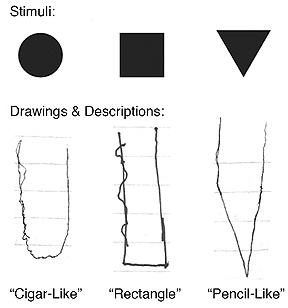
Researchers recently studied the relationship between numerical information in our vision, and...

Males Are Genetically Wired To Beg Females For Food

Bees have the reputation of being incredibly organized and spending their days making sure our...

The Scorched Cherry Twig And Other Christmas Miracles Get A Science Look

Bleeding hosts and stigmatizations are the best-known medieval miracles but less known ones, like ...
$0.50 Pantoprazole For Stomach Bleeding In ICU Patients Could Save Families Thousands Of Dollars

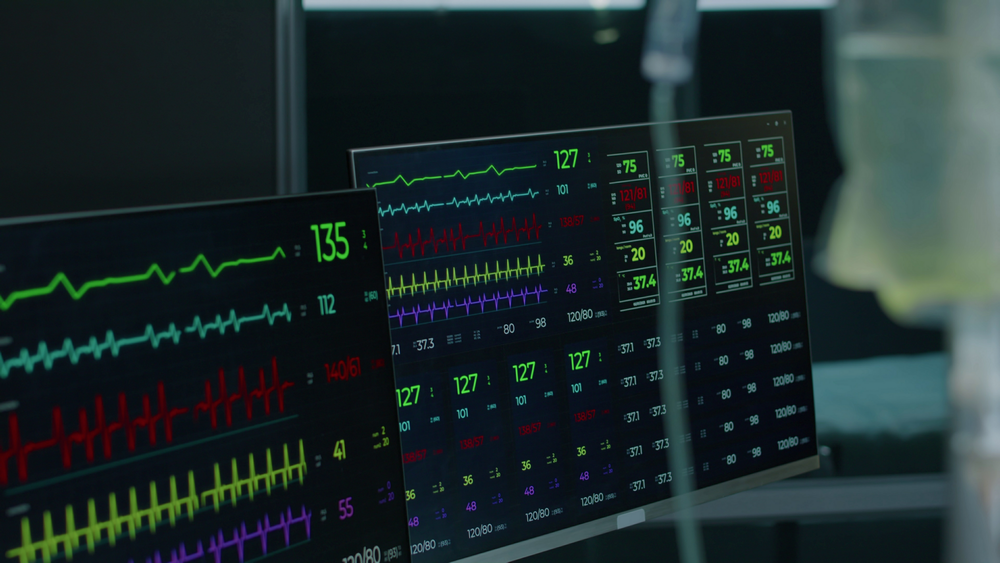
The inexpensive medication pantoprazole prevents potentially serious stomach bleeding in critically...

User picture.
News StaffRSS Feed of this column.

News Releases From All Over The World, Right To You... Read More »

Blogroll

It’s well known that the child’s brain has a remarkable capacity for change, but controversy rages about the extent to which such plasticity exists in the adult human brain -- particularly, in the part responsible for vision.

Now, scientists from The Johns Hopkins University and MIT offer evidence -- derived from both brain imaging and behavioral studies -- that the adult visual cortex (the area of the brain that receives images from the eyes) does, indeed, have the ability to reorganize. Moreover, that reorganization affects visual perception.

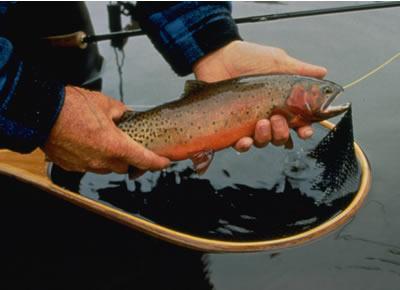
A new study led by the University of Colorado at Boulder indicates biologists trying to save Colorado's native greenback cutthroat trout from extinction over the past several decades through hatchery propagation and restocking efforts have, in most cases, inadvertently restored the wrong fish.

According to a sophisticated DNA analysis, five of nine "relic" populations of what biologists believed to be greenback cutthroat trout living in isolated pockets of the state actually are Colorado River cutthroat trout, a closely related subspecies, said lead author Jessica Metcalf, a researcher in CU-Boulder's ecology and evolutionary biology department.

Physicists at the University of Michigan have coaxed two separate atoms to communicate with a sort of quantum intuition that Albert Einstein called "spooky."

In doing so, the researchers have made an advance toward super-fast quantum computing. The research could also be a building block for a quantum internet.

Scientists used light to establish what's called "entanglement" between two atoms, which were trapped a meter apart in separate enclosures (think of entangling like controlling the outcome of one coin flip with the outcome of a separate coin flip).

Rheumatoid arthritis (RA) and systemic lupus erythematosus (Lupus) are considered autoimmune inflammatory diseases, where the body’s immune system attacks healthy tissue. In RA, the immune system attacks the linings of the joints and sometimes other organs. In lupus, it attacks the internal organs, joints and skin. If not well controlled, both diseases can lead to significant disability.

A genetic variation has been identified that increases the risk of two these chronic diseases.

Reproductive efficiency has suffered a dramatic decrease since the mid-1980s despite rapid worldwide progress in genetics and management of high producing dairy herds.

Researchers from the University of Barcelona propose that summer heat stress is likely to be a major factor related to low fertility in high producing dairy herds, especially in countries with warm weather.

The environmental temperature, radiant energy, relative humidity, and wind speed all contribute to the degree of heat stress. Heat stress may be defined as any combination of environmental variables that give rise to conditions that are higher than those of the temperature range of the animal’s thermal neutral zone.

Rice University biomedical engineers have developed a new technique for growing cartilage from human embryonic stem cells, a method that could be used to grow replacement cartilage for the surgical repair of knee, jaw, hip, and other joints.

"Because native cartilage is unable to heal itself, researchers have long looked for ways to grow replacement cartilage in the lab that could be used to surgically repair injuries," said lead researcher Kyriacos A. Athanasiou, the Karl F. Hasselmann Professor of Bioengineering.