Banner
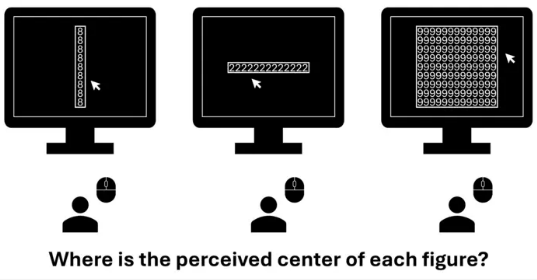
Object-Based Processing: Numbers Confuse How We Perceive Spaces

Researchers recently studied the relationship between numerical information in our vision, and...
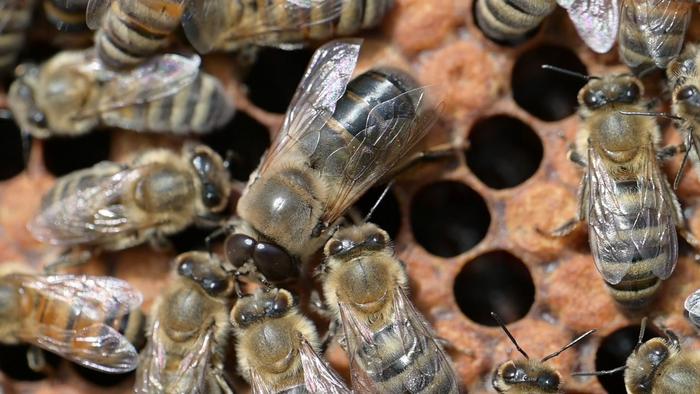
Males Are Genetically Wired To Beg Females For Food

Bees have the reputation of being incredibly organized and spending their days making sure our...
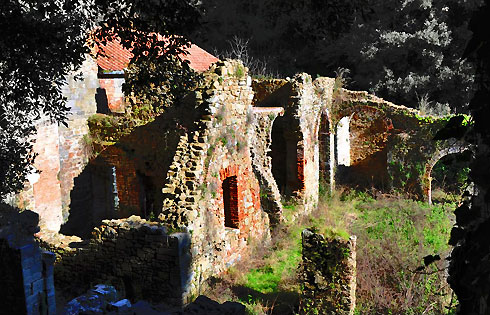
The Scorched Cherry Twig And Other Christmas Miracles Get A Science Look

Bleeding hosts and stigmatizations are the best-known medieval miracles but less known ones, like ...

$0.50 Pantoprazole For Stomach Bleeding In ICU Patients Could Save Families Thousands Of Dollars

The inexpensive medication pantoprazole prevents potentially serious stomach bleeding in critically...

User picture.
News StaffRSS Feed of this column.

News Releases From All Over The World, Right To You... Read More »

Blogroll

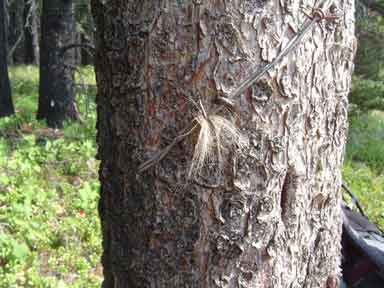
Bears don't rub trees because their backs are itchy. Dr Owen Nevin of the University of Cumbria states that adult male grizzly bears use so-called “rub trees” as a way to communicate with each other while looking for breeding females, and that this behavior could help reduce battles between the bears.

Many theories have been advanced as to why bears rub trees: some thought females might rub trees as they came into oestrous, and others that bears might be giving their backs a good scratch to get rid of parasites or pick up sap to act as insect repellent.

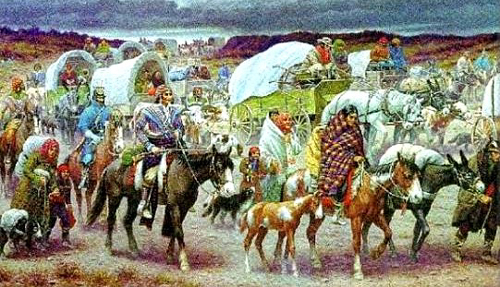
By 1763, the world of Cherokee Indians in the Southeastern U.S. was in tatters. The French and Indian War had wracked the sprawling Cherokee settlements that stretched from the headwaters of the Savannah River in South Carolina and Georgia to the Overhills towns in eastern Tennessee.

Though 75 years would pass before the Trail of Tears would banish the remnants of the nation west to Oklahoma, the tribe watched hopelessly as much of its history rapidly faded.

Researchers have long wondered why the Cherokee settled where they did, building clusters of small towns in fertile river valleys in mostly mountainous areas.

Scientists have also studied why the society collapsed with such relative speed as the eighteenth century unfolded.

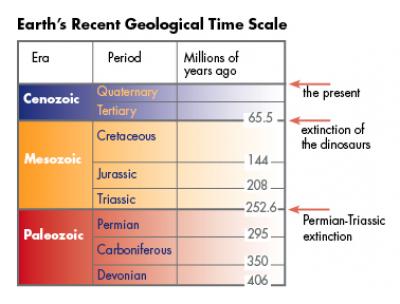
252 million years ago a mass extinction of cataclysmic proportions occurred and the world was changed forever. Prior to that, ocean life was diverse and clam-like organisms called brachiopods dominated. After the extinction little else existed and a different kind of clam-like organism, called a bivalve, took over.

Why did it happen?

The Aurigid meteor shower peaked on September 1, originating from C/1911 N1 Kiess, or comet Kiess, a long-period comet that takes about 2000 years to orbit the Sun. It was discovered in 1935 by Carl Kiess.

As Earth passes through the dust comet Kiess left behind 2000 years ago, meteoroids, or shooting stars, rain upon Earth. They burn up in the atmosphere at very high velocities, about 67 km/s, creating the meteor shower.

The Aurigids get their name from the constellation Auriga, because if you look up in the sky, this is where the shooting stars seem to come from. The dust trail of comet Kiess will not be crossed again in this manner for 70 years.


The constellation of Auriga rising above the horizon.

Researchers at UT Southwestern Medical Center have found that a single gene might control whether or not individuals tend to pile on fat, a discovery that may point to new ways to fight obesity and diabetes.

“From worms to mammals, this gene controls fat formation,” said Dr. Jonathan Graff, associate professor of developmental biology and internal medicine at UT Southwestern and senior author of a study appearing in the Sept. 5 issue of Cell Metabolism.

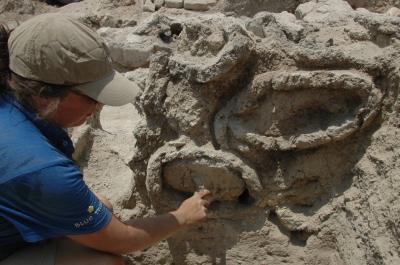
Amihai Mazar, Eleazar L. Sukenik Professor of Archaeology at the Hebrew University, revealed that the first apiary (beehive colony) dating from the Biblical period has been found in excavations he directed this summer at Tel Rehov in Israel’s Beth Shean Valley. This is the earliest apiary to be revealed to date in an archaeological excavation anywhere in the ancient Near East, said Prof. Mazar. It dates from the 10th to early 9th centuries B.C.E.

Tel Rehov is believed to have been one of the most important cities of Israel during the Israelite monarchy. The beehives there were found in the center of a built-up area there that has been excavated since 1997 by Dr. Nava Panitz-Cohen of the Hebrew University. Three rows of beehives were found in the apiary, containing more than 30 hives.