Banner
The Scorched Cherry Twig And Other Christmas Miracles Get A Science Look

Bleeding hosts and stigmatizations are the best-known medieval miracles but less known ones, like ...

$0.50 Pantoprazole For Stomach Bleeding In ICU Patients Could Save Families Thousands Of Dollars

The inexpensive medication pantoprazole prevents potentially serious stomach bleeding in critically...

Metformin Diabetes Drug Used Off-Label Also Reduces Irregular Heartbeats

Adults with atrial fibrillation (AFib) who are not diabetic but are overweight and took the diabetes...

Your Predator: Badlands Future - Optical Camouflage, Now Made By Bacteria

In the various 'Predator' films, the alien hunter can see across various spectra while enabling...

User picture.
News StaffRSS Feed of this column.

News Releases From All Over The World, Right To You... Read More »

Blogroll

Clemson University chemists have developed a method to dramatically improve the longevity of fluorescent nanoparticles that may someday help researchers track the motion of a single molecule as it travels through a living cell.

The chemists are exploiting a process called “resonance energy transfer,” which occurs when fluorescent dye molecules are added to the nanoparticles. Their findings will be reported at the 234th annual national American Chemical Society meeting Aug.19-24 in Boston.

If scientists could track the motion of a single molecule within a living cell it could reveal a world of information. Among other things, scientists could determine how viruses invade a cell or how proteins operate in the body.

A new study, published in the August issue of Glycobiology, found that exposing prostate cancer cells to pectin under laboratory conditions reduced the number of cells by up to 40 percent.

University of Georgia Cancer Center researcher Debra Mohnen and her colleagues found that the cells literally self-destructed in a process known as apoptosis. Pectin even killed cells that aren’t sensitive to hormone therapy and therefore are difficult to treat with current medications.

“What this paper shows is that if you take human prostate cancer cells and add pectin, you can induce programmed cell death,” said Mohnen, a professor of biochemistry and molecular biology. “If you do the same with non-cancerous cells, cell death doesn’t occur.”

97 million Americans are overweight or obese. Obesity is considered an epidemic these days. Could a virus be behind it?

Scientists have presented a new study showing infection with the adenovirus-36 (Ad-36) virus, long recognized as a cause of respiratory and eye infections in humans, may be a contributing factor.

Their laboratory experiments they showed that infection with Ad-36 transforms adult stem cells obtained from fat tissue into fat cells. Stem cells not exposed to the virus, in contrast, were unchanged.

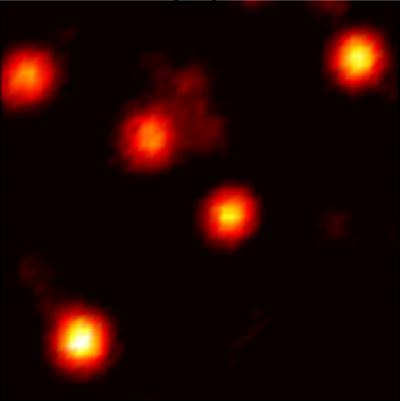
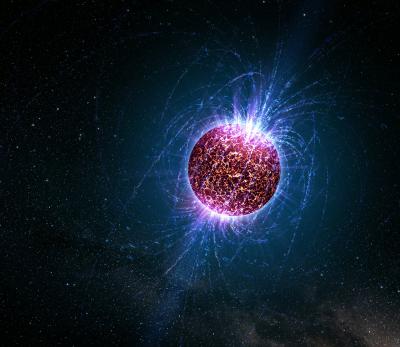
Located in the constellation Ursa Minor, and nicknamed Calvera after the villain in the movie "The Magnificent Seven", the new discovery will be only the eighth known "isolated neutron star", if confirmed, and the closest.

An isolated neutron star is one that does not have an associated supernova remnant, binary companion, or radio pulsations.

They chose that name for a special reason. "The seven previously known isolated neutron stars are known collectively as 'The Magnificent Seven' within the community and so the name Calvera is a bit of an inside joke on our part," says co-discoverer Derek Fox of Penn State. A paper describing the research will be published in the Astrophysical Journal.

Scientists conducting an experiment beneath the mountains of Italy have reached a clearer understanding of the sun's heart -- and of a mysterious class of subatomic particles born there.

The researchers, working as part of an international collaboration at the underground Gran Sasso National Laboratory near L'Aquila, Italy, have made the first real-time observation of low-energy solar neutrinos, which are fundamental particles created by nuclear reactions that stream in vast numbers from the sun's core.

Their measurements will be published in an upcoming edition of Physics Letters B and reports a direct measurement of the 7Be solar neutrino signal rate performed with the Borexino low background liquid scintillator detector.

Stem cells transplanted into the brains of mice generate more numerous and more mature nerve cells if the brain cells called astrocytes are not activated. This discovery at the Sahlgrenska Academy is an important step forward for stem cell research.

The study was performed by a research team at the Center for Brain Repair and Rehabilitation at the Sahlgrenska Academy.

The transplantation of stem cells and activation of the body's own stem cells could be a future treatment for several neurological disorders.