Banner
Object-Based Processing: Numbers Confuse How We Perceive Spaces

Researchers recently studied the relationship between numerical information in our vision, and...

Males Are Genetically Wired To Beg Females For Food

Bees have the reputation of being incredibly organized and spending their days making sure our...
The Scorched Cherry Twig And Other Christmas Miracles Get A Science Look

Bleeding hosts and stigmatizations are the best-known medieval miracles but less known ones, like ...

$0.50 Pantoprazole For Stomach Bleeding In ICU Patients Could Save Families Thousands Of Dollars

The inexpensive medication pantoprazole prevents potentially serious stomach bleeding in critically...

User picture.
News StaffRSS Feed of this column.

News Releases From All Over The World, Right To You... Read More »

Blogroll

An international team of scientists, including several at The Johns Hopkins University, has detected a hidden magnetic “quantum order” that extends over chains of nearly 100 atoms in a material that is otherwise magnetically disordered.

The findings, which are published online today (July 26) in the journal Science, may have implications for the design of devices and materials for quantum information processing, including large-scale quantum computers capable of tackling problems exponentially faster than can conventional computers.

The team’s results are important because they demonstrate that the magnetic moments (the measure of the strength of a magnetic source) of a large number of atoms can band together to form quantum states much like those of a very large molecule.

Scientists from two European-funded groups - EuroStemCell (European Consortium for Stem Cell Research) and ESTOOLS - are working together to call for a relaxation of current laws, particularly in Germany and Italy, in the hope that their European counterparts are able to collaborate on international projects without fear of legal reprisal.

Currently, stem cell legislation differs across Europe. Projects that are perfectly legal in Sweden and the UK could result in a three-year prison sentence in Germany. Researchers from countries with very restrictive legislation might also become liable by taking on coordinating positions in other European institutions.

Researchers in an ongoing U.S.-Cuban archaeological expedition, co-led by The University of Alabama, are attempting to learn more about the native people Christopher Columbus encountered on his first voyage to the New World.

UA’s department of anthropology and the Central-Eastern Department of Archaeology of the science ministry in Cuba are partnering in the effort, funded by the National Geographic Society and focused on a former large native village, El Chorro de Maita, in eastern Cuba.

“This season, the team is mapping the site and determining the size and location of residential areas within it,” said Dr. Jim Knight, professor of anthropology at UA who set up the project and is advising it.

Two drugs commonly prescribed to treat diabetes double the risk of heart failure, according to new research by the University of East Anglia (UEA).

Rosiglitazone (Avandia) and Pioglitazone (Actos) are recommended by the National Institute of Clinical Excellence (NICE) for the treatment of Type II Diabetes. Prescriptions for the drugs, known as thiazolidinediones, have doubled over the last three years and they were taken by more than 1.5 million people in England last year.

The new research was undertaken by Dr Yoon Loke, a clinical pharmacologist at UEA’s School of Medicine, Health Policy and Practice, working with colleagues at Wake Forest University in the US. The results are published in the August edition of the journal Diabetes Care.

In the hot springs of Yellowstone National Park, a team of researchers have discovered a new genus and species of chlorophyll-producing bacterium that transforms light into chemical energy. The discovery is described in a paper written by Don Bryant of Penn State University and David M. Ward of Montana State University.

Yellowstone National Park is a tourist's wonderland because of its wildlife, mountains, geysers and hot springs. But the park is also a scientific reservoir that harbors what may be the world's largest diversity of thermophilic (heat-loving) microorganisms.

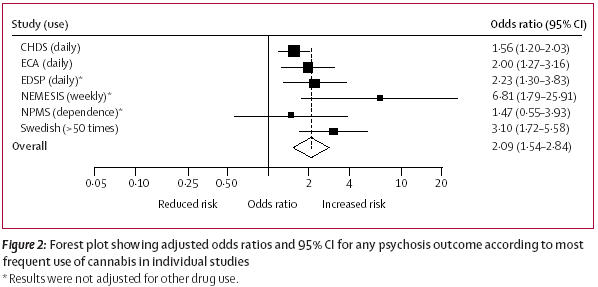
There is now enough evidence to warn young people that using cannabis could increase their risk of developing a psychotic illness later in life by more than 40%, conclude authors of an Article published in this week’s edition of The Lancet. “Governments would do well to invest in sustained and effective education campaigns on the risks to health of taking cannabis.”

Cannabis, or marijuana, is the most commonly used illegal substance in most countries, including the UK and USA.