Banner
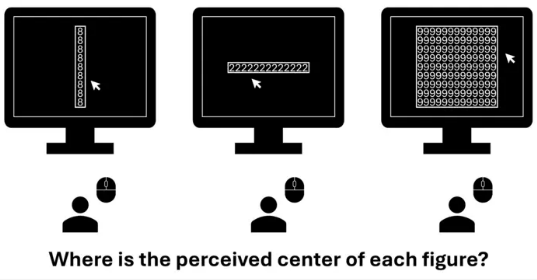
Object-Based Processing: Numbers Confuse How We Perceive Spaces

Researchers recently studied the relationship between numerical information in our vision, and...
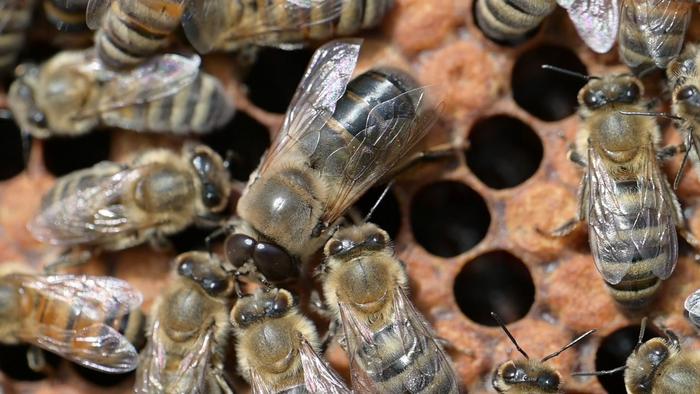
Males Are Genetically Wired To Beg Females For Food

Bees have the reputation of being incredibly organized and spending their days making sure our...

The Scorched Cherry Twig And Other Christmas Miracles Get A Science Look

Bleeding hosts and stigmatizations are the best-known medieval miracles but less known ones, like ...

$0.50 Pantoprazole For Stomach Bleeding In ICU Patients Could Save Families Thousands Of Dollars

The inexpensive medication pantoprazole prevents potentially serious stomach bleeding in critically...

User picture.
News StaffRSS Feed of this column.

News Releases From All Over The World, Right To You... Read More »

Blogroll

Researchers from Boston University School of Medicine (BUSM) and Boston University School of Public Health (BUSPH) have developed a method to estimate sickle cell disease severity and predict the risk of death in people with this disease. The study appears online in the June issue of the journal Blood.

Sickle cell disease is caused by mutations in the beta-hemoglobin gene (HBB). Individuals having identical pairs of genes for the HBB glu6val mutation (HbS) have sickle cell anemia; individuals with both HbS and HbC mutations have sickle cell-HbC (HbSC) disease. Both of these types of sickle cell-disease have extremely variable characteristics.

A chemically-modified version of a mitochondrial toxin long used to control species of invasive fish in lakes has been found to selectively inhibit two "survival proteins” in cancer cells. The research is a first step toward developing a molecularly-targeted drug that could eliminate cellular-level resistance to multiple types of chemotherapy and radiation therapy found in many types of cancers.

In a paper published today in the July 2007 issue of Molecular Cancer Therapeutics, scientists at Fred Hutchinson Cancer Research Center report that a modified version of antimycin called 2-Methoxy antimycin is selective in killing cells that have high levels of Bcl-2 and Bcl-xL proteins.

Researchers from the University of Pittsburgh School of Medicine report a significant new advance in the search for an effective treatment for human liver cancer in the July issue of Molecular Cancer Therapeutics.

Using a newly available monoclonal antibody, they demonstrated significant reductions in tumor cell proliferation and survival in human and mouse hepatocellular cancer (HCC) cell lines. According to the researchers, this finding has significant implications not only for the treatment of liver cancer but for a number of different types of cancer.

Most cases of HCC are secondary to either a viral hepatitis infection or cirrhosis of the liver.

Argonaute 2 (Ago2) is unique among its family: It is the only one of the four mammalian Argonaute proteins that exhibits endonuclease “slicer” activity (facilitation of miRNA-guided cleavage of target mRNA).

However, as Drs. Donal O’Carroll and Alexander Tarakhovsky (The Rockefeller Institute) report, Ago2’s defining characteristic is surprisingly non-essential for its role in hematopoiesis and miRNA biogenesis.

Drs. O’Carroll, Tarakhovsky and colleagues generated transgenic mice harboring mutated versions of Ago2 in their bone marrow. The researchers found that Ago2 is, indeed, quite necessary for normal blood cell development. Its endonulcease activity, however, is not.

Using natural ‘gravitational lenses’, an international team of astronomers claim to have found a hint of a population of the most distant galaxies yet seen - the light we see from them today left more than 13 thousand million years ago, when the Universe was just 500 million years old.

Team leader Professor Richard Ellis, Steele Professor of Astronomy at Caltech, will present images of these faint and distant objects in his talk on Wednesday 11 July at the ‘From IRAS to Herschel and Planck’ conference at the Geological Society in London.

A University of Alabama astronomer has co-developed a new way to characterize galaxy features that is giving scientists additional insight into how galaxies formed and changed over time, according to a paper published in the June 2007 issue of The Astronomical Journal.

Dr. Ronald J. Buta, professor of astronomy at UA, and Dr. Xiaolei Zhang, of the Naval Research Laboratory, Washington, D.C., co-authored the paper detailing the new method of characterizing density wave features in galaxies. Density waves are mass enhancements in galaxies that appear in the forms of spiral arms, linear bar features, and ring-shaped patterns. Orbiting stars and gas clouds stream in and out of these features much like vehicles in heavy traffic.