
Banner
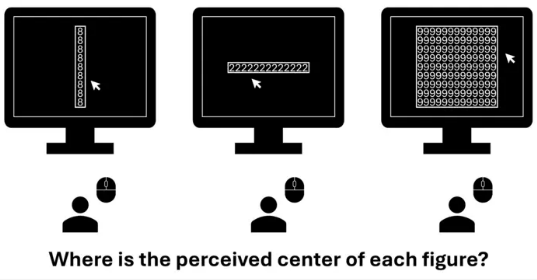
Object-Based Processing: Numbers Confuse How We Perceive Spaces

Researchers recently studied the relationship between numerical information in our vision, and...
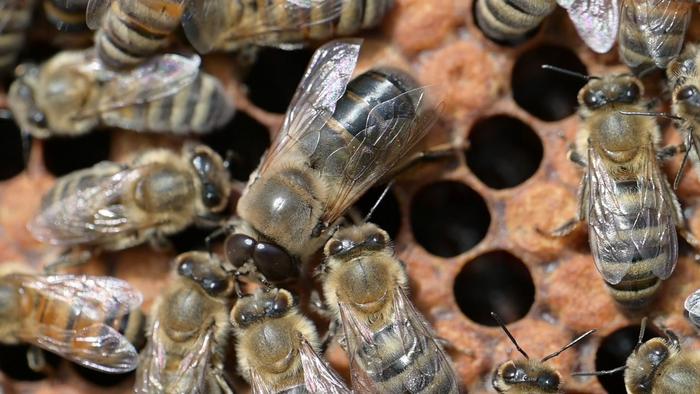
Males Are Genetically Wired To Beg Females For Food

Bees have the reputation of being incredibly organized and spending their days making sure our...

The Scorched Cherry Twig And Other Christmas Miracles Get A Science Look

Bleeding hosts and stigmatizations are the best-known medieval miracles but less known ones, like ...
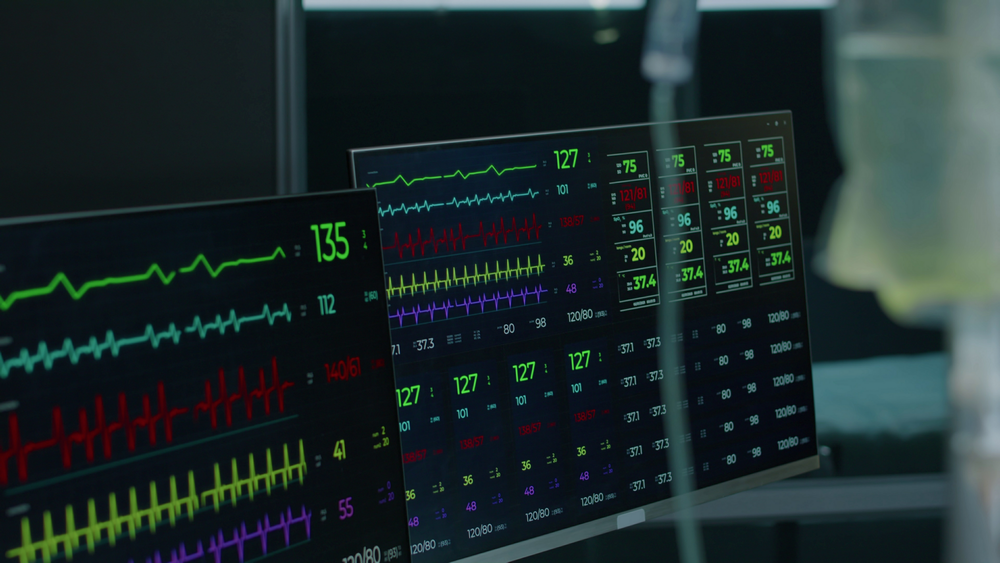
$0.50 Pantoprazole For Stomach Bleeding In ICU Patients Could Save Families Thousands Of Dollars

The inexpensive medication pantoprazole prevents potentially serious stomach bleeding in critically...

User picture.
News StaffRSS Feed of this column.

News Releases From All Over The World, Right To You... Read More »

Blogroll

African and African American women are more likely to die of breast cancer than their white counterparts because they tend to get the disease before the menopause, suggests new research from the University of East Anglia and the Children’s Hospital Boston in collaboration with researchers in the US and Italy.

A racial disparity in mortality rates from breast cancer in the US first appeared in the 1970s coinciding with the introduction of mammography.

Bacteria could be used to help steady buildings against earthquakes, according to researchers at UC Davis. The microbes can literally convert loose, sandy soil into rock.

When a major earthquake strikes, deep, sandy soils can turn to liquid, with disastrous consequences for buildings sitting on them. Currently, civil engineers can inject chemicals into the soil to bind loose grains together. But these epoxy chemicals may have toxic effects on soil and water, said Jason DeJong, an assistant professor of civil and environmental engineering at UC Davis.

Habitual intake of caffeinated beverages provides protection against heart disease mortality in the elderly, say researchers at SUNY Downstate Medical Center and Brooklyn College.

Using data from the first federal National Health and Nutrition Examination Survey Epidemiologic Follow-up Study, the researchers found that survey participants 65 or more years old with higher caffeinated beverage intake exhibited lower relative risk of coronary vascular disease and heart mortality than did participants with lower caffeinated beverage intake.

USC's lego-like autonomous robotic units show off ability to reconfigure into different systems for different tasks.

Wei-Min Shen of the University of Southern California's Information Sciences Institute recently reported to NASA significant progress in developing "SuperBot," identical modular units that plug into each other to create robots that can stand, crawl, wiggle and even roll. He illustrated his comments with striking video of the system in action, video now posted on line. 

A Binghamton University researcher has established a new framework to help determine whether individuals might be at risk for schizophrenia.

In a study published in this month's Journal of Abnormal Psychology, Mark F. Lenzenweger, a professor of clinical science, neuroscience and cognitive psychology at Binghamton University, State University of New York (SUNY), is the first to have found that abnormalities in eye movements and attention can be used to divide people into two groups in relation to schizophrenia-related risk.

"Schizophrenia affects one in every 100 people," said Lenzenweger, who considers it the costliest form of mental illness known to humankind.

The ESO Very Large Telescope Interferometer, which allows astronomers to scrutinise objects with a precision equivalent to that of a 130-m telescope, is proving itself an unequalled success every day. One of the latest instruments installed, AMBER, has led to a flurry of scientific results, an anthology of which is being published this week as special features in the research journal Astronomy & Astrophysics.

"With its unique capabilities, the VLT Interferometer (VLTI) has created itself a niche in which it provide answers to many astronomical questions, from the shape of stars, to discs around stars, to the surroundings of the supermassive black holes in active galaxies," says Jorge Melnick (ESO), the VLT Project Scientist.






