Banner
Object-Based Processing: Numbers Confuse How We Perceive Spaces

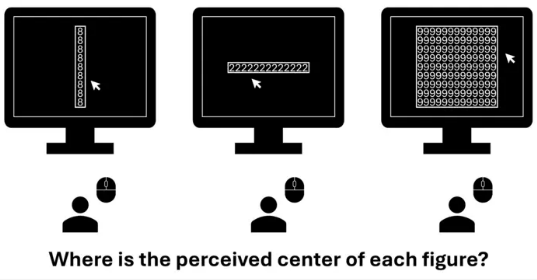
Researchers recently studied the relationship between numerical information in our vision, and...
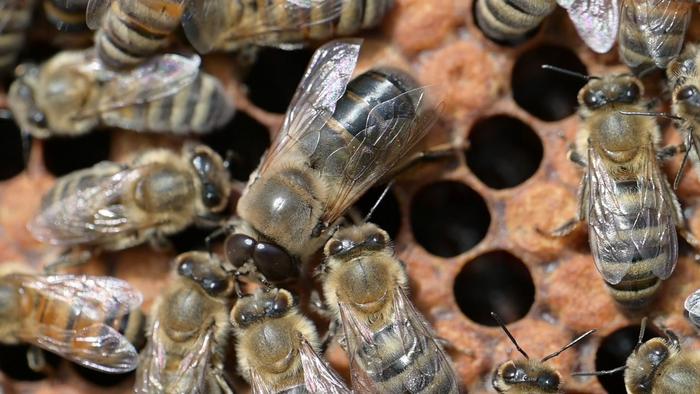
Males Are Genetically Wired To Beg Females For Food

Bees have the reputation of being incredibly organized and spending their days making sure our...

The Scorched Cherry Twig And Other Christmas Miracles Get A Science Look

Bleeding hosts and stigmatizations are the best-known medieval miracles but less known ones, like ...
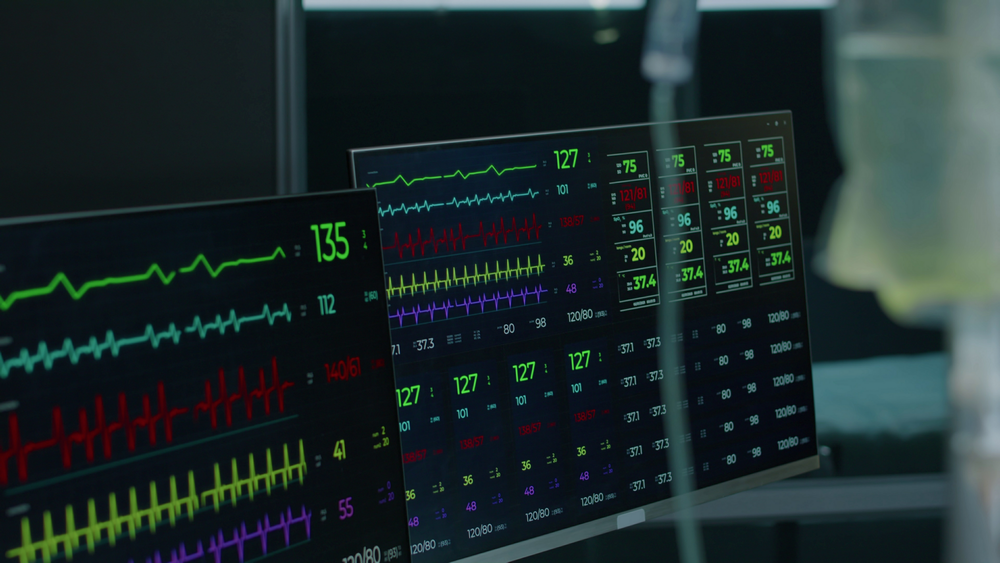
$0.50 Pantoprazole For Stomach Bleeding In ICU Patients Could Save Families Thousands Of Dollars

The inexpensive medication pantoprazole prevents potentially serious stomach bleeding in critically...

User picture.
News StaffRSS Feed of this column.

News Releases From All Over The World, Right To You... Read More »

Blogroll

Certain cancer risks can be passed down through families, the result of tiny changes in a family's genetic code. But not all genetic changes are deadly. To help medical counselors and physicians identify the mutations that pose the greatest health risks, researchers at four institutions, including Johns Hopkins, have developed and validated a new computer tool.

The system, described in the Feb. 16 issue of Public Library of Science Computational Biology, evaluates 16 "predictive features" to help answer a critical question: Is a particular mutation a harmless variation or a genetic glitch that could set the stage for cancer?

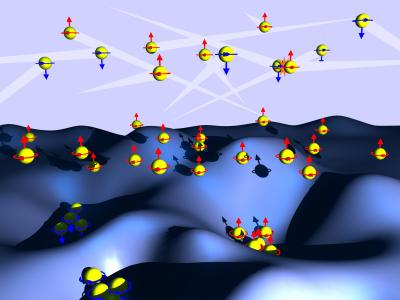
Physicists at JILA are using ultrashort pulses of laser light to reveal precisely why some electrons, like ballet dancers, hold their spin positions better than others—work that may help improve spintronic devices, which exploit the magnetism or "spin" of electrons in addition to or instead of their charge. One thing spinning electrons like, it turns out, is some disorder.

JILA is a joint venture of the National Institute of Standards and Technology (NIST) and the University of Colorado at Boulder.

Using the highest magnetic fields in the world, an international team of researchers has observed the quantum Hall effect – a much studied phenomenon of the quantum world – at room temperature.

The quantum Hall effect was previously believed to only be observable at temperatures close to absolute zero (equal to minus 459 degrees). But when scientists at the National High Magnetic Field Laboratory in the U.S. and at the High Field Magnet Laboratory in the Netherlands put a recently developed new form of carbon called graphene in very high magnetic fields, scientists were surprised by what they saw.


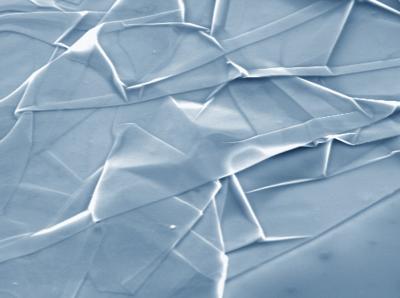
This image is a scanning electron microscope micrograph of a strongly crumpled graphene sheet on a silicon wafer.

A new report on climate over the world's southernmost continent shows that temperatures during the late 20th century did not climb as had been predicted by many global climate models.

This comes soon after the latest report by the Intergovernmental Panel on Climate Change that strongly supports the conclusion that the Earth's climate as a whole is warming, largely due to human activity.

It also follows a similar finding from last summer by the same research group that showed no increase in precipitation over Antarctica in the last 50 years. Most models predict that both precipitation and temperature will increase over Antarctica with a warming of the planet.

When glaciologist Lonnie Thompson returns to Peru's Qori Kalis glacier early this summer, he expects to find that half of the ice he saw during his visit there last year has vanished.

What troubles him the most is his recent observations that suggest that the entire glacier may likely be gone within the next five years, providing possibly the clearest evidence so far of global climate change.

The fact that the Qori Kalis glacier, high in the Andes Mountains , is only one of many ice tongues retreating on the Quelccaya Ice Cap, the largest body of ice in the tropics, provides strong evidence of the warming that appears to be underway worldwide.

Quickly now, which is a higher risk that you will get a disease: 1 in 100; 1 in 1,000; or 1 in 10? Choosing the correct answer depends on a person's numeracy – the ability to grasp and use math and probability concepts, according to a presentation at the annual meeting of the American Association for the Advancement of Science.

The scenario was part of a series of experiments with University of Oregon students. In this case, 96 percent correctly chose 1 in 10, a 10 percent chance. However, that response came from a more-educated, college-going crowd.