
Banner
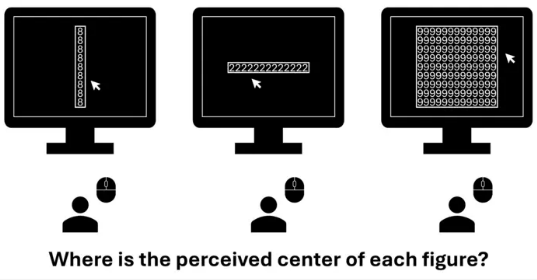
Object-Based Processing: Numbers Confuse How We Perceive Spaces

Researchers recently studied the relationship between numerical information in our vision, and...
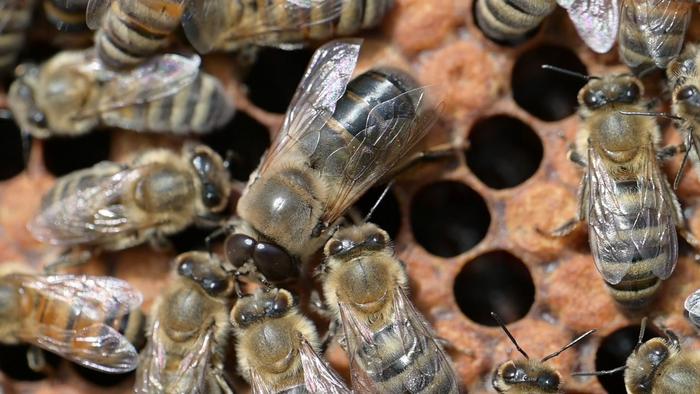
Males Are Genetically Wired To Beg Females For Food

Bees have the reputation of being incredibly organized and spending their days making sure our...

The Scorched Cherry Twig And Other Christmas Miracles Get A Science Look

Bleeding hosts and stigmatizations are the best-known medieval miracles but less known ones, like ...

$0.50 Pantoprazole For Stomach Bleeding In ICU Patients Could Save Families Thousands Of Dollars

The inexpensive medication pantoprazole prevents potentially serious stomach bleeding in critically...

User picture.
News StaffRSS Feed of this column.

News Releases From All Over The World, Right To You... Read More »

Blogroll

Nearly 2 million children, or approximately 3 percent to 5 percent of young children in the United States, are considered to have ADHD. This disorder affects a child’s ability to focus, concentrate and control impulsive behavior. This disorder is so common that most school classrooms have at least one child with clinically-diagnosed ADHD.

In an 18-year-study on attention-deficit hyperactivity disorder (ADHD), Mayo Clinic researchers found that treatment with prescription stimulants is associated with improved long-term academic success of children with ADHD. The Mayo Clinic results are the first population-based data to show stimulant drug therapy helps improve long-term school outcomes.

A paper published this week in the open access journal PLoS Medicine provides strong evidence that one specific part of the genome is associated with rheumatoid arthritis.

Rene Toes and colleagues from Leiden University Medical Center, the Karolinska Institute, and Celera studied four groups of patients and matched controls. They found a consistent association with one specific region of the genome -- a region on chromosome 9 that includes the two genes, complement component 5 (C5) of the complement system (a primitive system within the body that is involved in the defense against foreign molecules) and a gene involved in the inflammatory response, TNF receptor-associated factor 1(TRAF1).

A team led by biophysicist Jeremy Smith of the University of Tennessee and Oak Ridge National Laboratory (ORNL) has taken a significant step toward unraveling the mystery of how proteins fold into unique, three-dimensional shapes.

Using ORNL's Cray XT4 Jaguar supercomputer as well as computer systems in Italy and Germany, the team revealed a driving force behind protein folding involving the way its constituents interact with water. The team's results are being published in this week's edition of the Proceedings of the National Academy of Sciences.

Proteins are the workhorses of the body, taking on a wide variety of tasks. They fight infections, turn food into energy, copy DNA and catalyze chemical reactions. Insulin is a protein, as are antibodies and many hormones.

Whether a smoking-cessation drug will enable you to quit smoking may depend on your genes, according to new genotyping research from the Centre for Addiction and Mental Health (CAMH). The study, published in the September issue of the journal Biological Psychiatry, found that the enzyme known to metabolize both the smoking cessation drug bupropion and nicotine is highly genetically variable in all ethnicities and influences smoking cessation.

For two generations of physicists, it has been a standard belief that the neutron, an electrically neutral elementary particle and a primary component of an atom, actually carries a positive charge at its center and an offsetting negative charge at its outer edge.

The notion was first put forth in 1947 by Enrico Fermi, a Nobel laureate noted for his role in developing the first nuclear reactor. But new research by a University of Washington physicist shows the neutron's charge is not quite as simple as Fermi believed.

Using precise data recently gathered at three different laboratories and some new theoretical tools, Gerald A.

Good-looking people capture our attention and render us temporarily helpless to turn our eyes away from them, according to a new Florida State University study. That applies to men and women and, in the case of married people, even to looking at the same sex.

“It’s like magnetism at the level of visual attention,” said Jon Maner, an assistant professor of psychology at FSU, who studied the role mating-related motives can play in a psychological phenomenon called attentional adhesion. The paper is one of the first to show how strongly, quickly and automatically we are attuned to attractive people, he said.




