Banner
Object-Based Processing: Numbers Confuse How We Perceive Spaces

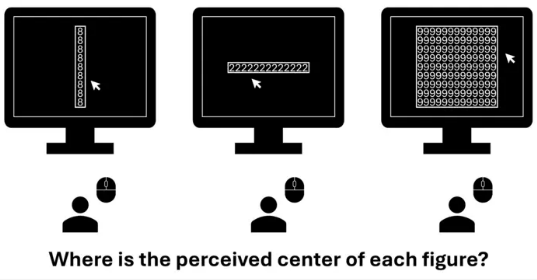
Researchers recently studied the relationship between numerical information in our vision, and...
Males Are Genetically Wired To Beg Females For Food

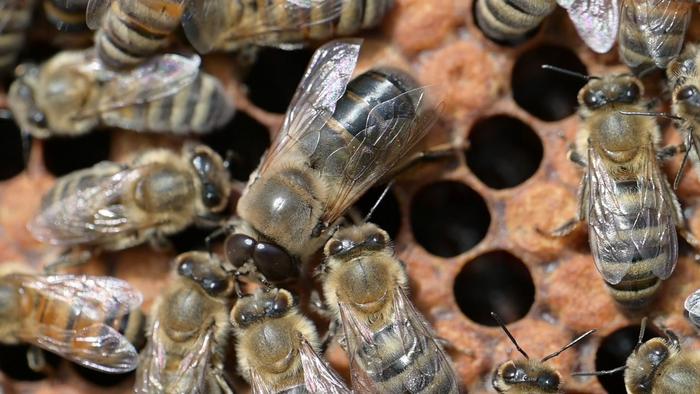
Bees have the reputation of being incredibly organized and spending their days making sure our...

The Scorched Cherry Twig And Other Christmas Miracles Get A Science Look

Bleeding hosts and stigmatizations are the best-known medieval miracles but less known ones, like ...

$0.50 Pantoprazole For Stomach Bleeding In ICU Patients Could Save Families Thousands Of Dollars

The inexpensive medication pantoprazole prevents potentially serious stomach bleeding in critically...

User picture.
News StaffRSS Feed of this column.

News Releases From All Over The World, Right To You... Read More »

Blogroll

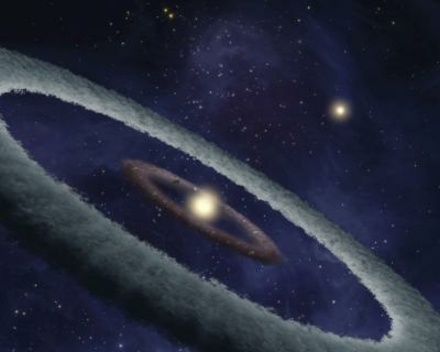
An international team of astronomers might have discovered the missing link in the evolution of the so-called magnetic cataclysmic variable stars. They determined the spin and orbital periods of the binary star Paloma. They found that the Paloma system has a weird way of rotating that fills the gap between two classes of magnetic cataclysmic stars. Their results will soon be published in Astronomy & Astrophysics.

Cataclysmic variables (CVs) are a class of binary stars made up of a white dwarf [1] and a normal star much like our Sun. Both stars orbit so close to each other that the white dwarf accretes matter from the companion star. In most of the several hundred CVs known, the matter spirals around the white dwarf, forming a disk, before being accreted and incorporated into the star.

Using atom-level imaging techniques, University of Michigan researchers have revealed important structural details of an enzyme system known as "Mother Nature's blowtorch" for its role in helping the body efficiently break down many drugs and toxins.

The research has been detailed in a series of papers, the most recent published online this month in the journal BBA Biomembranes.

The system involves two proteins that work cooperatively. The first, cytochrome P450, does the actual work, but only when it gets a boost from the second protein, cytochrome b5. To complicate matters, the two proteins can interact only when both are bound to a cell membrane.

Many neuronal disorders, including epilepsy, schizophrenia and lissencephaly – a form of mental retardation -, result from abnormal migration of nerve cells during the development of the brain. Researchers from the Mouse Biology Unit of the European Molecular Biology Laboratory (EMBL) in Italy, have now discovered that a protein that helps organising the cells’ skeleton is crucial for preventing such defects.

The voltage sensor of voltage-gated ion channels is a conserved protein domain that senses millivolt changes in transmembrane potential, to regulate ion permeation through the channel. A recently discovered protein, Ci-VSP, has a voltage sensor that is coupled not to an ion channel but to a phosphatidylinositide phosphosphatase, the activity of which depends on membrane potential.

In a new paper published in The Journal of Physiology, Murata and Okamura, from the Okazaki Institute for Integrative Bioscience, examine a voltage-sensitive phosphatase that converts an electrical to a chemical signal; they directly demonstrate that the enzyme activity of Ci-VSP changes in a voltage-dependent manner through the operation of the voltage sensor.

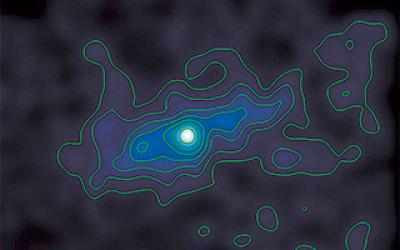
The brand-new Large Binocular Telescope (LBT) in Arizona has a gotten off to an astronomical start, helping an international team of astronomers learn that a recently discovered tiny companion galaxy to our Milky Way, named the Hercules Dwarf Galaxy, has truly exceptional properties: unlike the round tiny dwarf galaxies found so far, this neighbor 430,000 light years away is shaped more like a cigar.

The stars in many large galaxies are arranged in a disk-like configuration, like our Milky Way, but among the millions of well-studied tiny dwarf galaxies none has ever been observed to have a cigar-like shape before now.

An explanation for the galaxy's unusual shape is that it is being disrupted by the gravitational forces of the Milky Way.

Cholesterol level testing at about 15 months of age could prevent heart disease later in life, say doctors in a study published by British Medical Journal today.

Their rationale? Hereditary high cholesterol, known as familial hypercholesterolaemia, affects about two in every 1000 people and causes very high levels of low density lipoprotein (LDL) or ‘bad cholesterol’ in the blood. It carries a high risk of death from coronary heart disease.

Treatment to lower cholesterol reduces the risk substantially, but is it worth the expense to test all children for something that will impact .2% of the population?