Banner
Males Are Genetically Wired To Beg Females For Food

Bees have the reputation of being incredibly organized and spending their days making sure our...

The Scorched Cherry Twig And Other Christmas Miracles Get A Science Look

Bleeding hosts and stigmatizations are the best-known medieval miracles but less known ones, like ...

$0.50 Pantoprazole For Stomach Bleeding In ICU Patients Could Save Families Thousands Of Dollars

The inexpensive medication pantoprazole prevents potentially serious stomach bleeding in critically...

Metformin Diabetes Drug Used Off-Label Also Reduces Irregular Heartbeats

Adults with atrial fibrillation (AFib) who are not diabetic but are overweight and took the diabetes...

User picture.
News StaffRSS Feed of this column.

News Releases From All Over The World, Right To You... Read More »

Blogroll

Computer models now under development could enhance the design of sports equipment to help people of all abilities realise their sporting potential.

The models, more sophisticated and more specialised than others previously used in sports equipment design, produce unprecedentedly realistic simulations of how potential ball designs, for instance, will actually behave when in use.

This data can then be harnessed by sports equipment design teams to ensure that the final products they develop behave (e.g. bounce and spin) as required and, above all, with more consistency than ever before. This is vital if sportsmen and women are to optimise their skills, apply them with confidence and maximise their achievement.

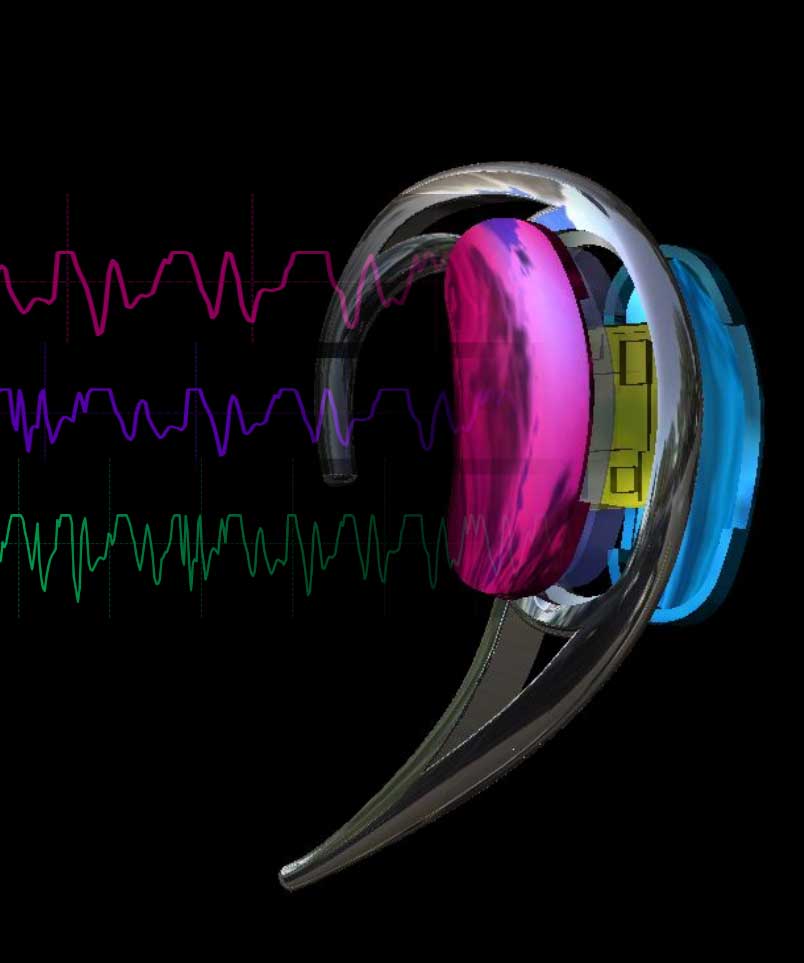
A revolutionary new sensor collects and immediately transmits data about posture, stride length, step frequency, acceleration, response to shock waves travelling through the body etc.

It's cufflink-sized and clipped behind the wearer’s ear, so it doesn't hinder performance and when worn by an athlete during training, it can transmit the information for immediate visual display on a handheld device or laptop used by their coach at the trackside. The coach can then harness the data to shape the on-the-spot advice and instruction they give the athlete regarding technique. By instantly adding to the value of every training session, the sensor can therefore deliver better sporting performance.

It seems the evolution versus creationism debate will never end. Professor Steve Jones, a geneticist from University College London will address delegates at the 7th annual University College Dublin-Conway Festival of Research in O’Reilly Hall, University College Dublin on Thursday, September 20th 2007 about ‘Why evolution is right and creationism is wrong’.

Why hear an argument against something unproven at all? Jones is concerned that intelligent Design is being presented as scientific fact. Proponents of intelligent design state that the universe and everything in it has been designed by a higher being based on the premise that some systems are just too complex to have evolved.

An analysis by the Hudson Institute states that more than 500 scientists have published evidence refuting at least one element of current man-made global warming scares.

The analysis says that more than 300 of the scientists found evidence that 1) a natural moderate 1,500-year climate cycle has produced more than a dozen global warmings similar to ours since the last Ice Age and/or that 2) our Modern Warming is linked strongly to variations in the sun's irradiance.

"This data and the list of scientists make a mockery of recent claims that a scientific consensus blames humans as the primary cause of global temperature increases since 1850," said Hudson Institute Senior Fellow Dennis Avery.

In 1911 the discovery that the earth was billions of years old changed our view of the world forever. At the end of the 19th century, many geologists still believed the age of the Earth to be a few thousand years old, as indicated by the Bible, while others considered it to be around 100 million years old, in line with calculations made by Lord Kelvin, the most prestigious physicist of his day.

Before radiometric dating there was no way of knowing.

In 1898 Marie Curie discovered the phenomenon of radioactivity and by 1904 Ernest Rutherford, a physicist working in Britain, realised that the process of radioactive decay could be harnessed to date rocks.

Global child deaths have reached a record low, falling below 10 million per year to 9.7 million, down from almost 13 million in 1990, according to UNICEF.

"This is an historic moment," said UNICEF Executive Director Ann M. Veneman. "Now we must build on this public health success to push for the achievement of the Millennium Development Goals."

Among these goals, which range from halving extreme poverty to halting the spread of HIV/AIDS, is a commitment to a two-thirds reduction in child mortality between 1990 and 2015, a result which would save an additional 5.4 million children by 2015.

However, Veneman pointed out that there is no room for complacency.

"The loss of 9.7 million young lives each year is unacceptable.