Banner
The Scorched Cherry Twig And Other Christmas Miracles Get A Science Look

Bleeding hosts and stigmatizations are the best-known medieval miracles but less known ones, like ...

$0.50 Pantoprazole For Stomach Bleeding In ICU Patients Could Save Families Thousands Of Dollars

The inexpensive medication pantoprazole prevents potentially serious stomach bleeding in critically...
Metformin Diabetes Drug Used Off-Label Also Reduces Irregular Heartbeats

Adults with atrial fibrillation (AFib) who are not diabetic but are overweight and took the diabetes...

Your Predator: Badlands Future - Optical Camouflage, Now Made By Bacteria

In the various 'Predator' films, the alien hunter can see across various spectra while enabling...

User picture.
News StaffRSS Feed of this column.

News Releases From All Over The World, Right To You... Read More »

Blogroll

The largest-ever study of treatments for diabetes has shown that a fixed combination of perindopril and indapamide also reduces the risks of heart and kidney disease.

One of the study leaders, Professor Stephen MacMahon from The George Institute for International Health in Australia, said, "these results represent an important step forward in health care for the millions of people with diabetes worldwide. This treatment reduced the likelihood of dying from the complications of diabetes by almost one-fifth, with virtually no side-effects.”

Globally, there are approximately 250 million people with diabetes, most of whom will eventually be killed or disabled by the complications of their condition. The most common cause of death in people with diabetes is heart disease.

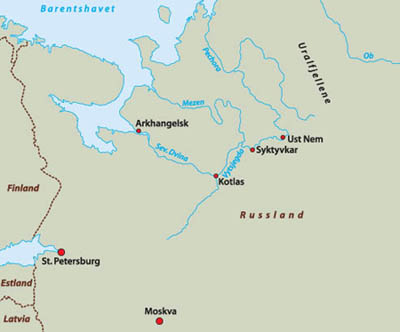
During the last Ice Age, the ice dammed enormous lakes in Russia. The drainage system was reversed several times and the rivers flowed southwards. A group of geologists is now investigating what took place when the ice melted and the lakes released huge volumes of fresh water into the Arctic Ocean.

”The ice-dammed lakes in Russia were larger than the largest lakes we know today,” Eiliv Larsen, a geologist at the Geological Survey of Norway (NGU), tells me. He is in charge of the important SciencePub International Polar Year project that is studying natural climate changes in the Arctic and the ways in which man has adapted to them.

Moving glaciers

”The entire drainage system in Russia has been reversed several times during the past 130 000 years.

With prices of gourmet coffee approaching sticker-shock levels, scientists in Illinois are reporting development of a method to "fingerprint" coffee to detect when corn has been mixed in to short-change customers.

Gulab Jham and colleagues point out that such adulteration of Brazilian coffee is among the most serious problems affecting coffee quality -- with cereal grains, coffee twigs, and brown sugar sometimes mixed into the genuine article. Their research focuses on detecting corn, probably the most widely used adulterant.

British astronomers from the University of Cambridge and the California Institute of Technology (Caltech) have developed a new camera that gives much more detailed pictures of stars and nebula than even the Hubble Space Telescope, and it does all this from the ground. Images from ground-based telescopes are usually blurred out by the atmosphere.

Astronomers have tried to develop techniques to correct the blurring called adaptive optics but so far they only work successfully in the infrared where the smearing is greatly reduced. However a new noise-free, high-speed camera has been developed at the Institute of Astronomy in Cambridge which makes very high resolution imaging in the visible possible.

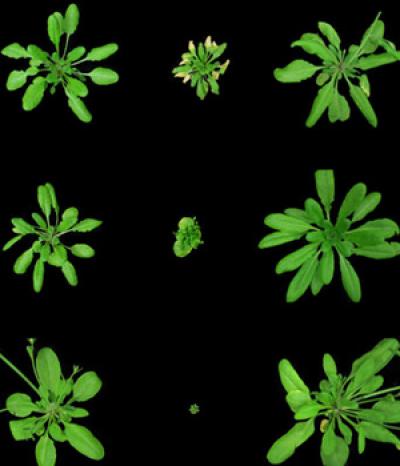
Plant biologists at the Max Planck Institute of Developmental Biology and the University of North Carolina at Chapel Hill have discovered that an autoimmune response, triggered by a small number of genes, can be a barrier to producing a viable offspring.

Studying Arabidopsis thaliana, sometimes called thale cress, the researchers identified a phenotype that, when paired together from a male and female, produced plants that survived only long enough to produce a few leaves, then died – a phenomenon called hybrid necrosis; literally, death.

Many breeds of African, Asian, and Latin American livestock are at risk of extinction, say scientists from the Consultative Group on International Agricultural Research (CGIAR) and they have called for the rapid establishment of genebanks to conserve the sperm and ovaries of key animals critical for the global population’s future survival.

An over-reliance on just a few breeds of a handful of farm animal species, such as high-milk-yielding Holstein-Friesian cows, egg-laying White Leghorn chickens, and fast-growing Large White pigs, is causing the loss of an average of one livestock breed every month according to a recently released report by the UN Food and Agriculture Organization (FAO).