Banner
The Scorched Cherry Twig And Other Christmas Miracles Get A Science Look

Bleeding hosts and stigmatizations are the best-known medieval miracles but less known ones, like ...

$0.50 Pantoprazole For Stomach Bleeding In ICU Patients Could Save Families Thousands Of Dollars

The inexpensive medication pantoprazole prevents potentially serious stomach bleeding in critically...

Metformin Diabetes Drug Used Off-Label Also Reduces Irregular Heartbeats

Adults with atrial fibrillation (AFib) who are not diabetic but are overweight and took the diabetes...

Your Predator: Badlands Future - Optical Camouflage, Now Made By Bacteria

In the various 'Predator' films, the alien hunter can see across various spectra while enabling...

User picture.
News StaffRSS Feed of this column.

News Releases From All Over The World, Right To You... Read More »

Blogroll

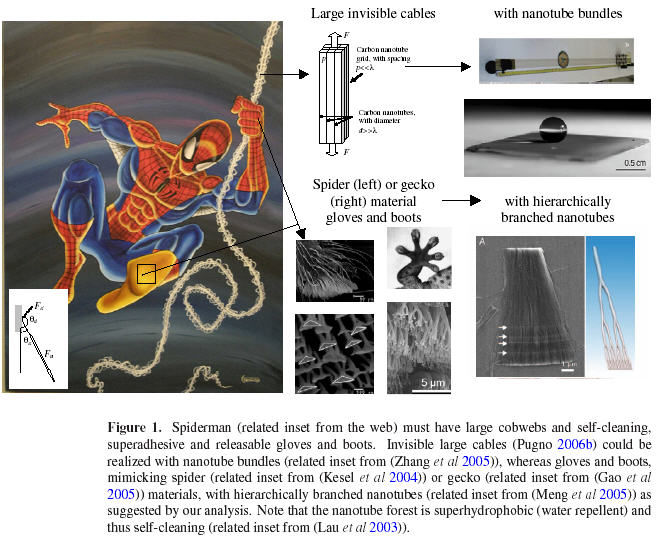
Physicists have found the formula for a Spiderman suit. Recent research determined that van der Waals forces, the weak attraction that molecules have for each other when they are brought very close together, are responsible for the amazing sticking power of geckos and spiders. It is the tiny hairs on spiders’ feet that attract to the molecules of surfaces, even glass, and keep them steady.

The historic collaboration between leading scientists and Evangelicals to protect the environment, spearheaded by the Center for Health and the Global Environment at Harvard Medical School (HMS) and the National Association of Evangelicals (NAE) continues this week with a trip to Alaska. A group of five scientists and five evangelical leaders began traveling together on August 25th to observe first- hand the dramatic effects of climate change on local people and on the land, ocean, plants, and wildlife of the nation’s northernmost state.

“The goal of our trip is to witness together what human-caused climate change is doing to our world,” said co-leader of the trip Eric Chivian, who shared the 1985 Nobel Peace Prize and is Director of the HMS Center.

One of the most distinctive characteristics of humans is probably one you don’t think of very often — the capacity to learn based merely on what someone tells you.

For instance, if we are told that our neighbors’ son has died his hair purple, we update our mental image of him to accommodate this newly acquired information.

What is unknown, however, is when we become capable of revising our mental representations of objects or situations based solely on what someone tells us.

It appears that chemical warfare has been around a lot longer than poison arrows, mustard gas or nerve weapons – about 100 million years, give or take a little.

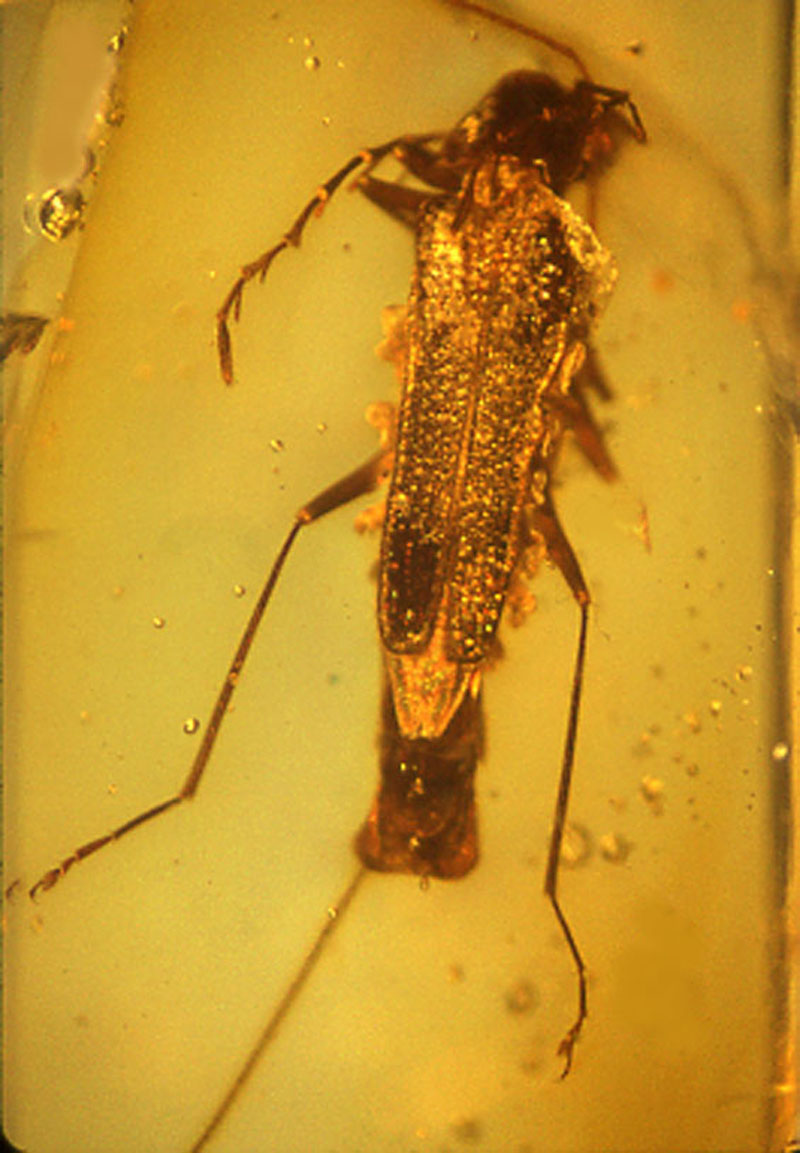
A new study by researchers at Oregon State University has identified a soldier beetle, preserved almost perfectly in amber, which was in the process of using chemical repellants to fight off an attacker when an oozing flow of sap preserved the struggle for eternity.

The discovery is the earliest fossil record of a chemical defense response, scientists say, and indicates that this type of protective mechanism – now common in the insect world and among other animal species – has been around for more than 100 million years.

The decreased use of cocaine in the United States over the last 20 years mostly occurred among the highly educated, while cocaine use among non-high school graduates remained constant, according to a study by researchers at the Johns Hopkins Bloomberg School of Public Health.

The study authors suspect that the inverse relationship between cocaine use and education is related to access to health warnings and resources. They also concluded that the emerging disparity highlights the need for improved interventions that target persistent cocaine users who are lower educated.

“Much like smoking, people with a better understanding of the impact cocaine has on health are more likely to modify their behavior,” said Valerie S.

Volcanoes sometimes get a bad rap for belching CO2 but today it turns out they're also responsible for the air we breathe.

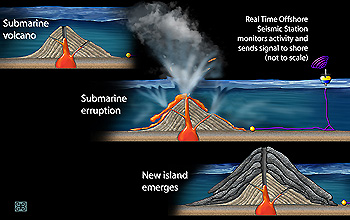
National Science Foundation-funded research published this week in the journal Nature indicates that billions of years ago, when the Earth was home largely to undersea volcanoes, a previously unknown agent was removing the gas.

The researchers suggest that mixture of gases and lavas produced by submarine volcanoes scrubbed oxygen from the atmosphere and bound it into oxygen-containing minerals.


An artist's cross-section of an underwater volcano and the processes that drive them. Submarine volcanoes can sometimes form islands. Credit: Zina Deretsky, National Science Foundation