
Banner
The Scorched Cherry Twig And Other Christmas Miracles Get A Science Look

Bleeding hosts and stigmatizations are the best-known medieval miracles but less known ones, like ...

$0.50 Pantoprazole For Stomach Bleeding In ICU Patients Could Save Families Thousands Of Dollars

The inexpensive medication pantoprazole prevents potentially serious stomach bleeding in critically...
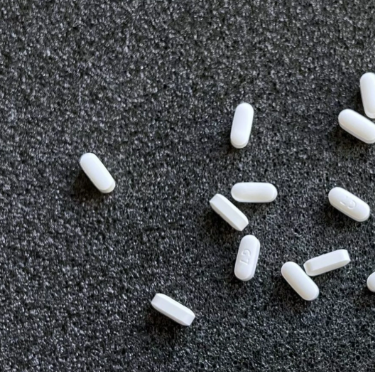
Metformin Diabetes Drug Used Off-Label Also Reduces Irregular Heartbeats

Adults with atrial fibrillation (AFib) who are not diabetic but are overweight and took the diabetes...

Your Predator: Badlands Future - Optical Camouflage, Now Made By Bacteria

In the various 'Predator' films, the alien hunter can see across various spectra while enabling...

User picture.
News StaffRSS Feed of this column.

News Releases From All Over The World, Right To You... Read More »

Blogroll

Following are five myths about girls and science, according to the National Science Foundation.

1. Myth: From the time they start school, most girls are less interested in science than boys are.

Reality: In elementary school about as many girls as boys have positive attitudes toward science. A recent study of fourth graders showed that 66 percent of girls and 68 percent of boys reported liking science. But something else starts happening in elementary school. By second grade, when students (both boys and girls) are asked to draw a scientist, most portray a white male in a lab coat. The drawings generally show an isolated person with a beaker or test tube. Any woman scientist they draw looks severe and not very happy.

It turns out boyfriends really do try harder than husbands, according to a new study from George Mason University.

The study of more than 17,000 people in 28 countries found that married men report doing less housework than men who are live-in boyfriends. Still no word on whether or not married men also get less sex. Not that correlation equals causation.

This study was recently published in the Journal of Family Issues by Shannon Davis and co-authors Theodore Greenstein and Jennifer Gerteisen Marks of North Carolina State University.

Genetic markers contain pieces of foreign DNA that allow researchers to know when the gene they inserted into a cell has produced the desired trait, like glowing when exposed to ultraviolet light. This is important because results are not easy to see.

Whitehead Institute for Biomedical Research postdoctoral researchers Alexander Meissner and Marius Wernig have demonstrated that it’s possible to convert specialized mouse skin cells into unspecialized stem cells and have identified successfully reprogrammed cells by looks alone.

Their findings bring human stem cell therapies a step closer to reality.

Einstein's general theory of relativity explained for us that the universe is elastic and gravity distorts space-time like we distort a couch when we sit on it. John Wheeler explained this perfectly when he wrote, "Matter tells space how to curve, and curved space tells matter how to move."

Now astronomers have seen Einstein’s predicted distortion of space-time around three neutron stars, and in doing so they have pioneered a groundbreaking technique for determining the properties of these ultradense objects. Neutron stars cram more than an entire Sun’s worth of material into a sphere the size of a city. A cup of neutron-star stuff would outweigh Mount Everest.

People who live to 100 or more are known to have just as many—and sometimes even more—harmful gene variants compared with younger people. Now, scientists at the Albert Einstein College of Medicine of Yeshiva University have discovered the secret behind this paradox: favorable “longevity” genes that protect very old people from the bad genes’ harmful effects. The novel method used by the researchers could lead to new drugs to protect against age-related diseases.

“We hypothesized that people living to 100 and beyond must be buffered by genes that interact with disease-causing genes to negate their effects,” says Dr.

Engineers at Purdue are working on technology that produces hydrogen by adding water to an alloy of aluminum and gallium. When water is added to the alloy, the aluminum splits water by attracting oxygen, liberating hydrogen in the process. The Purdue researchers are developing a method to create particles of the alloy that could be placed in a tank to react with water and produce hydrogen on demand.

The gallium is a critical component because it hinders the formation of an aluminum oxide skin normally created on aluminum's surface after bonding with oxygen, a process called oxidation. This skin usually acts as a barrier and prevents oxygen from reacting with aluminum.