Banner
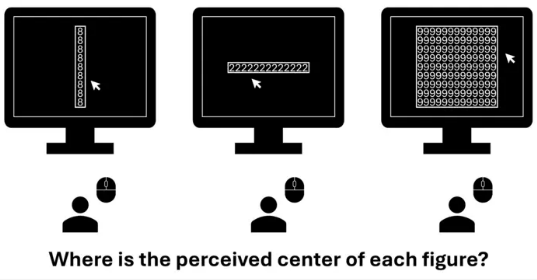
Object-Based Processing: Numbers Confuse How We Perceive Spaces

Researchers recently studied the relationship between numerical information in our vision, and...
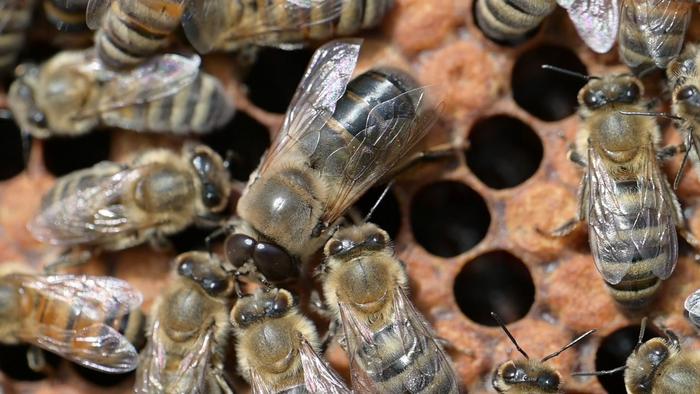
Males Are Genetically Wired To Beg Females For Food

Bees have the reputation of being incredibly organized and spending their days making sure our...

The Scorched Cherry Twig And Other Christmas Miracles Get A Science Look

Bleeding hosts and stigmatizations are the best-known medieval miracles but less known ones, like ...

$0.50 Pantoprazole For Stomach Bleeding In ICU Patients Could Save Families Thousands Of Dollars

The inexpensive medication pantoprazole prevents potentially serious stomach bleeding in critically...

User picture.
News StaffRSS Feed of this column.

News Releases From All Over The World, Right To You... Read More »

Blogroll

Aircraft engines are more efficient at higher temperatures, but this requires thermal treatment of engine components at very specific high temperatures in excess of 1300 °C. If the heat treatment temperature deviates too much from the optimal temperature, the treatment may be inadequate.

Thermocouples are calibrated using materials with known melting points (fixed points), but the available reference materials in the region of the very high temperatures required to treat jet engine components have a large uncertainty compared with the lower temperature fixed points.

Now measurement scientists at the National Physical Laboratory (NPL) have reduced the uncertainty of thermocouple temperature sensors at high temperatures to within a degree.

Scientists from the Desert Research Institute (DRI) and their collaborators have determined that Northern Hemisphere industrial pollution resulted in a seven-fold increase in black carbon (soot) in Arctic snow during the late 19th and early 20th centuries, according to new research into the impact of black carbon on Arctic climate forcing.

The study in the August 9th online edition of Science magazine was led by Drs. Joe McConnell and Ross Edwards – two ice core scientists from DRI – who used a new method for measuring soot in snow and ice to evaluate historical changes in soot concentrations using an ice core from the Greenland Ice Sheet.

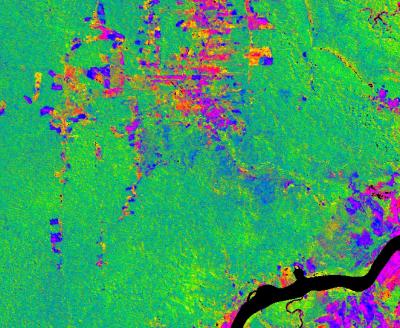
A new regional study shows that land-use policies in Peru have been key to tempering rain forest degradation and destruction in that country. Scientists at the Carnegie Institution’s Department of Global Ecology led an international effort to analyze seven years of high-resolution satellite data covering most (79%) of the Peruvian Amazon for their findings. The work is published in the August 9, 2007, on-line edition of Science Express.

The scientists found that the government’s program of designating specific regions for legal logging, combined with protection of other forests, and the establishment of territories for indigenous peoples helped keep large-scale rain forest damage in check between the years 1999 and 2005.

Modern communication technologies offer many new opportunities for reaching out to people. Can it also help patients with mental disorders?

Maybe. A group of investigators of the University of Heidelberg has published a controlled study on a new method of group therapy treatment based on internet chat in the July issue of Psychotherapy and Psychosomatics.

Following traditional impatient treatment, this study investigated the effectiveness of group therapy delivered through internet chat.

Is there a definitive test for mental illness? Not yet, but using advanced neuropsychiatric diagnostic tools including magnetic resonance imaging (MRI) and positron emission tomography (PET), mental health professionals at The Menninger Clinic in Houston are pinpointing the causes of behavioral and psychiatric problems in patients.

“Even though a patient may have a straightforward mental health diagnosis or diagnoses, the neuropsychiatric approach can help us rule out medical or neurological reasons for the patient’s symptoms before we settle on a psychiatric reason,” says Florence Kim, M.D., director of the Menninger Comprehensive Psychiatric Assessment Service.

Nectar-feeding bats burn sugar faster than any other mammal on Earth – and three times faster than even top-class athletes – ecologists have discovered. The findings, published in the British Ecological Society's journal Functional Ecology, illustrate that because they live life on an energetic knife edge, these bats are very vulnerable to any changes in their environment that interrupt their fuel supply for even a short period.

Working with a captive breeding colony in Germany, Dr Christian Voigt of the Leibniz Institute for Zoo and Wildlife Research in Berlin and Professor John Speakman of the University of Aberdeen fed long-tongued bats (Glossophaga soricina) sugar labelled with non-radioactive carbon-13 and then measured the amount of carbon-13 in the bats’ exhaled breath.