Banner
Object-Based Processing: Numbers Confuse How We Perceive Spaces

Researchers recently studied the relationship between numerical information in our vision, and...

Males Are Genetically Wired To Beg Females For Food

Bees have the reputation of being incredibly organized and spending their days making sure our...

The Scorched Cherry Twig And Other Christmas Miracles Get A Science Look

Bleeding hosts and stigmatizations are the best-known medieval miracles but less known ones, like ...
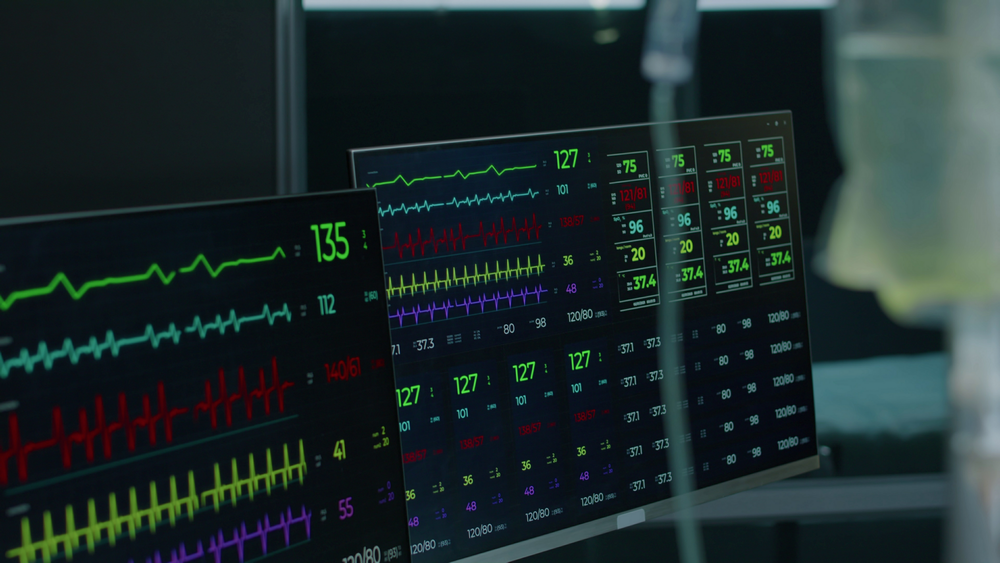
$0.50 Pantoprazole For Stomach Bleeding In ICU Patients Could Save Families Thousands Of Dollars

The inexpensive medication pantoprazole prevents potentially serious stomach bleeding in critically...

User picture.
News StaffRSS Feed of this column.

News Releases From All Over The World, Right To You... Read More »

Blogroll

Oregon Health & Science University research shows how calcium regulates the recharging of high-frequency auditory nerve cells after they've fired a burst of signals, and it may have implications for neurological disorders.

The study by scientists at OHSU's Vollum Institute and the University of Arkansas for Medical Sciences, which appears in the current issue of the journal Nature Neuroscience, shows that calcium ions play a greater role in keeping in check the brain's most powerful circuits, such as those used for processing sound signals, than previously thought.

A penalty kick places a goalkeeper at such a disadvantage that only approximately 18% of penalty kicks are saved. However, some soccer fans think goalkeepers might save penalty kicks more easily by standing marginally to the left or right.

It turns out they're right! In an article published in the March issue of Psychological Science, Professors Rich Masters, John van der Kamp and Robin Jackson of the Institute of Human Performance at the University of Hong Kong found that penalty takers are more likely to direct the football to the side with more space.

Archeologists from Yale and the University of Leicester have identified an ancient solar observatory at Chankillo, Peru as the oldest in the Americas with alignments covering the entire solar year, according to an article in the March 2 issue of Science.

Recorded accounts from the 16th century A.D. detail practices of state-regulated sun worship during Inca times, and related social and cosmological beliefs. These speak of towers being used to mark the rising or setting position of the sun at certain times in the year, but no trace of the towers has ever been found.

Scientists at the University of Illinois have conducted a genetic analysis of vespid wasps that revises the vespid family tree and challenges long-held views about how the wasps’ social behaviors evolved.

In the study, published in the Feb. 21 Proceedings of the National Academy of Sciences, the researchers found genetic evidence that eusociality (the reproductive specialization seen in some insects and other animals) evolved independently in two groups of vespid wasps.

These findings contradict an earlier model of vespid wasp evolution, which placed the groups together in a single lineage with a common ancestor.

Eusocial behavior is quite rare, and generally involves the breeding of different reproductive classes within a colony.

There is no clear benefit from a hormone commonly prescribed to enhance the effectiveness of infertility treatments, according to a new review of studies.

The steroid hormones called glucocorticoids have potent effects on the body’s inflammatory and immune responses, so many fertility specialists prescribe them in hopes of making the lining of the uterus more receptive to embryo implantation. But lead review author Carolien Boomsma says that routine practice should stop.

“This meta-analysis shows that empirical use of glucocorticoids is not supported by evidence from studies,” she said. “Moreover, we don’t know enough about the possible adverse effects of glucocorticoids in early pregnancy.

Researchers at the University of Illinois have found that a molecular pathway known to have a role in the progression of bone cancer in humans is also critical to the pathology of skeletal tumors in dogs and cats. Their work could lead to advances in the palliative care of companion animals afflicted with osteosarcoma.

The research team, which included U. of I. pathobiology professor Anne Barger, examined the homeostatic role of an enzyme, receptor activator of nuclear factor kappa-B (known as RANK), and two key modulators of its activity: RANK ligand (RANK-L) and osteoprotegrin (OPG). RANK is one of a family of receptors that regulates bone and immune homeostasis. In health, RANK, RANK-L and OPG together keep the continual process of bone growth and resorption in balance.