Banner
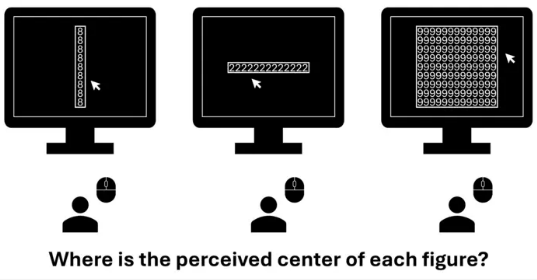
Object-Based Processing: Numbers Confuse How We Perceive Spaces

Researchers recently studied the relationship between numerical information in our vision, and...
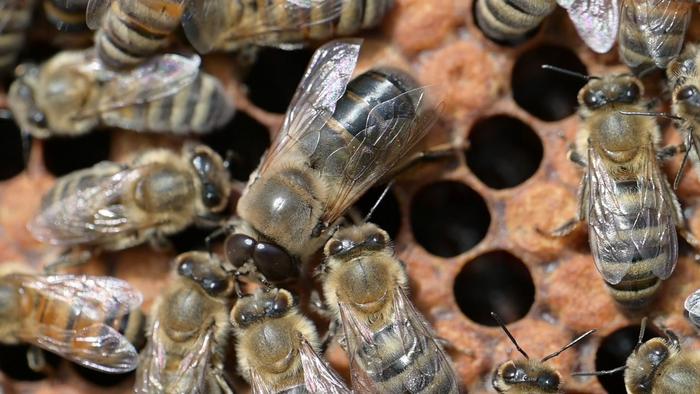
Males Are Genetically Wired To Beg Females For Food

Bees have the reputation of being incredibly organized and spending their days making sure our...

The Scorched Cherry Twig And Other Christmas Miracles Get A Science Look

Bleeding hosts and stigmatizations are the best-known medieval miracles but less known ones, like ...

$0.50 Pantoprazole For Stomach Bleeding In ICU Patients Could Save Families Thousands Of Dollars

The inexpensive medication pantoprazole prevents potentially serious stomach bleeding in critically...

User picture.
News StaffRSS Feed of this column.

News Releases From All Over The World, Right To You... Read More »

Blogroll

New research has examined the usefulness of bone marrow stem cells for treating male infertility, with promising results. The related report by Lue et al, “Fate of bone marrow stem cells transplanted into the testis: potential implication for men with testicular failure,” appears in the March issue of The American Journal of Pathology.

When a couple experiences infertility, the man is just as likely as the woman to be the cause. Male infertility may arise from failed proliferation and differentiation of the germ cells (precursors of sperm) or from dysfunction of the supporting cells. New research is looking to stem cells as a means of replacing nonfunctioning cells, whether germ cells or supporting cells.

Researchers, directed by Dr. Ronald S.

A new study from Joslin Diabetes Center may shed light on why some people can eat excessive amounts of food and not gain weight or develop type 2 diabetes, while others are more likely to develop obesity and this most common form of diabetes on any diet. The study, which used two strains of mice with differing tendencies to gain weight and develop diabetes on a high-fat diet, identified genetic and cellular mechanisms that may prevent certain mice on a calorie-dense diet from gaining weight and developing metabolic syndrome.

“Although this study was done with mice, it points out new mechanisms that may underlie the ability of genetically different mice -- and perhaps genetically different people -- to not gain much weight on high caloric diets,” said lead investigator C.

A wedge of sediment, pushed up by glacial movement, may be a buffer against moderate sea level rise, pointing to ocean temperature rise as the key factor in glacial retreat, according to two papers published today (March 1) in Science Express.

"Sediment beneath ice shelves helps stabilize ice sheets against retreat in response to rise in relative sea level of at least several meters," says Richard Alley, the Evan Pugh professor of geosciences, Penn State.

Carnegie Mellon University researchers say government officials need to adopt new ways of measuring and regulating the fine particles of smoke and soot so endemic to serious health problems and the global warming crisis.

In a March 2 article published in the journal Science, professors Allen L. Robinson and Neil M. Donahue report a new conceptual model for how microscopic particles behave in the atmosphere that raises new questions about current regulations.

The research found new chemical processes that occur after soot and gaseous pollutants are emitted from cars and trucks, changing the chemical and physical properties of the soot particles and creating new particulate matter.

In the March 2007 issue of BioScience, an international team of 19 researchers calls for better forecasting of the effects of global warming on extinction rates. The researchers, led by Daniel B. Botkin, note that although current mathematical models indicate that many species could be at risk from global warming, surprisingly few species became extinct during the past 2.5 million years, a period encompassing several ice ages. They suggest that this "Quaternary conundrum" arises because the models fail to take adequate account of the mechanisms by which species persist in adverse conditions.

A 17-year University of Utah study of ground movements shows that the power of the huge volcanic hotspot beneath Yellowstone National Park is much greater than previously thought during times when the giant volcano is slumbering.


Wyoming's Teton Range looms behind a Global Positioning System (GPS) antenna in Jackson Hole that was part of a 17-year University of Utah study in which GPS devices were used to measure gradual movements of Earth's crust in Grand Teton National Park, Yellowstone National Park and surrounding areas.