Banner
Males Are Genetically Wired To Beg Females For Food

Bees have the reputation of being incredibly organized and spending their days making sure our...

The Scorched Cherry Twig And Other Christmas Miracles Get A Science Look

Bleeding hosts and stigmatizations are the best-known medieval miracles but less known ones, like ...
$0.50 Pantoprazole For Stomach Bleeding In ICU Patients Could Save Families Thousands Of Dollars

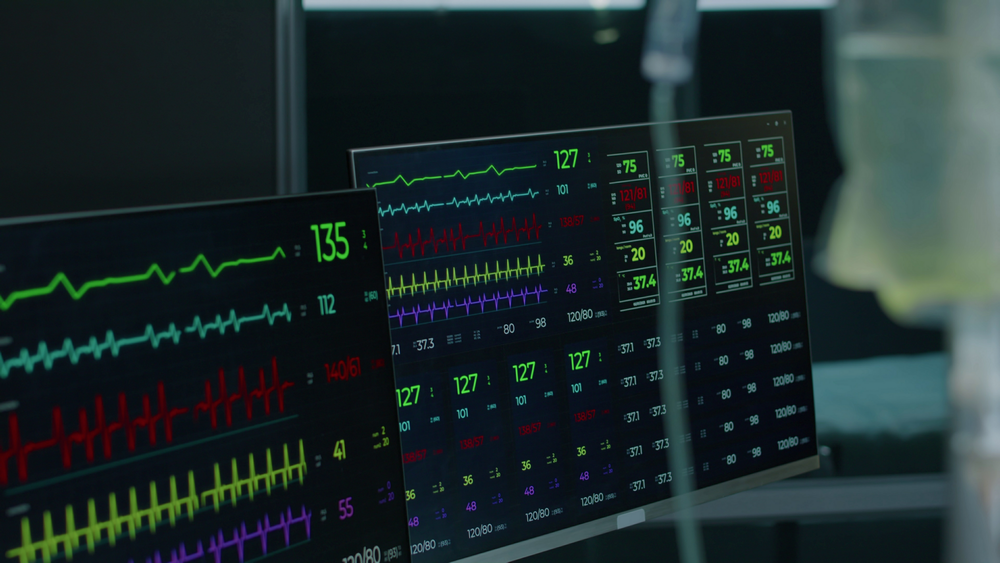
The inexpensive medication pantoprazole prevents potentially serious stomach bleeding in critically...
Metformin Diabetes Drug Used Off-Label Also Reduces Irregular Heartbeats

Adults with atrial fibrillation (AFib) who are not diabetic but are overweight and took the diabetes...

User picture.
News StaffRSS Feed of this column.

News Releases From All Over The World, Right To You... Read More »

Blogroll

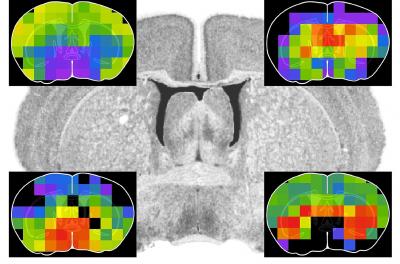
The Allen Brain Atlas, a genome-wide map of the mouse brain on the Internet, has been hailed as “Google of the brain.” The atlas now has a companion or the brain’s working molecules, a sort of pop-up book of the proteins, or proteome map, that those genes express.

The protein map is “the first to apply quantitative proteomics to imaging,” said Richard D. Smith, Battelle Fellow at the Department of Energy’s Pacific Northwest National Laboratory, who led the mapping effort with Desmond Smith of UCLA’s David Geffen School of Medicine.


Caption: Abundance profiles of four different proteins compiled from 1 millimeter cubes (voxels) in a mouse brain.

Stem cell technique helps women grow their own implants

Daily Mail - Women have grown their own breast implants through pioneering stem cell treatment, it emerged yesterday. Scientists harvested the stem cells from the women's own fat and encouraged them to form breast tissue...

Global-warming skeptics cite being 'treated like a pariah'

There's science in love, you know, and that means there's science in Valentine's Day. Science on Valentine's Day is like cold fusion instead of ethanol. Completely wonderful. And we have it all right here.

Not sure who to date? Garth Sundem answers it in The Valentine's Day Man-O-Meter. Be sure to take it as gospel because he never just makes stuff up.
There's science in love, you know, and that means there's science in Valentine's Day. Science on Valentine's Day is like cold fusion instead of ethanol. Completely wonderful. And we have it all right here.

VK Raina, leading glaciologist and former ADG of the Geological Society of India, told the Hindustan Times that out of 9,575 glaciers in India, till date, research has been conducted only on about 50. Nearly 200 years data has shown that nothing abnormal has occurred in any of these glaciers.

It is simple. The issue of glacial retreat is being sensationalised by a few individuals, the septuagenarian Raina claimed.

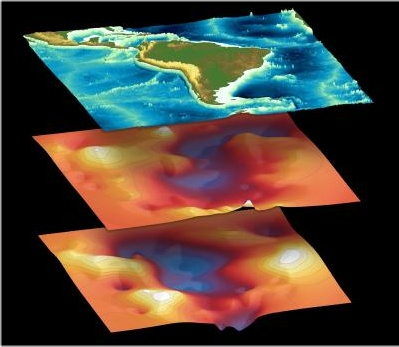
New research challenges traditional perceptions of contemporary climate as sole determiner of richness of species.

The climate is changing! But how does that affect nature? New research challenges traditional perceptions of contemporary climate as sole determiner of richness of species.

An international research team led by Professor Carsten Rahbek from Department of Biology, University of Copenhagen, questions traditional beliefs that contemporary climate alone determines richness of species, that is, how life is distributed on earth. The current issue of Science magazine highlights the research in Editor’s choice.

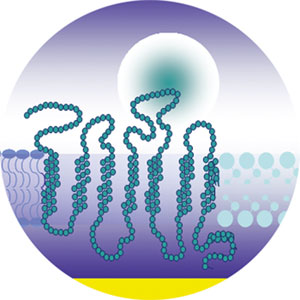
An artificial nose could be a real benefit at times: this kind of biosensor could sniff out poisons, explosives or drugs, for instance. Researchers at the Max Planck Institute for Polymer Research and the Max Planck Institute of Biochemistry recently revealed a technique for integrating membrane proteins into artificial structures.

Membrane proteins have several important functions in the cell, one of which is to act as receptors, passing on signals from molecules in the air, for example, to the cell interior. They are thus ideal biosensors, but until now were difficult to access in the lab.