Banner
Pilot Study: Fibromyalgia Fatigue Improved By TENS Therapy

Fibromyalgia is the term for a poorly-understood condition where people experience pain and fatigue...

High Meat Consumption Linked To Lower Dementia Risk

Older people who eat large amounts of meat have a lower risk of dementia and cognitive decline...

Long Before The Inca Colonized Peru, Natives Had A Thriving Trade Network

A new DNA analysis reveals that long before the Incan Empire took over Peru, animals were...

Mesolithic People Had Meals With More Tradition Than You Thought

The common imagery of prehistoric people is either rooting through dirt for grubs and picking berries...

User picture.
News StaffRSS Feed of this column.

News Releases From All Over The World, Right To You... Read More »

Blogroll

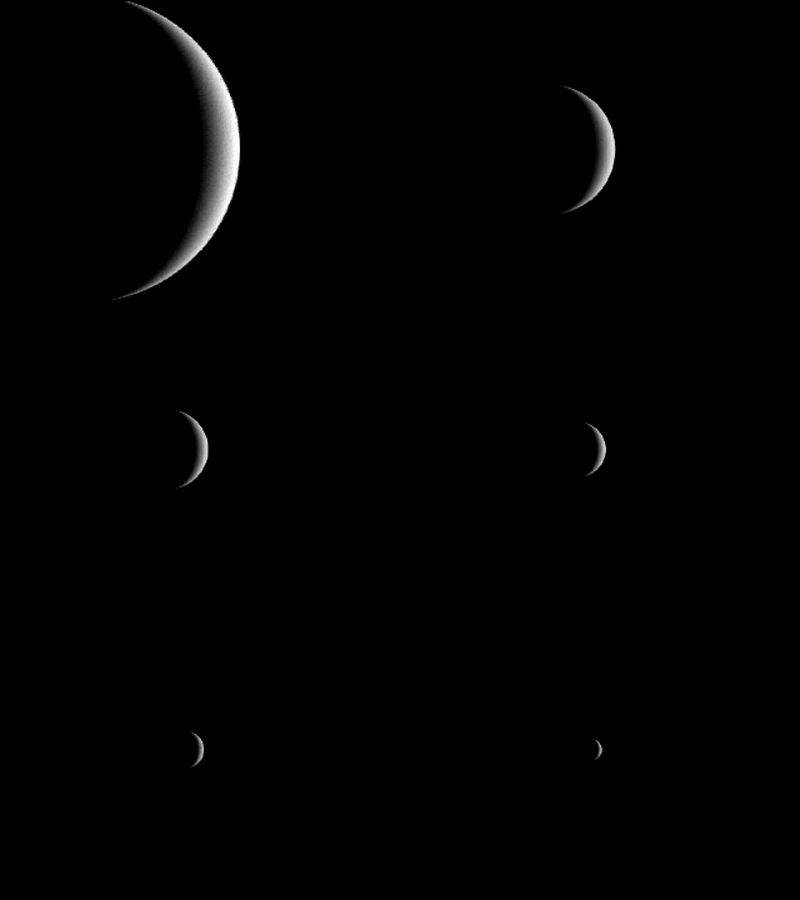
ESA’s Venus Express and NASA’s MESSENGER looked at Venus in tandem for a few hours in June. Here is the first set of images.

The orbital geometry of Venus Express when MESSENGER skimmed past Venus on 5 June meant that the two spacecraft were not at the same location (with respect to the surface of the planet) at the exact same time. So how could they make true joint observations of the same regions and phenomena? Scientists came up with a highly creative solution.


Bye-bye Venus. As NASA’s MESSENGER departed from planet Venus on 5 June 2007 to continue its journey towards Mercury, its Wide Angle Camera captured a sequence of 50 images (480-nm wavelength filter) showing the planet disappearing in the distance.

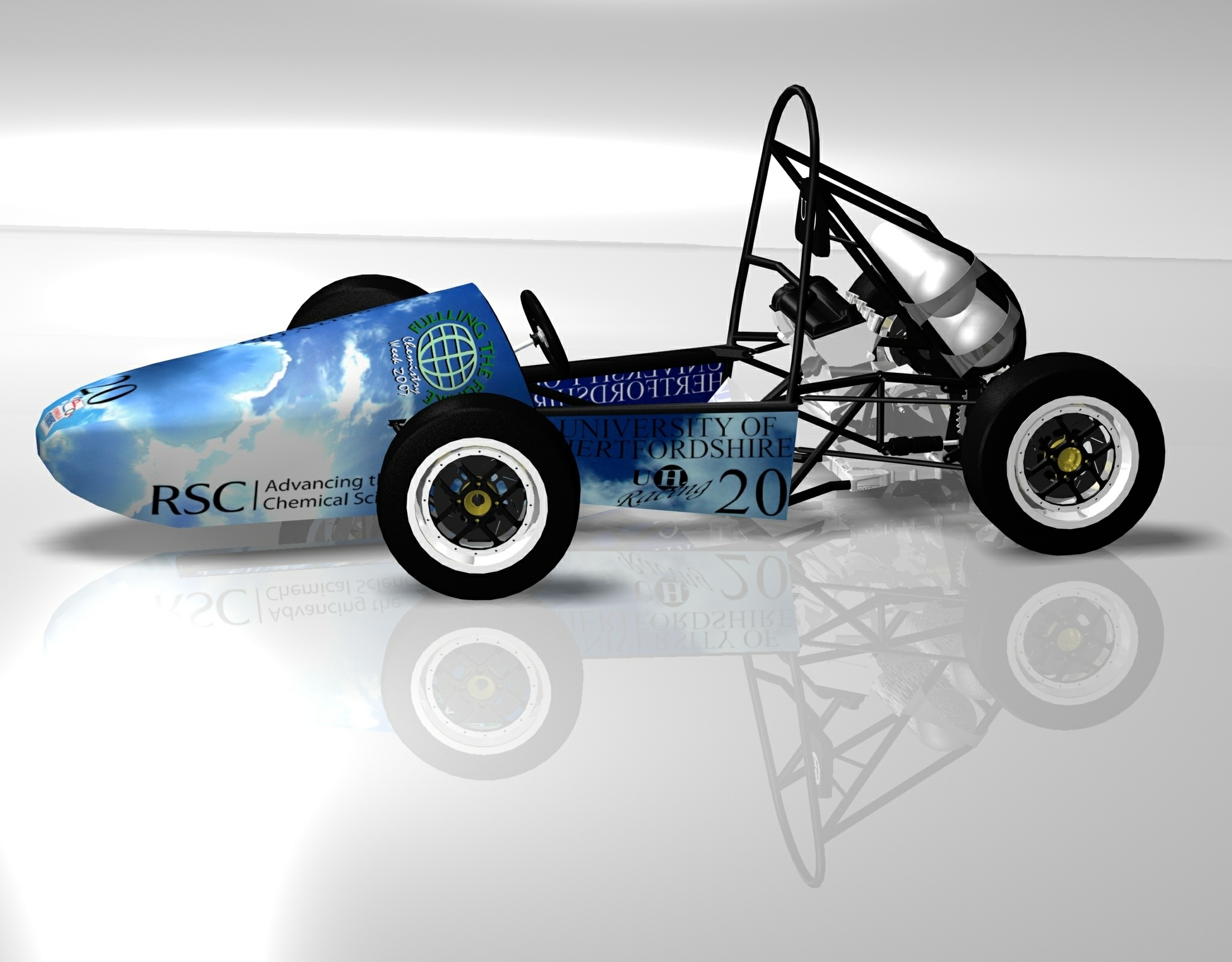
Engineers at the University of Hertfordshire have developed the first hydrogen-powered racing car which they will race this weekend.

A £5,000 grant from the Royal Society of Chemistry has made it possible for John Goddard and James Waters, two PhD students in the University’s new Sustainable Energy Technologies Centre to convert a Formula Student racing car into a hydrogen-powered vehicle.

This is the first time that a hydrogen-powered racing car has been developed anywhere in the world.

Opinions people have about innovations are influenced by the context in which they form their opinion. For example, opinions about a novel energy source like biomass are influenced by thoughts regarding other energy sources.

The less knowledge, interest or time people have, the stronger this effect. Sustainable energy options must therefore be promoted in the right context says Dutch researcher Wouter van den Hoogen.

People frequently form opinions about new technologies, such as novel energy options, despite having a very limited knowledge of the subject concerned. The subject is often complex and people are either not particularly interested or have limited time.

Researchers across the world have been trying to answer the question of how RNAi works for many years. A research group headed by Prof. Renée Schroeder (MFPL) and Dr. Javier Martinez (IMBA) based at the Campus Vienna Biocenter says they have come closer to finding an answer.

RNA interference (RNAi) is a natural cellular defence and regulation mechanism which works by eliminating unwanted RNA molecules. Its potential for use in therapy was officially recognised last year with the presentation of the Nobel Prize in Physiology or Medicine. The first treatments to be based on this mechanism are currently undergoing clinical testing.

Our bodies, and the biological brilliance built in, are able to move with elegance and efficiency using a combination of appropriate biomechanics, neuronal control, and adaptivity.

Simulating that with technology has so far eluded technological advances because of the motor coordination of complex multi-joint movements and the complicated nature of their dynamics.

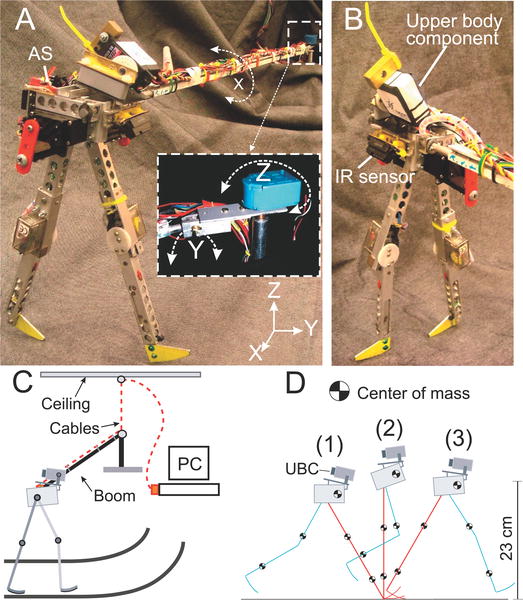
Yet now scientists at the University of Göttingen have simulated the neuronal principles that form the dynamics of human walking in a robot.

"RunBot", as it is called, lives up to its name – it holds the world record in speed walking for dynamic machines. Now its inventors have expanded its repertoire. With an infrared eye it can detect a slope on its path and adjust its gait on the spot.

Scientists say that using data from the Mars Express mission and numerical models they can determine how the orbit of Mars around the Sun accounts for the origin and perennial occurrence of water ice at the Martian South Pole.

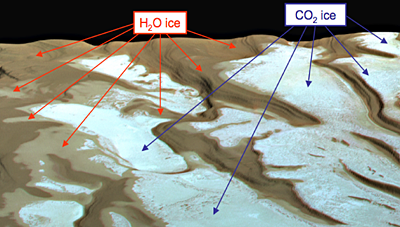
The OMEGA instrument on board Mars Express had already found previously undetected perennial deposits of water-ice sitting on top of million-year old layered terrains and those provided strong evidence for recent glacial activity.


The OMEGA instrument on board ESA’s Mars Express has characterised the types of ice deposits present in the South polar cap of Mars as the arrows, superimposed on an image taken by the HRSC instrument, indica