Banner
Pilot Study: Fibromyalgia Fatigue Improved By TENS Therapy

Fibromyalgia is the term for a poorly-understood condition where people experience pain and fatigue...

High Meat Consumption Linked To Lower Dementia Risk

Older people who eat large amounts of meat have a lower risk of dementia and cognitive decline...

Long Before The Inca Colonized Peru, Natives Had A Thriving Trade Network

A new DNA analysis reveals that long before the Incan Empire took over Peru, animals were...

Mesolithic People Had Meals With More Tradition Than You Thought

The common imagery of prehistoric people is either rooting through dirt for grubs and picking berries...

User picture.
News StaffRSS Feed of this column.

News Releases From All Over The World, Right To You... Read More »

Blogroll

Hunting for traces of life on Mars calls for two radically different strategies, says Arizona State University professor Jack Farmer. Of the two, he says, with today’s exploration technology we can most easily look for evidence for past life, preserved as fossil "biosignatures" in old rocks.

Farmer is a professor of geological sciences in ASU’s School of Earth and Space Exploration, where he heads the astrobiology program. He is reporting on his work today (Feb. 16) at the annual meeting of the American Association for the Advancement of Science in San Francisco.

"Searching for extraterrestrial life must follow two alternative pathways, each requiring a different approach and tools," Farmer says. "If we're looking for living organisms, we are doing exobiology.

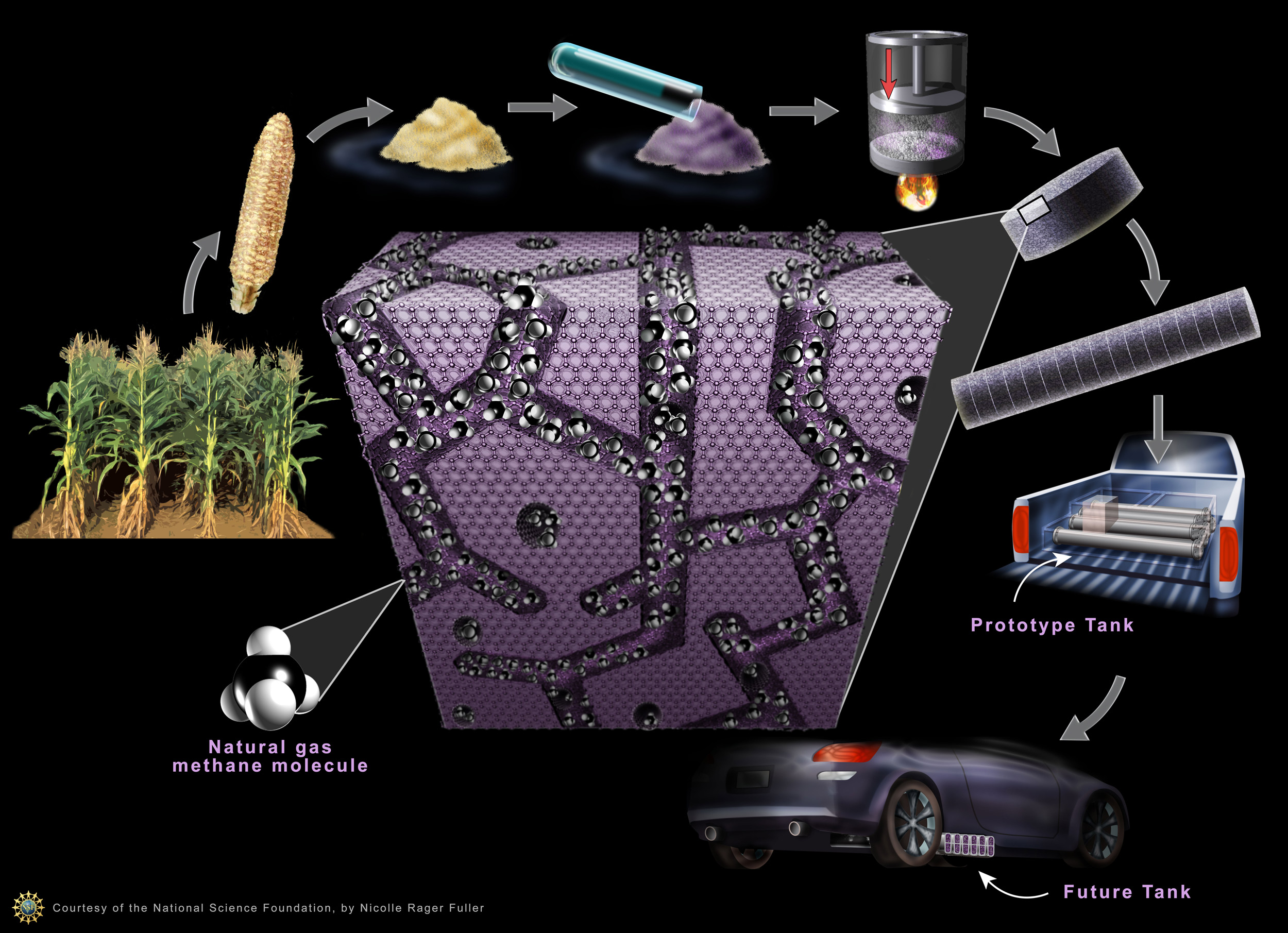
Using corncob waste as a starting material, researchers have created carbon briquettes with complex nanopores capable of storing natural gas at an unprecedented density of 180 times their own volume and at one seventh the pressure of conventional natural gas tanks.

The breakthrough, announced today in Kansas City, Mo., is a significant step forward in the nationwide effort to fit more automobiles to run on methane, an abundant fuel that is domestically produced and cleaner burning than gasoline.


Researchers at the University of Missouri-Columbia and the Midwest Research Institute in Kansas City have developed a method to convert corncob waste into a carbon "sponge" with nanoscale pores.

Just a little mechanical strain can cause a large drop in the maximum current carried by high-temperature superconductors, according to novel measurements carried out by the National Institute of Standards and Technology (NIST). The effect, which is reversible, adds a new dimension to designing superconducting systems—particularly for electric power applications—and it also provides a new tool that will help scientists probe the fundamental mechanism behind why these materials carry current with no resistance.


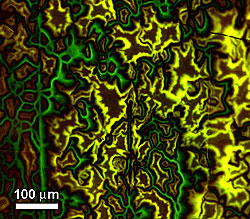
Magneto-optical image of magnetic fields within a YBCO superconductor showing electrically connected grains (yellow) and grain boundaries (green) that form barriers to superconducting currents.

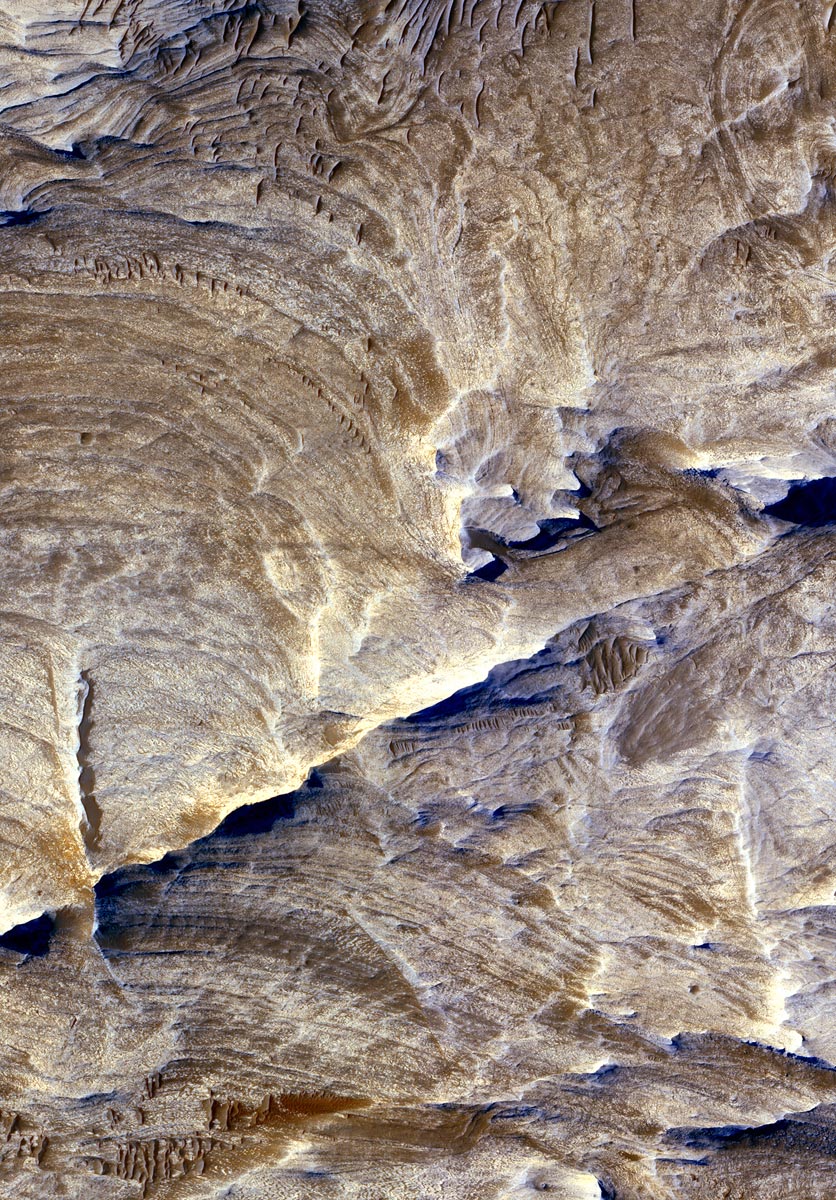
Liquid or gas flowed through cracks penetrating underground rock on ancient Mars, according to a report based on some of the first observations by NASA's Mars Reconnaissance Orbiter. These fluids may have produced conditions to support possible habitats for microbial life.

These ancient patterns were revealed when the most powerful telescopic camera ever sent to Mars began examining the planet last year. The camera showed features as small as approximately 3 feet (one meter) across. Mineralization took place deep underground, along faults and fractures.

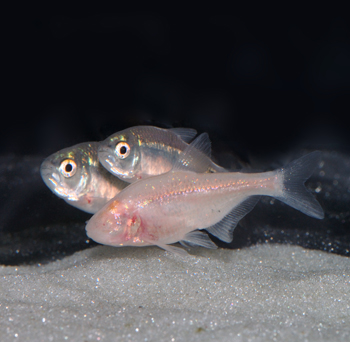
“Regressive evolution,” or the reduction of traits over time, is the result of either natural selection or genetic drift, according to a study on cavefish by researchers at New York University’s Department of Biology, the University of California at Berkeley’s Department of Integrative Biology, and the Harvard Medical School. Previously, scientists could not determine which forces contributed to regressive evolution in cave-adapted species, and many doubt the role of natural selection in this process.

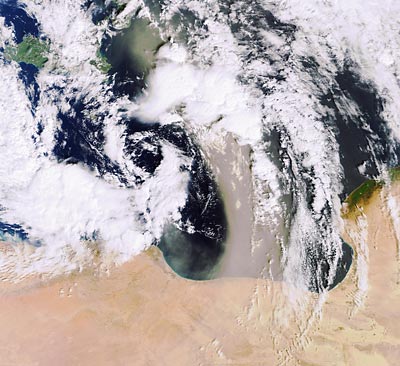
A strong wind blows sand and dust across the Mediterranean Sea from the Libyan Desert, located in the northeast section of the Sahara Desert, to Sicily and the southern tip of the Italian Peninsula on 10 February 2007 in this Envisat image.

Sandstorms are usually the result of atmospheric convection currents, which form when warm, lighter air rises and cold, heavier air sinks. The cold air in this image is visible stretching from the top left side of the image down to the centre and swirling back towards the north just above Libya (represented by the blue arrow in the image below), while the warm air current is seen blowing sand from south to north (represented by the red arrow).