Banner
The Scorched Cherry Twig And Other Christmas Miracles Get A Science Look

Bleeding hosts and stigmatizations are the best-known medieval miracles but less known ones, like ...

$0.50 Pantoprazole For Stomach Bleeding In ICU Patients Could Save Families Thousands Of Dollars

The inexpensive medication pantoprazole prevents potentially serious stomach bleeding in critically...
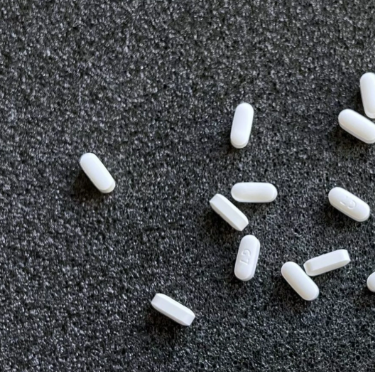
Metformin Diabetes Drug Used Off-Label Also Reduces Irregular Heartbeats

Adults with atrial fibrillation (AFib) who are not diabetic but are overweight and took the diabetes...

Your Predator: Badlands Future - Optical Camouflage, Now Made By Bacteria

In the various 'Predator' films, the alien hunter can see across various spectra while enabling...

User picture.
News StaffRSS Feed of this column.

News Releases From All Over The World, Right To You... Read More »

Blogroll
Scientists sometimes regret when the terms they use in a scientific way get a colloquial meaning.   In physics, Peter Higgs has to like his name recognition but might edit out references to a 'God particle' if he had it to do over again, and in biology a week doesn't go by that biologists won't complain that people misunderstand the term 'junk DNA.'

Well, 'junk' had a meaning before biology and everyone knew it - junk DNA in biology isn't garbage yet it dominates the genome and seems to lack specific functions. Why nature would force the genome to carry so much excess baggage is a puzzle still unsolved.
Cambridge University researchers have discovered that whether someone is a 'people-person' may depend on the structure of their brain: the greater the concentration of brain tissue in certain parts of the brain, the more likely they are to be a warm, sentimental person.   Interestingly, the orbitofrontal cortex and ventral striatum have previously been shown to be important for the brain's processing of much simpler rewards like sweet tastes or sexual stimuli. 
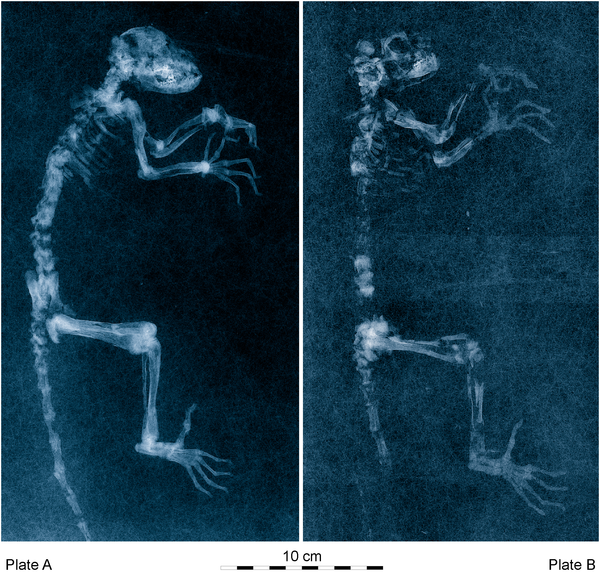
It's always best not to go overboard but the discovery of Darwinius masillae is pretty darn exciting, because it represents the most complete fossil primate ever found;  the skeleton, soft body outline and even the stomach contents.   It is phylogenetically terrific. Or not.  In any new claim like this, there will be doubts.
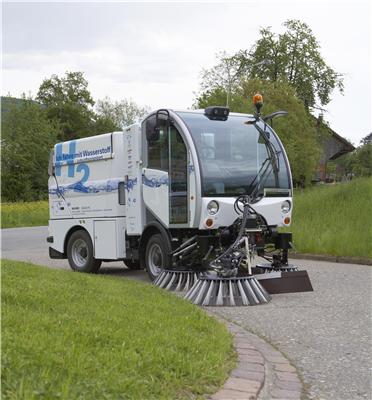
Empa and the Paul Scherrer Institute (PSI) have, together with Bucher Schoerling, Proton Motor, BRUSA Elektronik AG und Messer Schweiz, developed a hydrogen powered municipal street cleaning vehicle which was presented to the public last week in Basel. The vehicle is named the "Bucher CityCat H2"  and is the first municipal utility vehicle in the world powered by fuel cell technology.   For the next 18 months it will be tested in everyday usage.
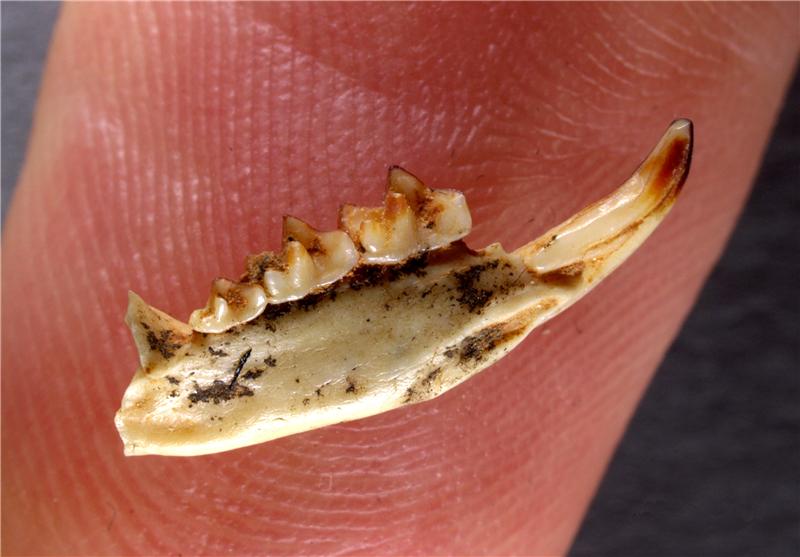
Morphometric and phylogenetic analyses of the fossilised remains of the jaws and teeth of a shrew discovered in a deposit in Gran Dolina de Atapuerca, in Burgos, a city of northern Spain at the edge of the central plateau, have shown this to be a new species (Dolinasorex glyphodon) that has not previously been described. The extinct animal had red teeth, was large in size compared with mammals of the same family, and was more closely related to Asian than European shrews.
Neanderthals/neandertals, popularly regarded as the 'stupid' cousins of modern humans, were actually capable of capturing the most impressive animals - and that takes some sense.   Dutch researcher Gerrit Dusseldorp analyzed their daily forays for food to gain insights into the complex behavior of the Neanderthal. His analysis revealed that the hunting was very knowledge intensive.