Banner
The Scorched Cherry Twig And Other Christmas Miracles Get A Science Look

Bleeding hosts and stigmatizations are the best-known medieval miracles but less known ones, like ...
$0.50 Pantoprazole For Stomach Bleeding In ICU Patients Could Save Families Thousands Of Dollars

The inexpensive medication pantoprazole prevents potentially serious stomach bleeding in critically...
Metformin Diabetes Drug Used Off-Label Also Reduces Irregular Heartbeats

Adults with atrial fibrillation (AFib) who are not diabetic but are overweight and took the diabetes...

Your Predator: Badlands Future - Optical Camouflage, Now Made By Bacteria

In the various 'Predator' films, the alien hunter can see across various spectra while enabling...

User picture.
News StaffRSS Feed of this column.

News Releases From All Over The World, Right To You... Read More »

Blogroll
A new study using advanced cardiac imaging technology indicates that cardiac abnormalities experienced by some marathon runners following competition are temporary, and do not result in damage to the heart muscle. The study, conducted by researchers at the University of Manitoba, marked the first use of cardiac magnetic resonance imaging, or CMR, in a post-marathon setting.
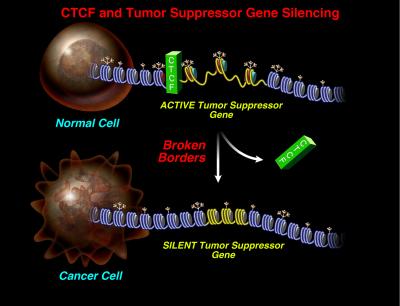
Our genome is a patchwork of neighborhoods that couldn't be more different: Some areas are hustling and bustling with gene activity, while others are sparsely populated and in perpetual lock-down. Breaking down just a few of the molecular fences that separate them blurs the lines and leads to the inactivation of at least two tumor suppressor genes, according to researchers at the Salk Institute for Biological Studies. 

Their findings published in the May 15, 2009 issue of Molecular Cell explain how a single event can put a cell well ahead on the road to becoming a tumor cell.
According to a Time magazine article, “The Male Minority,” women make up almost 60 percent of undergraduate students nationwide.   Science, technology and math are one of the few areas where men have superior numbers but the women are winning there too.

The Spelman College robotics team, SpelBots, tied for first place in the RoboCup Japan 2009 Standard Platform League Nao League humanoid soccer championship on May 10, 2009, in Osaka, Japan.

In today's connected world, networking know-how can be a key resource in finding jobs and business opportunities, but a series of new studies by Dr. Yuval Kalish of the Leon Recanati Graduate School of Business Administration at Tel Aviv University suggests that, in some cases, networking can do more harm than good.

"If you're at the intersection of two previously unconnected niches of a network, you're occupying what I call a 'structural hole,'" says Dr. Kalish. Filling that space can lead to prestige, opportunities and power ― or it may have quite the opposite effect.

When bees collect nectar, how do they hold onto the flower? Cambridge University scientists have shown that it is down to small cone-shaped cells on the petals that act like 'velcro' on the bees' feet. 

New research, published online in today's Current Biology, shows that bumblebees can recognise the texture of petal surfaces by touch alone. More importantly, they choose to land on petals with conical cells that make it easier to grip, rather than on flat, smooth surfaces. With this extra grip, they can extract nectar from the flower more efficiently. 
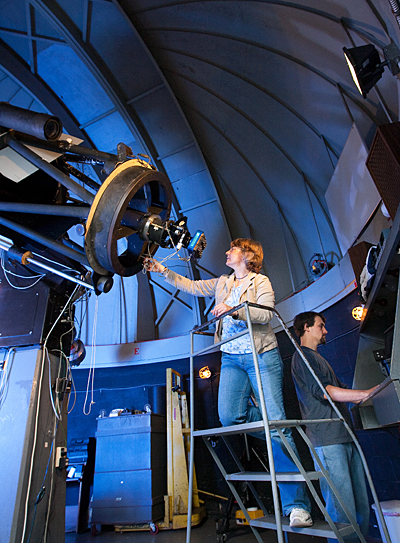
The Whole Earth Telescope (WET), a worldwide network of observatories coordinated by the University of Delaware, is synchronizing its lenses to provide round-the-clock coverage of a cooling star. As the star dims in the twilight of its life, scientists hope it will shed light on the workings of our own planet and other mysteries of the galaxy.

The dying star, a white dwarf identified as WDJ1524-0030, located in the constellation Ophiuchus in the southern sky, is losing its brightness as it cools, its nuclear fuel spent. It will be monitored continuously from May 15 to June 11 by WET, a global partnership of telescopes which was formed in 1986.