Banner
Males Are Genetically Wired To Beg Females For Food

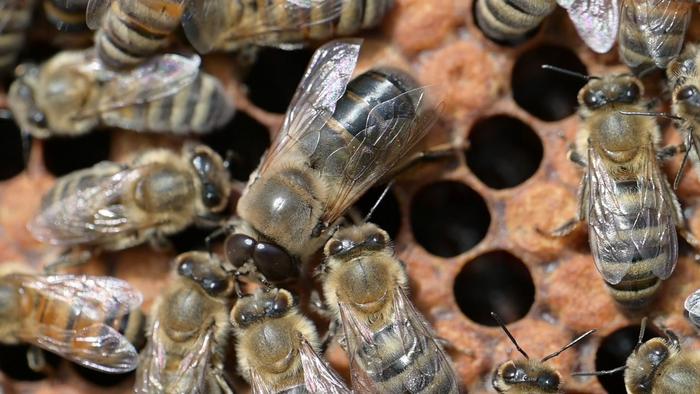
Bees have the reputation of being incredibly organized and spending their days making sure our...

The Scorched Cherry Twig And Other Christmas Miracles Get A Science Look

Bleeding hosts and stigmatizations are the best-known medieval miracles but less known ones, like ...

$0.50 Pantoprazole For Stomach Bleeding In ICU Patients Could Save Families Thousands Of Dollars

The inexpensive medication pantoprazole prevents potentially serious stomach bleeding in critically...

Metformin Diabetes Drug Used Off-Label Also Reduces Irregular Heartbeats

Adults with atrial fibrillation (AFib) who are not diabetic but are overweight and took the diabetes...

User picture.
News StaffRSS Feed of this column.

News Releases From All Over The World, Right To You... Read More »

Blogroll

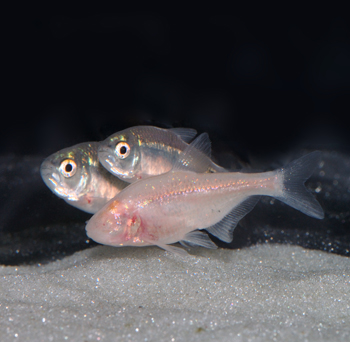
“Regressive evolution,” or the reduction of traits over time, is the result of either natural selection or genetic drift, according to a study on cavefish by researchers at New York University’s Department of Biology, the University of California at Berkeley’s Department of Integrative Biology, and the Harvard Medical School. Previously, scientists could not determine which forces contributed to regressive evolution in cave-adapted species, and many doubt the role of natural selection in this process.

A strong wind blows sand and dust across the Mediterranean Sea from the Libyan Desert, located in the northeast section of the Sahara Desert, to Sicily and the southern tip of the Italian Peninsula on 10 February 2007 in this Envisat image.

Sandstorms are usually the result of atmospheric convection currents, which form when warm, lighter air rises and cold, heavier air sinks. The cold air in this image is visible stretching from the top left side of the image down to the centre and swirling back towards the north just above Libya (represented by the blue arrow in the image below), while the warm air current is seen blowing sand from south to north (represented by the red arrow).

Imagine a cancer treatment tailored to the cells in a patient’s body, each person receiving a unique treatment program.

This is what Natural Sciences and Engineering Research Council grantee Thomas Ruth and his colleagues hope to accomplish within the next decade. Using the TRIUMF particle accelerator based in Vancouver, British Columbia, they are taking vast amounts of radioactive material and separating the particular atoms they need for therapy.

Ruth says radioisotope therapy is the next big frontier in health care because different types of chemicals can be selected for tailor-made treatment programs. This is because radioactive chemicals such as radioiodine decay in a predictable way and emit radiation while that is happening.

Scientific studies of why foods such as Brussels sprouts and stout beer are horribly bitter-tasting to some people but palatable to others are shedding light on a number of questions, from the mechanisms of natural selection to understanding how our genes affect our dietary habits.

Dr. Stephen Wooding, a population geneticist at UT Southwestern Medical Center in Dallas, studies how slight variations in genes give rise to variations in traits among a given human population.

Part of Dr. Wooding's research focuses on variations in the genes responsible for bitter-taste receptors, tiny receptacles on the tongue that intercept harsh-tasting chemicals from food.

Industrial agriculture faces painful challenges: the end of cheap energy, depleted water resources, impaired ecosystem services, and unstable climates. Scientists searching for alternatives to the highly specialized, energy intensive industrial system might profitably look to the biological synergies inherent in multi-species systems, according to an article in the March-April 2007 issue of Agronomy Journal. The paper's author, Fred Kirschenmann, Distinguished Fellow for Leopold Center for Sustainable Agriculture, Iowa State University, states that industrial agriculture assumes:


From roundworm to human, most cells in an animal’s body ultimately come from stem cells. When one of these versatile, unspecialized cells divides, the resulting “daughter” cell receives instructions to differentiate into a specific cell type. In some cases this signal comes from other cells. But now, for the first time, researchers at the Carnegie Institution’s Department of Embryology have found a type of stem cell that directly determines the fate of its daughters.


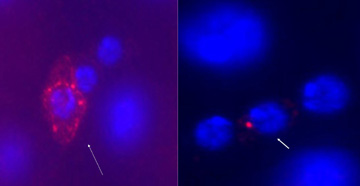
Intestinal stem cells (ISCs) in the gut of the fruit fly, Drosophila melanogaster, directly determine the fate of their daughter cells. The signaling protein called Delta, seen here in red, determines what type of cell the ISCs will produce.