Banner
The Scorched Cherry Twig And Other Christmas Miracles Get A Science Look

Bleeding hosts and stigmatizations are the best-known medieval miracles but less known ones, like ...
$0.50 Pantoprazole For Stomach Bleeding In ICU Patients Could Save Families Thousands Of Dollars

The inexpensive medication pantoprazole prevents potentially serious stomach bleeding in critically...

Metformin Diabetes Drug Used Off-Label Also Reduces Irregular Heartbeats

Adults with atrial fibrillation (AFib) who are not diabetic but are overweight and took the diabetes...

Your Predator: Badlands Future - Optical Camouflage, Now Made By Bacteria

In the various 'Predator' films, the alien hunter can see across various spectra while enabling...

User picture.
News StaffRSS Feed of this column.

News Releases From All Over The World, Right To You... Read More »

Blogroll

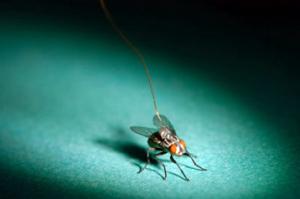
When they fly, insects use their vision for piloting, just like human pilots. The electric signals from their facetted eyes travel through specialized neurons to stimulate the wing muscles, which let the insects correct their flight and avoid crashes. Could these same neurons be used in a sort of "automatic pilot"?

This is what Nicolas Franceschini, Franck Ruffier and Julien Serres have just shown. These biorobotics specialists from the Movement and Perception Laboratory (CNRS/Université de la Méditerranée) in Marseille, France have revealed an automatic mechanism called the "optic flow regulator" that controls the lift force.

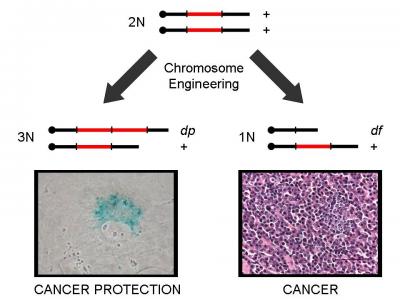
A decades-old cancer mystery has been solved by researchers at Cold Spring Harbor Laboratory (CSHL). "We not only found a critical tumor suppressor gene, but have revealed a master switch for a tumor suppressive network that means more targeted and effective cancer therapy in the future," said CSHL Associate Professor Alea Mills, Ph.D. The study, headed by Mills, was published in the February issue of Cell.

Specifically, Mills' discovery identifies CHD5, a protein that prevents cancer, as a novel tumor suppressor, mapping to a specific portion of chromosome 1 known as 1p36. When CHD5 is not doing its job, the machinery within our cells that normally prevents cancer is switched off.

A Michigan scientist who was put on academic trial for teaching evolution at Calvin College in the 1980s is emerging as a national figure in the cultural war over faith and science.

On Wednesday, Dr. Howard Van Till was one of four scholars from across the country who debated faith and evolution at a conference at Grove City College, a Christian liberal arts school near Pittsburgh.

And Sunday, he will lecture at Kirk in the Hills Presbyterian Church in Bloomfield Hills.

"This is such an important issue for Americans," said John Cook, a lawyer from West Bloomfield who plans to attend Van Till's talk.

Insects and other flying animals are somehow able to maintain appropriate flying heights and execute controlled takeoffs and landings despite lacking the advantage of sophisticated instrumentation available to human aviators. By characterizing the behavior of a specially designed flying robot, researchers have now been able to test a theory that helps explain how visual cues are used by insects during flight to ensure appropriate distance from the ground.

Intradiscal biacuplasty is an effective procedure to treat chronic discogenic pain, report researchers at the 23rd annual meeting of the American Academy of Pain Medicine in New Orleans. Improvement in pain scores and functional capacity can be observed much earlier with intradiscal biacuplasty than with intradiscal electrothermal therapy suggesting some additional or/and different mechanisms of action. It also appears to be more effective than intradiscal electrothermal therapy producing more than 50% of the pain relief in more than 50% of patients.

Intradiscal electrothermal therapy has produced variable results in the pain reduction and functional improvement in patients with axial discogenic pain.

Researchers have identified new genetic variations that may be associated with the risk of developing nonfatal venous thrombosis in postmenopausal women, according to a study in the February 7 issue of JAMA.

Deep vein thrombosis (blood clots in the thigh or leg) and pulmonary embolism (blood clots in the arteries leading to the lungs) cause significant illness and death in adult women, according to the background information in the article. The authors note that despite improved preventive treatments in high-risk patients, the incidence of venous thrombosis (VT) has not decreased.

In this study, Nicholas L.