Banner
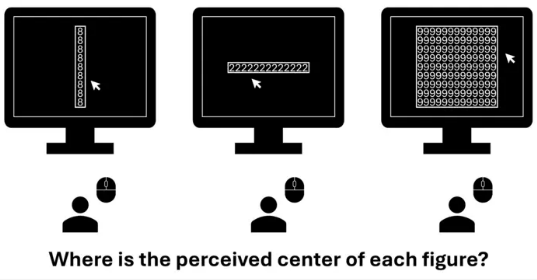
Object-Based Processing: Numbers Confuse How We Perceive Spaces

Researchers recently studied the relationship between numerical information in our vision, and...
Males Are Genetically Wired To Beg Females For Food

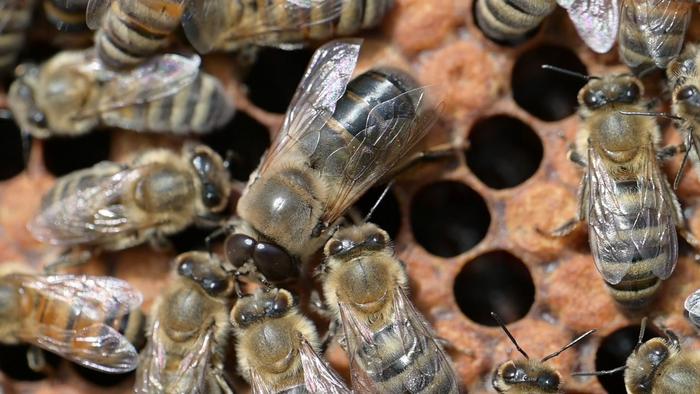
Bees have the reputation of being incredibly organized and spending their days making sure our...

The Scorched Cherry Twig And Other Christmas Miracles Get A Science Look

Bleeding hosts and stigmatizations are the best-known medieval miracles but less known ones, like ...

$0.50 Pantoprazole For Stomach Bleeding In ICU Patients Could Save Families Thousands Of Dollars

The inexpensive medication pantoprazole prevents potentially serious stomach bleeding in critically...

User picture.
News StaffRSS Feed of this column.

News Releases From All Over The World, Right To You... Read More »

Blogroll
By studying the Y chromosome from human dental remains from the Canary Islands, researchers have determined the origin and evolution of paternal lineages from the pre-Hispanic era to the present day. To date, only mitochondrial DNA had been studied, which merely reflects the evolution of maternal lineages, but a team of Spanish and Portuguese researchers carried out molecular genetic analysis of the Y chromosome (transmitted only by males) of the aboriginal population of the Canary Islands to determine their origin and the extent to which they have survived in the current population.

The results suggest a North African origin for these paternal lineages which, unlike maternal lineages, have declined to the point of being practically replaced today by European lineages.
Infants can correctly identify humans as the source of speech and monkeys as the source of monkey calls even when they are as young as five months old, says a new Proceedings of the National Academy of Sciences (PNAS) study.  

While young children know that humans speak, monkeys grunt and ducks quack, it's not clear when we come to know which vocalizations each of these animals produce.  Much is known about infants' abilities to match properties of human voices to faces, such as emotion, but it is unknown whether infants are able to match vocalizations to the specific species that produces them.

A new groups of exoplanets announced today comprises no less than 32 new discoveries. Including these new results, data from HARPS have led to the discovery of more than 75 exoplanets in 30 different planetary systems.

In 1999, ESO launched a call for opportunities to build the High Accuracy Radial Velocity Planet Searcher, better known as HARPS, a high resolution, extremely precise spectrograph for the ESO 3.6-meter telescope at La Silla, Chile.

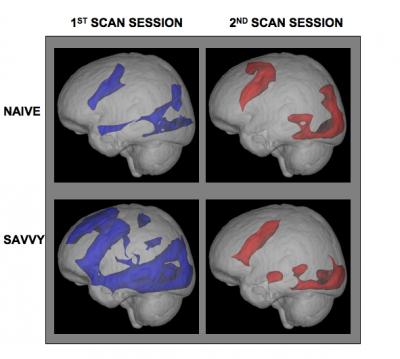
Brain activity considered to be  spontaneous 'white noise' changes after a person learns a new task, according to researchers, and the degree of change reflects how well subjects have learned to perform the task.

The suggestion is that this learning-induced change in the brain's spontaneous activity may reflect  a 'memory trace' for the new skill, which makes it easier to use those parts of the brain together again when the same challenge is presented. 

In addition to helping anatomical connections between different brain regions, the changes in spontaneous brain activity may maintain a record of prior experience that constrains the way the same circuitries are recruited at the time of a task. 
The conventional family has changed over the last few decade but regardless of parent genders or family structure, adolescents' perception of proper family functioning has changed little, says a new study.

Previous studies have pointed to families without a regular structure, such as headed by a lone parent or including the children of other partners, etc. as leading to a greater risk of teenagers living in such families turning to drugs or being violent, having mental health problems or even exhibiting criminal behavior.
Ah, to be a lizard - lay around in the sun, star in Japanese movies and, if  your tail is pulled off, you grow it right back.

Humans are not so lucky about the regeneration part but Tel Aviv University research says we may come close.   

Prof. Meital Zilberman of TAU's Department of Biomedical Engineering has developed a new biologically active "scaffold" made from soluble fibers, which may help humans replace lost or missing bone. With more research, she says, it could also serve as the basic technology for regenerating other types of human tissues, including muscle, arteries, and skin.