Banner
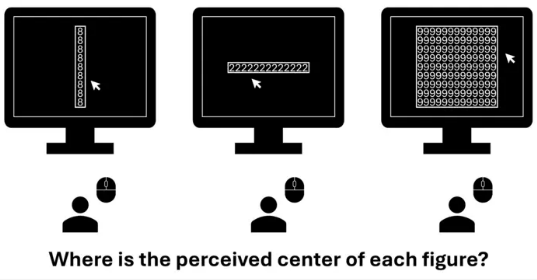
Object-Based Processing: Numbers Confuse How We Perceive Spaces

Researchers recently studied the relationship between numerical information in our vision, and...
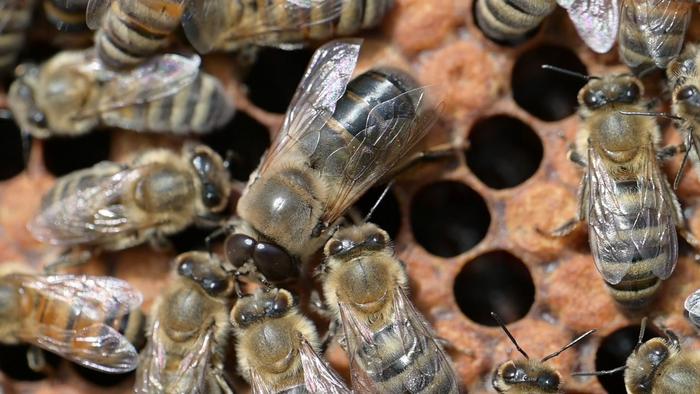
Males Are Genetically Wired To Beg Females For Food

Bees have the reputation of being incredibly organized and spending their days making sure our...
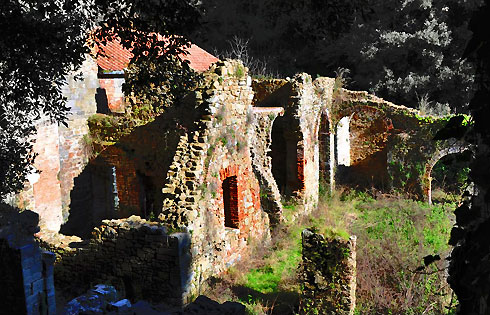
The Scorched Cherry Twig And Other Christmas Miracles Get A Science Look

Bleeding hosts and stigmatizations are the best-known medieval miracles but less known ones, like ...

$0.50 Pantoprazole For Stomach Bleeding In ICU Patients Could Save Families Thousands Of Dollars

The inexpensive medication pantoprazole prevents potentially serious stomach bleeding in critically...

User picture.
News StaffRSS Feed of this column.

News Releases From All Over The World, Right To You... Read More »

Blogroll
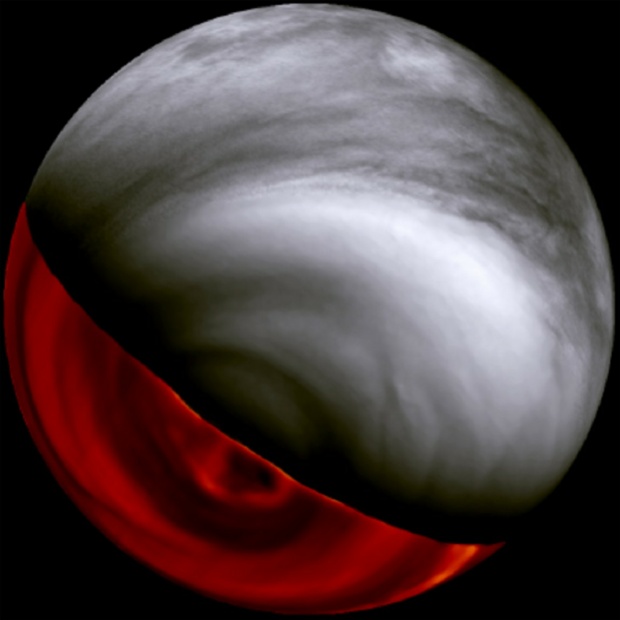
There is new evidence that the solar wind has stripped away significant quantities of water from Venus.  

The SPICAV and VIRTIS instruments carried by the Venus Express spacecraft have been used to measure concentrations of water vapor in the Venusian atmosphere at altitudes ranging from the lowest 10 km up to 110 km, high above the cloud tops.

Studies led by scientists from Belgium and Russia have found that the ratio of heavy water, which contains the isotope deuterium instead of hydrogen, to normal water is nearly twice as high above the clouds compared to its value in the lower atmosphere. 

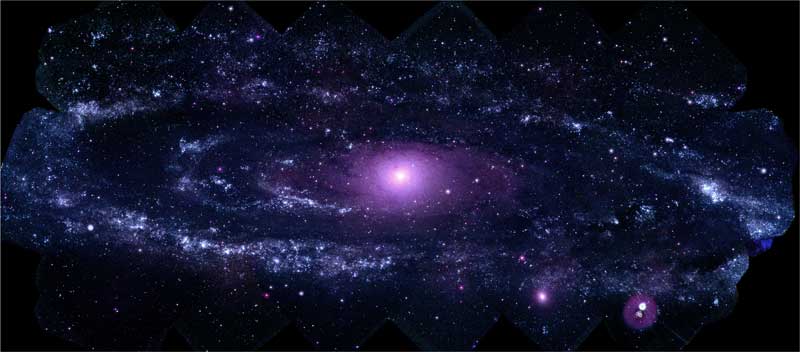
NASA's Swift satellite has acquired a new high-resolution view of a neighboring spiral galaxy; M31 in the constellation Andromeda, the largest and closest spiral galaxy to our own.

M31, also known as the Andromeda Galaxy, is more than 220,000 light-years across and lies 2.5 million light-years away. On a clear, dark night, the galaxy is faintly visible as a misty patch to the naked eye.

Between May 25 and July 26, 2008, Swift's Ultraviolet/Optical Telescope (UVOT) acquired 330 images of M31 at wavelengths of 192.8, 224.6, and 260 nanometers. The images represent a total exposure time of 24 hours. 
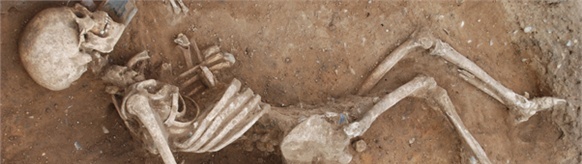
The buried town of Venta Icenorum at Caistor St Edmund in Norfolk is one of the most important, though least understood, Roman sites in Britain.

Caistor lies in the former territory of the Iceni, the tribe of Boudica Celts who famously rebelled against Roman rule in AD 60/61.

The survey revealed numerous circular features that apparently predate the Roman town.  These are probably of prehistoric date, and suggest that Caistor was the site of a large settlement before the Roman town was built. This had always been suspected because of numerous chance finds of late Iron Age coins and metalwork, but until the survey was carried out there had never been any evidence of buildings.

There have been increasingly violent attacks against scientists by animal rights activists in the last few years and partisan groups that can recite the name of every abortion provider killed by extreme pro-life people haven't taken much of a stand against violence done by people who inhabit their sphere.

Two commentaries in The Journal of Neuroscience this month outline the efforts by The Society for Neuroscience and the research community to ensure humane and responsible animal research.

How would you know if your water in space were infected with something?  Water is easy enough to clean but it requires some precision and current methods only examine water cleanliness after the fact.   

University of Utah chemists developed a two-minute water quality monitoring method that just started six months of tests aboard the International Space Station.

The new method involves sampling space station or space shuttle galley water with syringes, forcing the water through a chemical-imbued disk-shaped membrane, and then reading the color of the membrane with a commercially available, handheld color sensor normally used to measure the color and glossiness of automobile paint.
There's been a surprising archaeological discovery at Tel Dor in Israel, a place that was only on the periphery of the Hellenistic world; a gemstone engraved with a portrait of Alexander the Great.

Alexander was probably the first Greek to commission artists to depict his image – as part of a personality cult that was transformed into a propaganda tool. Rulers and dictators have implemented this form of propaganda ever since.   The excavations were done by an archaeological team directed by Dr. Ayelet Gilboa of the University of Haifa and Dr. Ilan Sharon of the Hebrew University of Jerusalem.