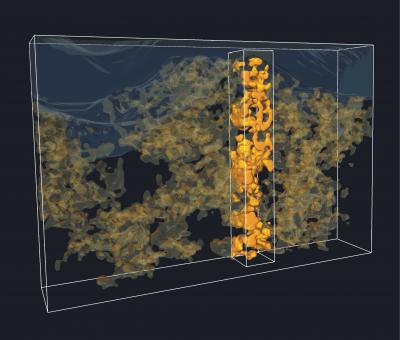
Polymer solar cells don't have the high efficiencies of the silicon kind yet, which isn't saying much, but they can be printed in roll-to-roll processes and at very high speeds so in time the technology could be very cost-effective. Polymer solar cells are also flexible and lightweight so they could be used on vehicles or clothing or to be incorporated in the design of objects.
Researchers from the Eindhoven University of Technology and the University of Ulm have made the first high-resolution 3D images of the inside of a polymer solar cell, giving them new insights in the nanoscale structure of polymer solar cells and its effect on the performance.
You may know that correlation studies have shown that the risk of becoming obese is 2.5 times higher for those who have double copies of the best known risk gene for being overweight or obese, the FTO gene (fat mass and obesity associated).
New discoveries of that sort have led to a resurgence in concern that we may be slaves to our genes, but is that the case? No, in every study obesity still required high calorie consumption, especially fat. A low fat diet neutralizes the harmful effects of the gene.
The smell of 'death' that repels insects turns out to be a truly ancient signal for avoiding disease or predators, says David Rollo, professor of biology at McMaster University in the journal Evolutionary Biology.
What do the death stench of corpses of from insects to crustaceans all have in common? A blend of specific fatty acids.
Because insects and crustaceans diverged more than 400-million years ago it is likely that most subsequent species recognize their dead in a similar way, that the origin of such signals was likely even older, and that such behavior initially occurred in aquatic environments (few crustaceans are terrestrial).
Older people have noticed their thinner arms and legs and perhaps you have as well. It's no secret muscle is harder to maintain, much less build, as we age but science was unclear exactly why.
A team of researchers the University of Nottingham Schools of Graduate Entry Medicine and Biomedical Sciences say that the suppression of muscle breakdown, which also happens during feeding, is blunted with age.
Muscle mass is important because a loss of muscle which decreases strength and increases the likelihood of falls and fractures - and a 'double whammy' affects people aged over 65. But weight training may 'rejuvenate' muscle blood flow and help retain muscle for older people.
A group of archaeologists and paleobiologists say they have discovered flax fibers in a cave in the Republic of Georgia that are more than 34,000 years old, making them the oldest fibers known to have been used by humans.
The flax, which would have been collected from the wild and not farmed, could have been used to make linen and thread, they say. The cloth and thread could then have been used to fashion garments for warmth, sew leather pieces, make cloths, or tie together packs that might have aided the mobility of our ancient ancestors from one camp to another.
Today is the 25th anniversary of the discovery of DNA fingerprinting. So has it done anything important, like given us a real understanding of how men and women communicate?
Well, no, but the University of Leicester Department of Genetics has revealed males and females at least communicate on the fundamental genetic level, an idea which counters scientific theory that the X and Y chromosomes - those that define the sexes - do not communicate at all.
In research published in the American Journal of Human Genetics, Zoë Rosser and colleagues say they have shown that exchange of DNA does occur between the X and Y in the regions previously thought to be completely isolated.


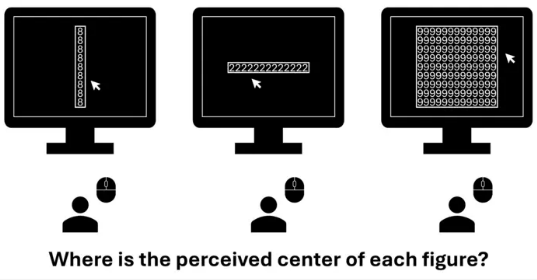 Object-Based Processing: Numbers Confuse How We Perceive Spaces
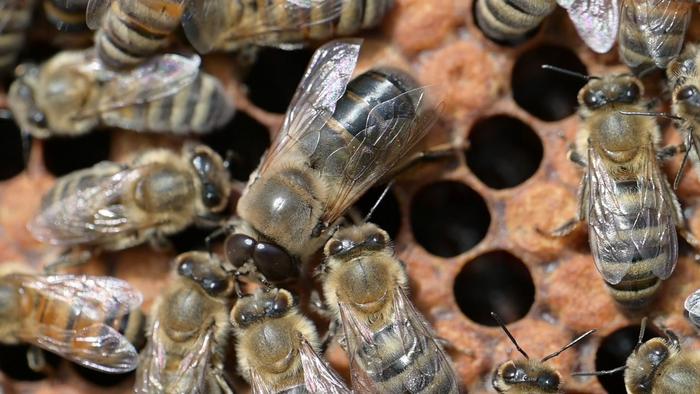 Males Are Genetically Wired To Beg Females For Food
 The Scorched Cherry Twig And Other Christmas Miracles Get A Science Look
 $0.50 Pantoprazole For Stomach Bleeding In ICU Patients Could Save Families Thousands Of Dollars