Banner
Object-Based Processing: Numbers Confuse How We Perceive Spaces

Researchers recently studied the relationship between numerical information in our vision, and...

Males Are Genetically Wired To Beg Females For Food

Bees have the reputation of being incredibly organized and spending their days making sure our...
The Scorched Cherry Twig And Other Christmas Miracles Get A Science Look

Bleeding hosts and stigmatizations are the best-known medieval miracles but less known ones, like ...

$0.50 Pantoprazole For Stomach Bleeding In ICU Patients Could Save Families Thousands Of Dollars

The inexpensive medication pantoprazole prevents potentially serious stomach bleeding in critically...

User picture.
News StaffRSS Feed of this column.

News Releases From All Over The World, Right To You... Read More »

Blogroll
Bacteria that generate significant amounts of electricity could be used in microbial fuel cells to provide power in remote environments or to convert waste to electricity. Professor Derek Lovley from the University of Massachusetts isolated bacteria with large numbers of tiny projections called pili which were more efficient at transferring electrons to generate power in fuel cells than bacteria with a smooth surface. The team's findings were reported at the Society for General Microbiology's meeting at Heriot-Watt University, Edinburgh. “Putting Microbes to Work” is the Society for General Microbiology’s autumn conference at Heriot-Watt University, Edinburgh on 7 - 10 September 2009.
Researchers say they have identified a genetic variation in people with type 2 diabetes that affects how the body's muscle cells respond to the hormone insulin.

Previous studies have identified several genetic variations in people with type 2 diabetes that affect how insulin is produced in the pancreas. Today's study shows for the first time a genetic variation that seems to impair the ability of the body's muscle cells to use insulin to help them make energy.
For most of the last century archaeologists, anthropologists, linguists and even geneticists have argued about who the ancestors of Europeans living today were.

People lived in Europe before and after the last big ice age and managed to survive by hunting and gathering and farming spread into Europe from the Near East over the last 9,000 years, which boosted the amount of food that could be produced by as much as 100-fold. But the extent to which modern Europeans are descended from either of those two groups has eluded scientists.
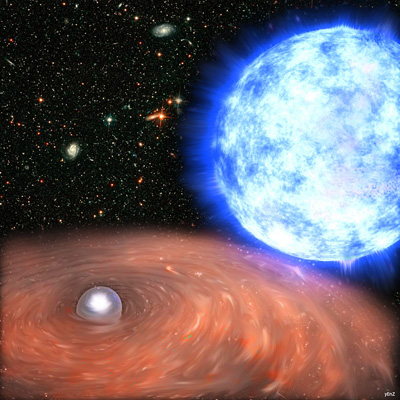
ESA's XMM-Newton orbiting X-ray telescope has uncovered the first close-up of a white dwarf star, circling a companion star, that could explode into a particular kind of supernova.

Well, in a few million years.

Astronomers use these supernovae as beacons to measure cosmic distances and could one day help us understand the expansion of the Universe.   They've been on the trail of this particular mystery object since 1997 when they discovered that something was giving off X-rays near the bright star HD49798. Now the mysterious object has been tracked along its orbit and observation has shown it to be a white dwarf, the dead heart of a star, shining X-rays into space.  
 
Stanford scientists say they will reinvent digital photography with the introduction of an 'open-source' digital camera.

If the technology catches on, camera performance will be no longer be limited by the software that comes pre-installed by the manufacturer because virtually all of the features of the Stanford camera – focus, exposure, shutter speed, flash, etc – are at the command of software that can be created by inspired programmers anywhere. "The premise of the project is to build a camera that is open source," said computer science professor Marc Levoy.
Should early 20th century researcher Paul Kammerer be credited as the founder of epigenetics?   It would certainly be a dramatic change from current perceptions of his work.

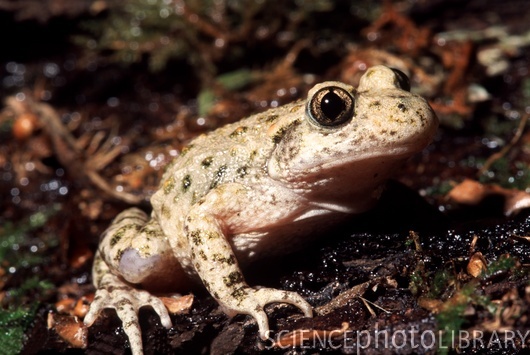
Kammerer, a leading proponent of the Lamarckian theory of evolution, achieved global prominence in the 1920's by arguing that acquired traits could be passed down through generations and, in his most controversial experiment,  forced land dweller midwife toads to live in water. Their offspring preferred to live and mate in water and by the third generation he noted that they began to develop black nuptial pads on their forelimbs, a feature common to water dwelling species.