Banner
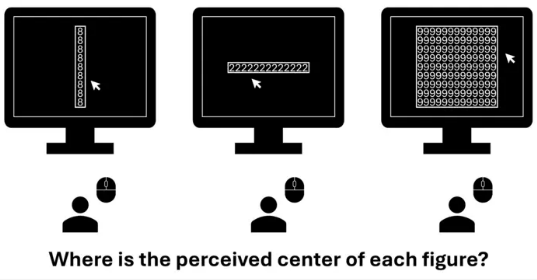
Object-Based Processing: Numbers Confuse How We Perceive Spaces

Researchers recently studied the relationship between numerical information in our vision, and...
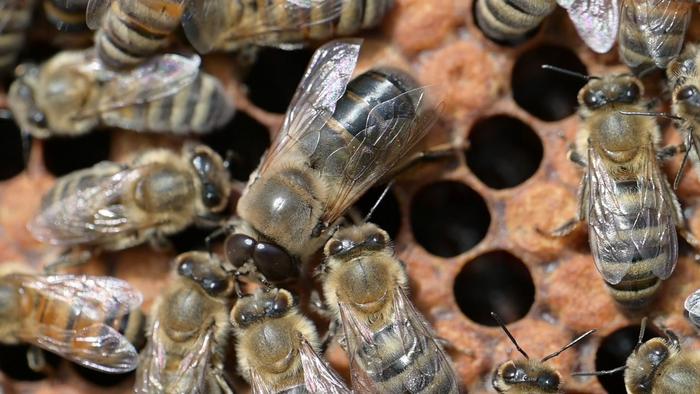
Males Are Genetically Wired To Beg Females For Food

Bees have the reputation of being incredibly organized and spending their days making sure our...

The Scorched Cherry Twig And Other Christmas Miracles Get A Science Look

Bleeding hosts and stigmatizations are the best-known medieval miracles but less known ones, like ...
$0.50 Pantoprazole For Stomach Bleeding In ICU Patients Could Save Families Thousands Of Dollars

The inexpensive medication pantoprazole prevents potentially serious stomach bleeding in critically...

User picture.
News StaffRSS Feed of this column.

News Releases From All Over The World, Right To You... Read More »

Blogroll
In 1935 one of the founders of modern genetics, J. B. S. Haldane, studied men in London with the blood disease hemophilia and estimated that there would be a one in 50,000 incidence of mutations causing hemophilia in the gene affected – the equivalent of a mutation rate of perhaps one in 25 million nucleotides across the genome. Others have measured rates at a few further specific genes or compared DNA from humans and chimpanzees to produce general estimates of the mutation rate expressed more directly in nucleotides of DNA. 16 scientists report today the first direct measurement of the general rate of genetic mutation at individual DNA letters in humans and show that those early estimates were spot on.
A team of researchers say long held beliefs about how stars are formed have been just a myth, and they say this astronomy myth got busted using a set of galaxies found with CSIRO's Parkes radio telescope.

When interstellar gas collapses to form stars, the stars range from massive to minute.  Since the 1950s many astronomers have believed that in a family of new-born stars the ratio of massive stars to lighter ones was always about the same — for every star 20 times more massive than the Sun or larger, you'd get 500 stars the mass of the Sun or less.
A small molecule known as 125B11 but also called Fatostatin and reportedly having both anti-fat and anti-cancer abilities is also a literal turnoff for fat-making genes, according to a new report in the journal Chemistry and Biology

The chemical blocks transcription factor known SREBP, a master controller of fat synthesis.   That action in mice that are genetically prone to obesity causes the animals to become leaner. It also lowers the amount of fat in their livers, along with their blood sugar and cholesterol levels.

Fatostatin or its analogs may also serve a tool for gaining further insights into the regulation of SREBP and fat metabolism
If you studied the basics of human anatomy, you probably know that females are born with their entire lifetime's supply of eggs and once they're gone, they're gone.    New findings by researchers at Fred Hutchinson Cancer Research Center say that is not always true.

The good news; during starvation, ovulation stops and when normal food conditions resume, so do the eggs, basically turning back the reproductive clock.

The bad news; it only works in in nematode worms.

Informed consent is tricky business because there are disagreements about what informed consent can mean outside the country of the company conducting the trial and people will grant a lot of consent if they believe a treatment can help them, which can lead to exploitation.

One item that is not a topic of heavy debate is financial interest disclosures.  Everyone seems to agree they are important but there are no comprehensive guidelines governing it.

Circadian rhythms are 24-hour cycles in various biological processes like core body temperature, melatonin synthesis and sleep–wake behavior.   They are synchronized most strongly by the light–dark cycle in the environment.

Bright light is known to increase alertness at night, but it has never been completely clear whether this light-induced alertness can arise from neural pathways other than those involved in the circadian system.

Research described in the BMC Neuroscience (open access!) says the circadian system is not the only pathway involved in determining alertness at night. showed that red light, which does not stimulate the circadian system, is just as effective at increasing night-time alertness as blue light, which does.