Banner
Social Media Is A Faster Source For Unemployment Data Than Government

Government unemployment data today are what Nielsen TV ratings were decades ago - a flawed metric...

Gestational Diabetes Up 36% In The Last Decade - But Black Women Are Healthiest

Gestational diabetes, a form of glucose intolerance during pregnancy, occurs primarily in women...

Object-Based Processing: Numbers Confuse How We Perceive Spaces

Researchers recently studied the relationship between numerical information in our vision, and...

Males Are Genetically Wired To Beg Females For Food

Bees have the reputation of being incredibly organized and spending their days making sure our...

User picture.
News StaffRSS Feed of this column.

News Releases From All Over The World, Right To You... Read More »

Blogroll
How big is the universe? No one really knows, but since we are in just one Orion spur of the arm of Sagittarius in one galaxy, and there are an unknown number of galaxies, it's big. So big our galaxy alone could have 6,000,000,000 planets like ours, according to a new estimate.

To be a potential planet like Earth, the new model estimating the number of planets like ours must be rocky, roughly Earth-sized and orbiting Sol-like (G-type) stars. It also has to orbit in the habitable zones of its star, which is the range of distances from a star in which a rocky planet could host liquid water  on its surface.
A few decades ago, Asian diets were regarded as superior because lower incomes meant they ate less meat - and those who were tested had less cholesterol, a substance found in the blood that the body uses to build healthy cells, but which can lead to a build-up in blood vessels. Cholesterol has been correlated to a risk factor for a risk factor for heart attacks.
The math used to analyze cyclic phenomena like the ebb and flow of ocean tides has been applied to Sol, the star we orbit. While it can't do anything to flatten its irregularities, or the impacts it has on communications, temperature, and weather, the "Sun clock" created by scholars shows it starts and stops on a much more precise schedule than can be discerned by observations plotted linearly over time.
Humans do not hibernate, but in science-fiction films long-distance travel often involves "suspended animation" where muscular atrophy, starvation, and oxygen deprivation don't occur. 

Mice don't hibernate either but they just did in experiments. Mice are obviously not little people, that is why claims involving mice are in the exploratory camp, but animals models are often a waypoint on the path to humans.

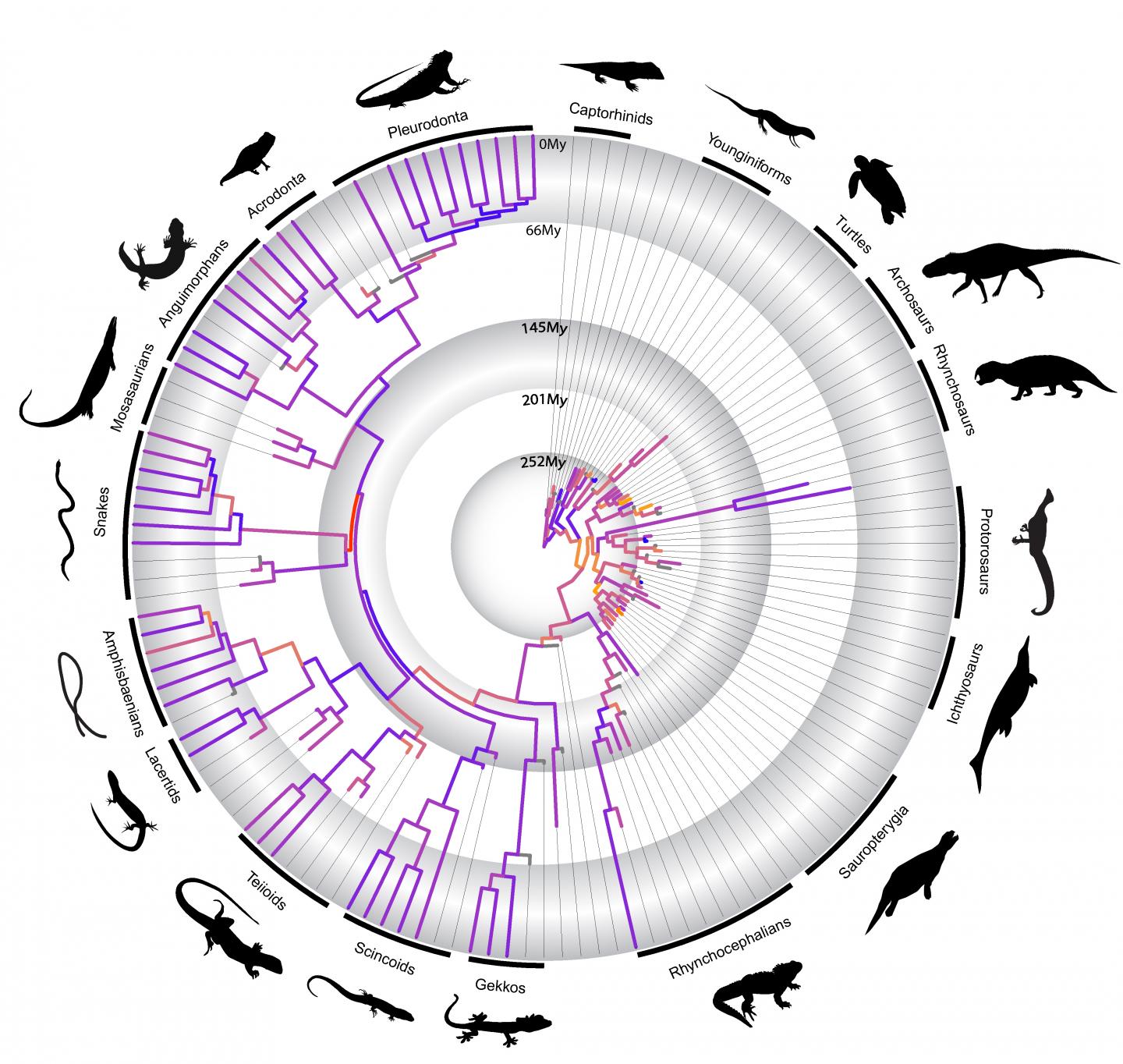
Well-preserved footprints from the Lower Cretaceous Jinju Formation of South Korea, 110 million years ago, show that an ancestor of modern-day crocodiles, named Batrachopus grandis, walked on two feet.

Palaeontologists knew that some crocodiles from the "age of dinosaurs" were more adapted to life on land than their modern relatives but those were smaller creatures, about three feet long with footprints showing they walked on all fours. Batrachopus grandis was instead 12 feet in size and bipedal. It is more like a Gorn from the television show "Star Trek" than what we think of as a crocodile.

What doesn't kill you makes you stronger is a popular phrase, but how true it ever was is unclear. Bones are not stronger after they break and while some people relax about small drama after real trauma, many also become more sensitized to stress instead of more resilient.