Banner
Ousiometrics Analysis Says All Human Language Is Biased

A new tool drawing on billions of uses of more than 20,000 words and diverse real-world texts claims...

Wavelengths Of Light Are Why CO2 Cools The Upper Atmosphere But Warms Earth

There are concerns about projected warming on the Earth’s surface and in the lower atmosphere...

Here's Where Your Backyard Was 300 Million Years Ago

We may use terms like "grounded" and terra firma to mean stability and consistency but geology...

Convergent Evolution Cheat Sheet Now 120 Million Years Old

One tenet of natural selection is a random walk of genes but nature may be more predictable than...

User picture.
News StaffRSS Feed of this column.

News Releases From All Over The World, Right To You... Read More »

Blogroll
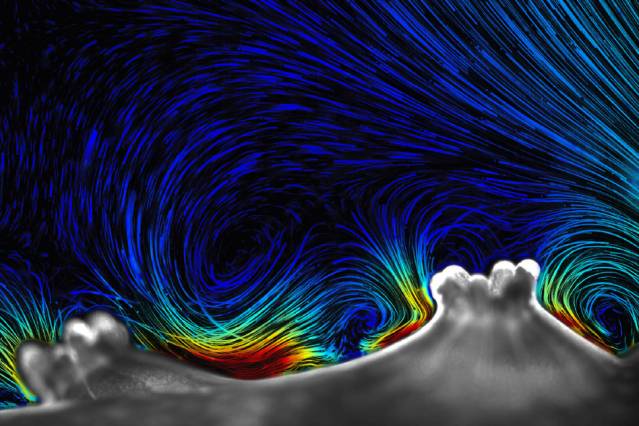
Corals, whose calcium-carbonate skeletons form the foundation of coral reefs, are passive organisms that rely entirely on ocean currents to deliver dissolved substances, such as nutrients and oxygen.

Or so it seemed. Scientists at MIT and the Weizmann Institute of Science (WIS) in Israel have found that they are far from passive, engineering their environment to sweep water into turbulent patterns that greatly enhance their ability to exchange nutrients and dissolved gases with their environment.
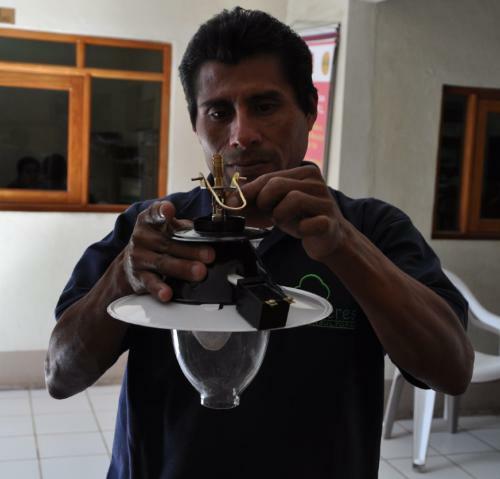
A four-year project on coffee wastewater treatment, The Energy from Coffee Wastewater project by UTZ Certified, has found that is possible to generate energy and protect water resources by treating discharges from coffee mills - maybe it will even tackle climate change.

The project started in 2010 with the goal of addressing what to do with the wastewater produced in the coffee industry. Tailor-made coffee wastewater treatment systems and solid-waste treatment mechanisms were installed in eight coffee farms in Nicaragua, ten in Honduras and one in Guatemala. The positive impact of the project on over 5,000 people in the region has inspired UTZ Certified to replicate the initiative in other countries.

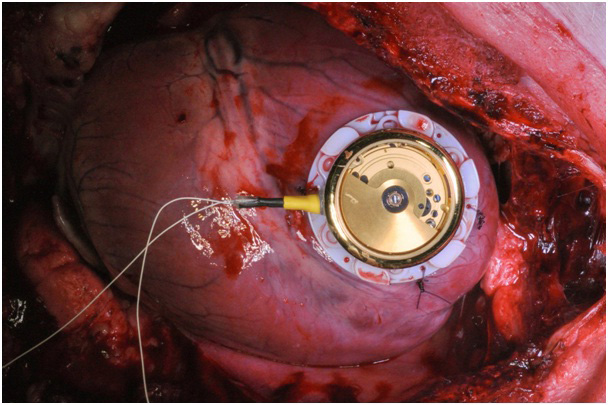
A new battery-less cardiac pacemaker is based on the automatic wristwatch concept - it is powered by heart motion.

The prototype device  presented at ESC Congress 2014 by Adrian Zurbuchen from Switzerland does not require battery replacement.

Zurbuchen is a PhD candidate in the Cardiovascular Engineering Group at ARTORG, University of Bern and said, "Batteries are a limiting factor in today's medical implants. Once they reach a critically low energy level, physicians see themselves forced to replace a correctly functioning medical device in a surgical intervention. This is an unpleasant scenario which increases costs and the risk of complications for patients.

Wockhardt Limited announced that two of its drugs, WCK 771 and WCK 2349, received the coveted Qualified Infectious Disease Product (QIDP) status from U.S. Food&Drug Administration (FDA).

QIDP status is granted to drugs which act against pathogens which have a high degree of unmet need in their treatment and are identified by the Centers for Disease Control. QIDP status allows for fast track review of the drug application by U.S. FDA, paving way for an early launch. This is the first instance of an Indian Pharmaceutical company receiving a QIDP status.


In patients who experienced an acute coronary syndrome (ACS) event (such as heart attack or unstable angina), use of the drug darapladib to inhibit the enzyme lipoprotein-associated phospholipase A2 (believed to play a role in the development of atherosclerosis) did not reduce the risk of recurrent major coronary events, according to a study published by JAMA. The study is being released early online to coincide with its presentation at the European Society of Cardiology Congress.