
Banner
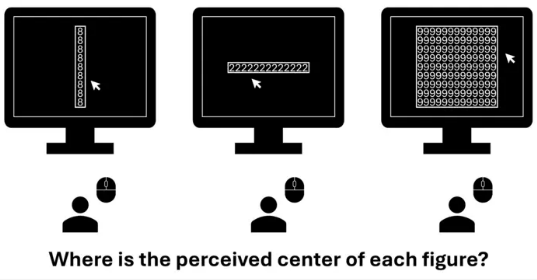
Object-Based Processing: Numbers Confuse How We Perceive Spaces

Researchers recently studied the relationship between numerical information in our vision, and...
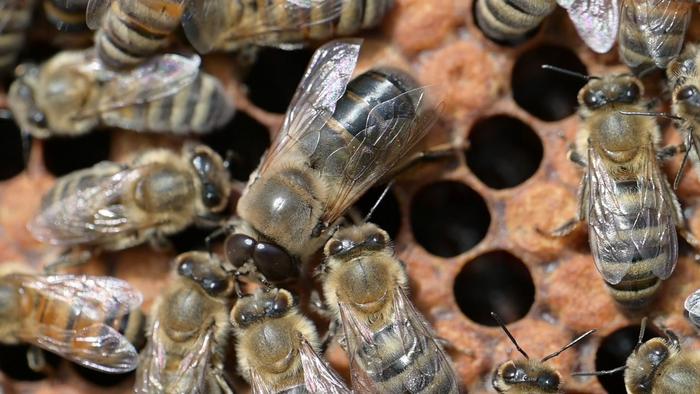
Males Are Genetically Wired To Beg Females For Food

Bees have the reputation of being incredibly organized and spending their days making sure our...

The Scorched Cherry Twig And Other Christmas Miracles Get A Science Look

Bleeding hosts and stigmatizations are the best-known medieval miracles but less known ones, like ...

$0.50 Pantoprazole For Stomach Bleeding In ICU Patients Could Save Families Thousands Of Dollars

The inexpensive medication pantoprazole prevents potentially serious stomach bleeding in critically...

User picture.
News StaffRSS Feed of this column.

News Releases From All Over The World, Right To You... Read More »

Blogroll

The minds of murderers who kill impulsively - crimes of passion, as they are commonly called - and those who carefully carry out premeditated crimes differ markedly both psychologically and intellectually, according to a new paper.

Sr35 has been identified as a gene that enables resistance to a new race, or strain, of stem rust, a disease that is producing large wheat yield losses throughout Africa and Asia and threatening global food security.

Adults may not understand what an infant is feeling but it's child's play to another baby.

A paper in Infancy contends that infants can recognize each other's emotions by five months of age. 

"Newborns can't verbalize to their mom or dad that they are hungry or tired, so the first way they communicate is through affect or emotion," says  psychology professor Ross Flom  of
Brigham Young University
. "Thus it is not surprising that in early development, infants learn to discriminate changes in affect."

Rat poison used for marijuana fields is killing fishers in the southern Sierra Nevada, according to a new paper. 

Oxygen is necessary for survival on Earth but the planet's atmosphere did not always contain this life-sustaining substance. One of science's greatest mysteries is how and when oxygenic photosynthesis—the process responsible for producing oxygen on Earth through the splitting of water molecules—first began.

Geobiologists writing in PNAS say they have found evidence of a precursor photosystem involving manganese that predates cyanobacteria, the first group of organisms to release oxygen into the environment via photosynthesis.  

All stars begin their lives in groups, though most, including our Sun, are born in small, benign groups that quickly fell apart. Others form in huge, dense swarms that survive for billions of years as stellar clusters.

Within such rich and dense clusters, stars jostle for room with thousands of neighbors while strong radiation and harsh stellar winds scour interstellar space, stripping planet-forming materials from nearby stars.

That's an unlikely place to find alien worlds.

Yet 3,000 light-years from Earth in the star cluster NGC 6811, astronomers have found two planets smaller than Neptune orbiting Sun-like stars.





