The Population Council
is enrolling 420 couples to test NES/T, which is the progestin compound segesterone acetate (Nestorone) in combination with testosterone.
There's no question "Gone With The Wind" is the most successful movie of all time, when you count tickets sold, but it's not the most influential. Nor is "Star Wars."
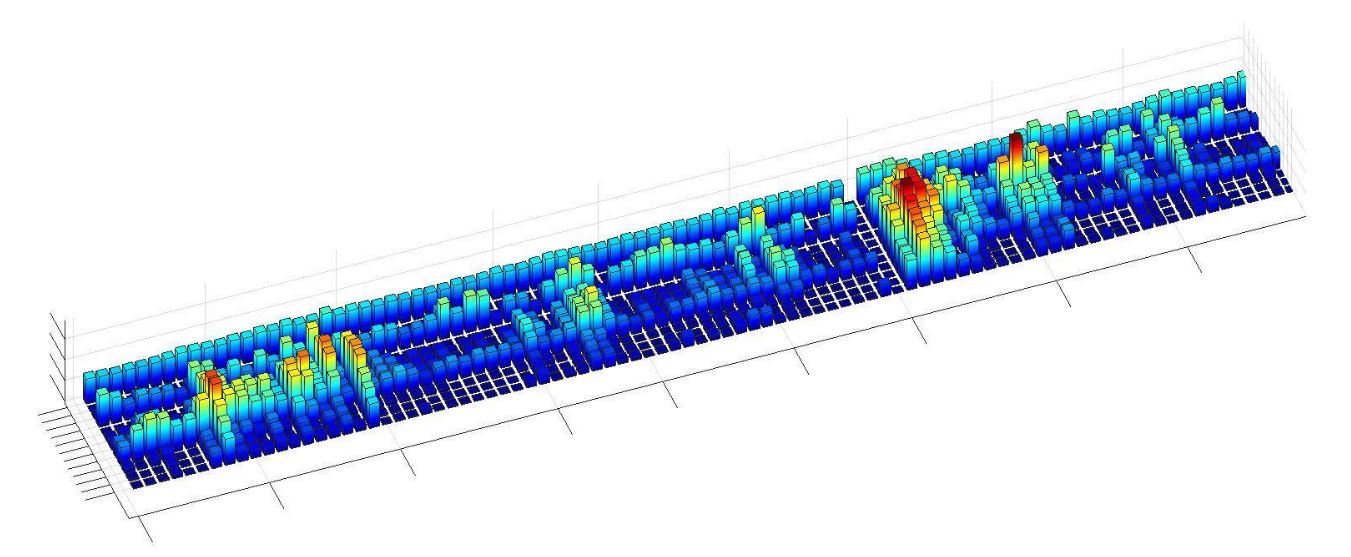
A network analysis instead shows that title goes to "The Wizard Oz", the definitive Judy Garland film. released in the same year as "Gone With The Wind."
In 8,000 B.C., when there were only about 10 million people on the entire planet, the boom and bust of famine and feast and wondering when the next meal would be was already a cultural concern.
And so agriculture was created. Mankind set out to do genetic engineering, doing RNA Interference (RNAi) cereals, legumes, roots and tubers. They not only scientifically selected for larger fruits, uniform ripening and taste, they even turned dangerous natural foods into healthy ones.
Do Drosophila, commonly called fruit flies, have culture?
Culture, lasting changes in a group that cannot be ascribed to genetic or ecological variation, is obviously a human quality, and it may be found in other vertebrates like some other primates and birds. A new computer simulation says it may be in fruit flies also.
Fruit flies can learn and copy the sexual preferences of their conspecifics after observing them copulating. For a behavioral pattern to be deemed culturally transmitted, there are considered:
1) the behavior must be learned socially, which is to say by observing conspecifics,
2) be copied from older individuals,
3) be memorized over the long term,
A new paper in
Health, Risk&Society reports that
women concerned about breast cancer often go to "Dr. Google" first but how much they trust it varies - more educated women, for example, trust it more, while less educated women would rather see a doctor.
Oxygen in the Earth’s atmosphere is necessary for complex forms of life, which use it during aerobic respiration to make energy. The levels of oxygen dramatically rose in the atmosphere around 2.4 billion years ago, and speculation is that is when organisms called cyanobacteria, which perform the same type of organic photosynthesis that all plants do today, first evolved, and could perform oxygen-producing (oxygenic) photosynthesis.
Perhaps cyanobacteria could have evolved before 2.4 billion years ago but something prevented oxygen from accumulating in the air.