Though our guts contain a trillion bacteria in various compositions, it's become popular to claim any detectable change is a bad thing. Unless it is to sell yogurt, where no detectable change is regarded as a probiotic good thing.
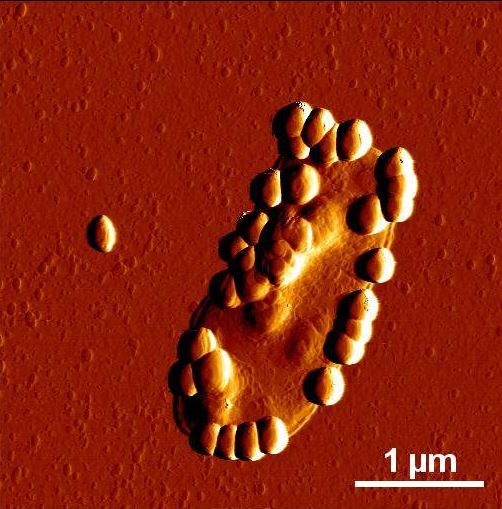
Now even at the nano- level. A new study claims ultra-small particles adhere to intestinal microorganisms, thereby affecting their life cycle as well as cross talk with the host. Nanoparticles’ binding inhibits the infection with Helicobacter pylori, a pathogen implicated in gastric cancer and the authors hope this could the development of potential 'probiotic' nanoparticles for food. Homeopaths are cheering.
Like " I had insomnia last night" and "I am so OCD", medical terms often become colloquial. So it is with people who say they had a "stomach flu."
There are stomach virusus, but what many people commonly call “stomach flu” isn’t flu at all. "Flu" is short for influenza, and that is respiratory so it involves lungs, not the stomach. What people call a stomach flu is instead viral gastroenteritis. It could be rotavirus, norovirus, adenovirus or something else, and could have been through tainted food.
Chicken eggs are already used for growing viruses that are used as vaccines, such as the flu jab but science is going one better;
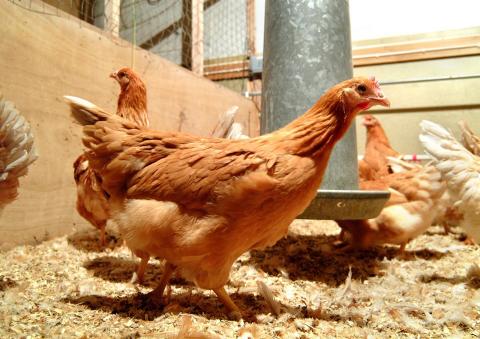
chickens that are genetically modified to produce human proteins in their eggs as part of the egg white.
A new study found the drugs work at least as well as the same proteins produced using existing methods and high quantities of the proteins can be recovered from each egg using a simple purification system and there are no adverse effects on the chickens themselves, which lay eggs as normal.
One to two percent of people have celiac disease, and the first thing they will tell you is that it is not a fad diet, no matter how many books or Dr. Oz segments tout gluten-free. To celiac patients, it is like poison and the replacements for gluten often contain extra sugar, extra fat, hydroxypropyl methyl cellulose and xanthan gum.
Science may soon be able to help. Gluten is a mixture of glutenin and gliadin proteins, which build a network that gives wheat bread itsproperties and quality. Most gliadins and part of the glutenins contain immunogenic epitopes, which are the actual trigger of the immune reaction.
When a sneeze happens, around 100,000 contagious germs for things like the common cold, influenza and tuberculosis move through the air at speeds of up to 100 miles per hour.
It sounds scary, but there are numerous environmental factors that impact the actual transmission of disease, and a new study sought to determine those right down to the level of a single aerosol particle and a single bacterium.
You may be told that you have individual choice about whether or not social media privacy (or lack thereof) affects you; don't join social media, or delete your account.
Not so,
according to a new study. Big Data can essentially triangulate your behavior, by using the data of your friends.


 Pilot Study: Fibromyalgia Fatigue Improved By TENS Therapy
 High Meat Consumption Linked To Lower Dementia Risk
 Long Before The Inca Colonized Peru, Natives Had A Thriving Trade Network
 Mesolithic People Had Meals With More Tradition Than You Thought