
Banner
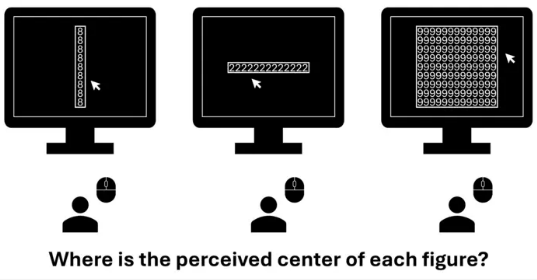
Object-Based Processing: Numbers Confuse How We Perceive Spaces

Researchers recently studied the relationship between numerical information in our vision, and...
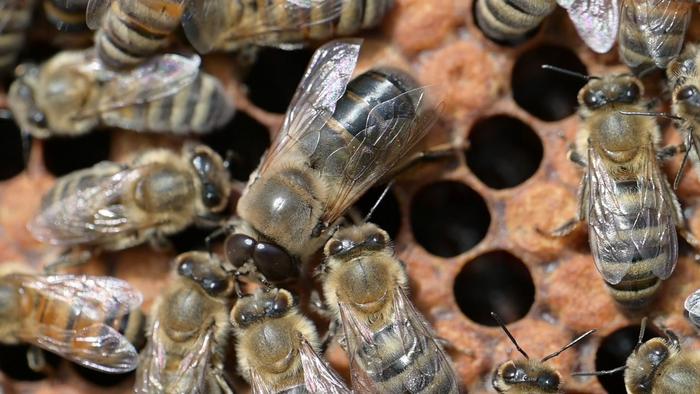
Males Are Genetically Wired To Beg Females For Food

Bees have the reputation of being incredibly organized and spending their days making sure our...

The Scorched Cherry Twig And Other Christmas Miracles Get A Science Look

Bleeding hosts and stigmatizations are the best-known medieval miracles but less known ones, like ...

$0.50 Pantoprazole For Stomach Bleeding In ICU Patients Could Save Families Thousands Of Dollars

The inexpensive medication pantoprazole prevents potentially serious stomach bleeding in critically...

User picture.
News StaffRSS Feed of this column.

News Releases From All Over The World, Right To You... Read More »

Blogroll

An assistant professor in the Division of Biology at Kansas State University is projecting that grazing animals such as bison and cattle will get smaller due to global warming in the Great Plains. 

The conclusion came about by comparing bison in cooler, wetter regions with those in warmer, drier regions. For example, the average 7-year-old male bison in South Dakota weighed 1,900 pounds, while an average 7-year-old male bison in Oklahoma -- a warmer region -- weighed 1,300 pounds. The cause: grasses in the southern Great Plains have less protein than grasses in the northern Great Plains because of the warmer climate. 

Nearly 70 percent of Americans take at least one prescription drug and more than 50 percent take two, scholars writing in Mayo Clinic Proceedings say. Antibiotics, antidepressants and painkilling opioids are most commonly prescribed, they found. 20 percent of patients are on five or more prescription medications, according to the findings.

Terrorism-induced smoking is a new explanatory factor that will keep public health academics from accepting that free choice happens - some people will do things that are bad for them.

 A Weill Cornell Medical College public health study is stuck in pre-9/11 determinism too; the author concludes that the September 11th, 2001 terrorist attacks caused 1,000,000 former smokers to take up the noxious weed again - and maintain it.

The analysis in Contemporary Economic Policy is distinct in that it is the first to examine terrorism-induced smoking in the United States and come up with net societal costs they feel are directly linked to terrorism.  All determined by phone surveys.

If you support less efficient agriculture, organic food or conventional food without science optimization, crop yields will not be enough to feed the population of 2050. It's the population bomb scare of the 1950s and '60s reborn a century later.

While American agriculture has dematerialized in the last few decades - we produce far more food on far less land - Europe and other countries have not kept pace. Due to that, crop yields worldwide won't increase quickly enough to support estimated global needs in 2050, according to the claims of a paper in PLoS ONE

Our internal circadian clock regulates daily life processes and is synchronized by external cues, the Zeitgeber, with the main cue being the light-dark cycle.

But the light-dark cycle effect is largely reduced in extreme habitats such as in the Arctic during the polar summer. Using a radiotelemetry system a team of researchers from the Max Planck Institute for Ornithology have now found, in four bird species in Alaska, different daily activity patterns ranging from strictly rhythmic to completely arrhythmic. These differences are attributed to the species' mating systems and behaviors. Their study shows that activity patterns can change according to social and environmental factors, which suggests a remarkable plasticity in the avian circadian system.

Glycoproteins are sugar-protein hybrid molecules that the protective mucus that lines our lungs and stomach and are also part of the fluid that lubricates our joints, the synovial fluid, and cover all our cells, with the sugar parts, the glycans, sticking out like a tiny forest of antennae.

 Researchers at ETH Zurich and Empa have also identified a surprising effect that glycans have on the water molecules that surround them.



