Banner
Synchrotron Could Shed Light On Exotic Dark Photons

There are many hypothetical particles proposed to explain dark matter and one idea to explore how...

The Pain Scale Is Broken But This May Fix It

Chronic pain is reported by over 20 percent of the global population but there is no scientific...

Study Links Antidepressants, Beta-blockers and Statins To Increased Autism Risk

An analysis of 6.14 million maternal-child health records  has linked prescription medications...

Pilot Study: Fibromyalgia Fatigue Improved By TENS Therapy

Fibromyalgia is the term for a poorly-understood condition where people experience pain and fatigue...

User picture.
News StaffRSS Feed of this column.

News Releases From All Over The World, Right To You... Read More »

Blogroll
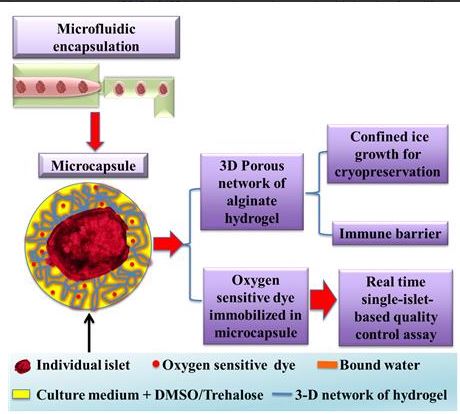
Diabetes is one of the leading causes of death. Patients with type 1 diabetes have their insulin secreting cells destroyed by the immune system and require daily insulin injections. Pancreatic islet transplantation is an effective treatment that can dramatically reduce daily doses or even eliminate dependence on external insulin. Insulin producing cells are injected into a recipient liver and after an adaptation period they start to produce sufficient hormone needed by diabetic patients.

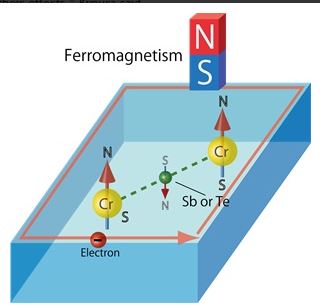
Researchers have identified the requirements for the development of new types of extremely low power consumption electric devices by studying Cr-doped (Sb, Bi)2Te3 thin films. 

At extremely low temperatures, an electric current flows around the edge of the film without energy loss, and under no external magnetic field. This attractive phenomenon is due to the material's ferromagnetic properties but it has been unclear how the material gains this property until now.

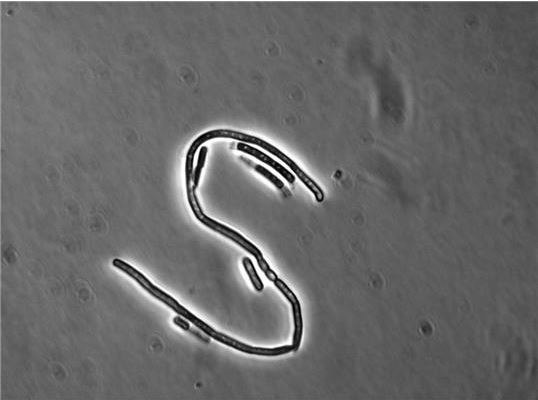
The bacterium Bacillus cereus had so far been considered to be exclusively endospore-forming. In response to harsh conditions, the bacteria form protective endospores enabling them to remain dormant for extended periods, then they reactivate to become fully functioning bacteria when conditions are favorable again.
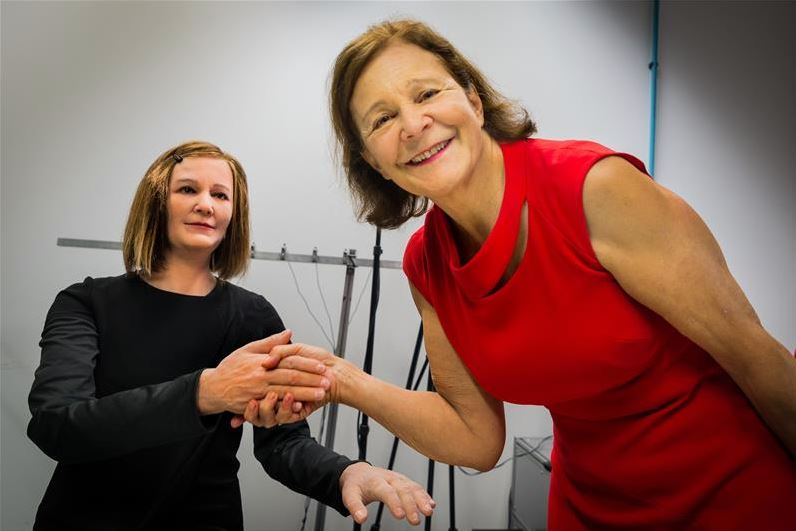
Nadine, a friendly human-like robot at Nanyang Technological University in Singapore will greet you back and shake your hand. Unlike conventional robots, the inventors say Nadine has her own personality, mood and emotions, and the next time you meet her, she will remember your name and your previous conversation with her.

She looks almost like a human being, with soft skin and flowing brunette hair. She smiles when greeting you, looks at you in the eye when talking, and can also shake hands with you. She can be happy or sad, depending on the conversation. Nadine is the doppelganger of its creator, Prof Nadia Thalmann, powered by intelligent software similar to Apple’s Siri or Microsoft’s Cortana. 

Researchers say that the actions of individual farmers should be considered when studying and modelling strategies of pest control.

Research published in PLOS Computational Biology presents a model to understand the actions of humans and the dynamics of pest populations. The authors demonstrate this by using the example of the European corn borer, a moth whose larval phase is a major pest of maize.

Using game theory the researchers found that the farmers' perceptions of profit and loss, alongside communication networks between individuals, affects pest populations. A farmer's decision on whether to control a pest is usually based on the perceived threat of the pest and the guidance of commercial advisors.

DALLAS - Dec. 31, 2015 - Using a new gene-editing technique, a team of scientists from UT Southwestern Medical Center stopped progression of Duchenne muscular dystrophy (DMD) in young mice.

If efficiently and safely scaled up in DMD patients, this technique could lead to one of the first successful genome editing-based treatments for this fatal disease, researchers said.