Banner
Synchrotron Could Shed Light On Exotic Dark Photons

There are many hypothetical particles proposed to explain dark matter and one idea to explore how...

The Pain Scale Is Broken But This May Fix It

Chronic pain is reported by over 20 percent of the global population but there is no scientific...
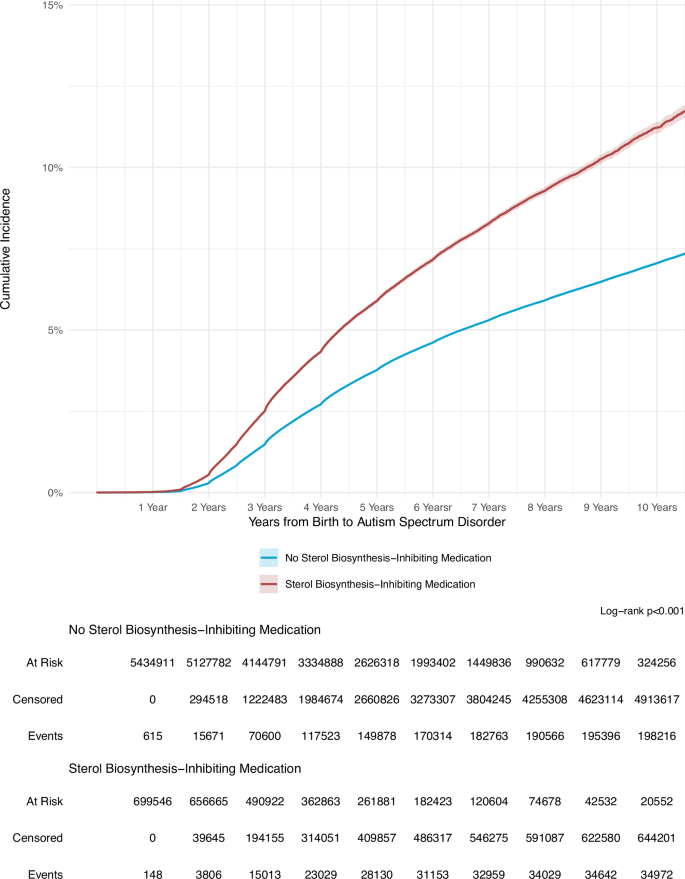
Study Links Antidepressants, Beta-blockers and Statins To Increased Autism Risk

An analysis of 6.14 million maternal-child health records  has linked prescription medications...

Pilot Study: Fibromyalgia Fatigue Improved By TENS Therapy

Fibromyalgia is the term for a poorly-understood condition where people experience pain and fatigue...

User picture.
News StaffRSS Feed of this column.

News Releases From All Over The World, Right To You... Read More »

Blogroll

Rochester, MN, Dec. 15, 2015 - More than 95% of the world's adult population is infected with the virus that causes chickenpox. Up to one third of these individuals will develop shingles (herpes zoster) in their lifetime. A new U.S. study has found that there is a short-term increased risk of stroke after having shingles, reports Mayo Clinic Proceedings.

MADISON, Wis. -- Su-Chun Zhang, a pioneer in developing neurons from stem cells at the University of Wisconsin-Madison, has created a specialized nerve cell that makes serotonin, a signaling chemical with a broad role in the brain.

Serotonin affects emotions, sleep, anxiety, depression, appetite, pulse and breathing. It also plays a role in serious psychiatric conditions like schizophrenia, bipolar disorder and depression.

"Serotonin essentially modulates every aspect of brain function, including movement," Zhang says. The transmitter is made by a small number of neurons localized on one structure at the back of the brain. Serotonin exerts its influence because the neurons that make it project to almost every part of the brain.

Our understanding of evolution can be enriched by adding fossil species to analyses of living animals, as shown by scientists from the University of Bristol.

Their paper, published today in Proceedings of the Royal Society B, investigates patterns of evolutionary change in a group of mammals known as Afrotheria. This charismatic group of mainly African mammals includes elephants, manatees, and elephant shrews. The team were interested in how body mass has evolved in Afrotheria, and how our interpretations differ when we take their extinct fossil relatives into account.

Having emerged late during evolution, seeds have transformed many plants into miniature travelers, contributing greatly to their colonization of terrestrial habitats. Researchers at the University of Geneva (UNIGE), Switzerland, have just discovered one of the keys to this success: the cuticle. Present as a thick waxy layer in the seed coat and composed of cutin -- a type of fatty acid --, the cuticle increases seeds' viability, their resistance to reactive oxygen species, and contributes to maintaining their dormant state. Seeds have thus recycled an ancient terrestrial plant protection mechanism that allows their leaves to be covered with an impermeable film preventing excessive transpiration. The results are published in the journal PLoS Genetics.

Their analysis revealed that the periods of Algol (2.85 days) and the Moon (29.6 days) strongly regulate the actions of deities in this calendar.

- Until now, there were only conjectures that many of the mythological texts of the Cairo Calendar describe astronomical phenomena. We can now unambiguously ascertain that throughout the whole year the actions of many deities in the Cairo Calendar are connected to the regular changes of Algol and the Moon, says Master of Science Sebastian Porceddu.

This research confirms that the first variable star, as well as its period, were discovered much earlier than was previously thought. These two "classical" milestones in the history of natural sciences need to be shifted three millennia backwards in time to 1244 - 1163 BC.

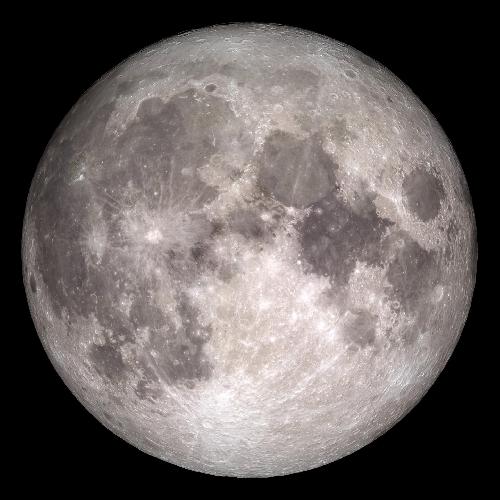
Not since 1977 has a full moon dawned in the skies on Christmas. But this year, a bright full moon will be an added gift for the holidays.

December's full moon, the last of the year, is called the Full Cold Moon because it occurs during the beginning of winter. The moon's peak this year will occur at 6:11 a.m. EST.

This rare event won't happen again until 2034. That's a long time to wait, so make sure to look up to the skies on Christmas Day.

pic

How the moon will appear on Christmas, 2015. Credit: NASA/Goddard/Lunar Reconnaissance Orbiter