




What is USERN? Ay, there's the rub - I feel I need to explain here what USERN (Universal Scientific Education and Research Network) is, and I don't like the idea, because it's a shame that USERN is not better known, especially within science-informed audiences. While the organization has collected over 26,000 members around the world, and it has reached the 10th edition of its congress, where cash and research fund prizes are granted to five under-40yo researchers who distinguished themselves in as many macro-areas of sciences, there are many colleagues who are oblivious of what the organization is, and what it does. So let me put a patch to that here today.
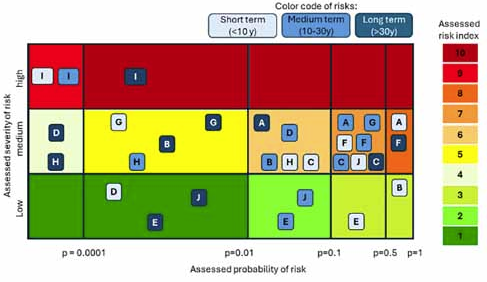
The organization stems from the unrelented efforts of its founder, Prof. Nima Rezaei (a distinguished immunologist from Tehran University). in 2015 Nima used his large network of scientific contacts to put it together, to work toward interdisciplinary science across borders. Given the expertise of its founder, USERN has a strong footprint in medical sciences, but indeed we cover 21 different scientific disciplines, and over time we have been able to collect an advisory board of over 600 among the highest-ranked scholars in the world. Of course, as goes with all advisory boards, some of these guys are not very active in the organization; others instead help us valuably, by proposing other members, evaluating the applications to the yearly prize, lecturing at our congress or at PhD schools we organize, and taking part in other activities (like a recent article on our vision of AI in science and society, published in IEEE Access here. By the way, below is a picture from the article, which lays down AI risks in a sort of Torino scale based on likelihood and severity).
Ok, so just another conference? Indeed, no. USERN acts as a catalyst of interdisciplinary science, where researchers can join forces from all over the world to produce studies that require expertise from different fields. Being a non-profit organization means that we have to live with a few donations, as the congress participation fee is kept to unreasonably low amount (less than 100$ in the past few editions) to facilitate the participation of young researchers. Also, we need to cover the travel expenses of invited keynote speakers, and cover the prize costs of the yearly laureates. It is tough, but we are managing.
I lost count of the number of Memoranda of Understanding that USERN has with universities and research institutes around the world, but I think the number is close to 100 (I don't recall from which side). I personally signed a few of them on behalf of the organization in the past few years, since I am the USERN President since November 2022, having been voted by the majority of the board members (21, one member per scientific discipline, with each in turn voted by Advisory Board members) prior to the VII congress we held in Muscat, Oman. The last such MoU was signed with the Medical University of Varna, in Bulgaria. We are planning to organize schools and other events with Varna, in fact. But similar activities have been going on with many other universities.
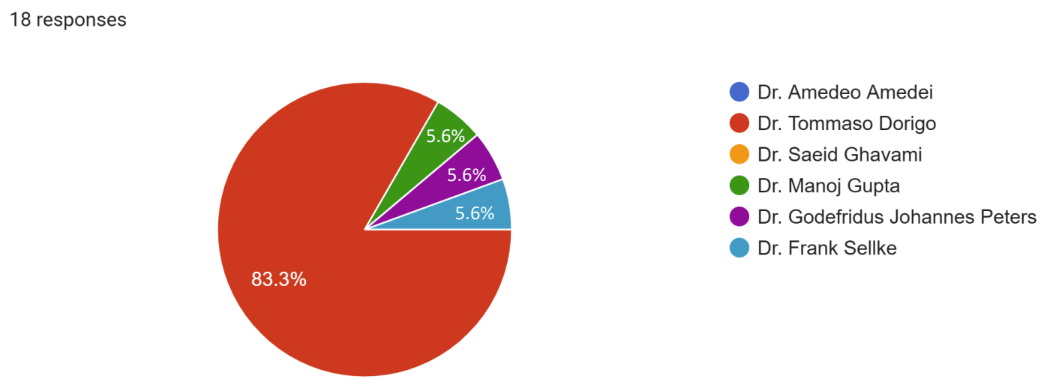
The USERN President is elected every three years, so this year we had a new round of elections. I manifested my availability to run for a second term, because I was not entirely satisfied by my work in the previous one - I felt there was more work I could help with. And I got elected again, with a very large majority. The results were announced in Campinas during the last day of the congress, on November 10. Below is the result of the election.
I should now speak about the USERN laureates of this year, but I think this blog post is getting too long, so I will rather save that information for another article. Instead, I will just report on the virtual sessions, which I attended in their entirety. These were five 2-hour sessions which were structured as follows: three 25-minute lectures by distinguished scholars in the area of the session, followed by six 6-minute presentation by young scientists (PhD students and post-docs). The latter were evaluated according to a predefined grid of criteria by a jury, and the best one in each session was given an award. It was mightily hard to select the winners!, as these presentations were very well-polished, clear, and perfectly in time! Kudos to all the participants - but I congratulated with them directly at the end of each session.
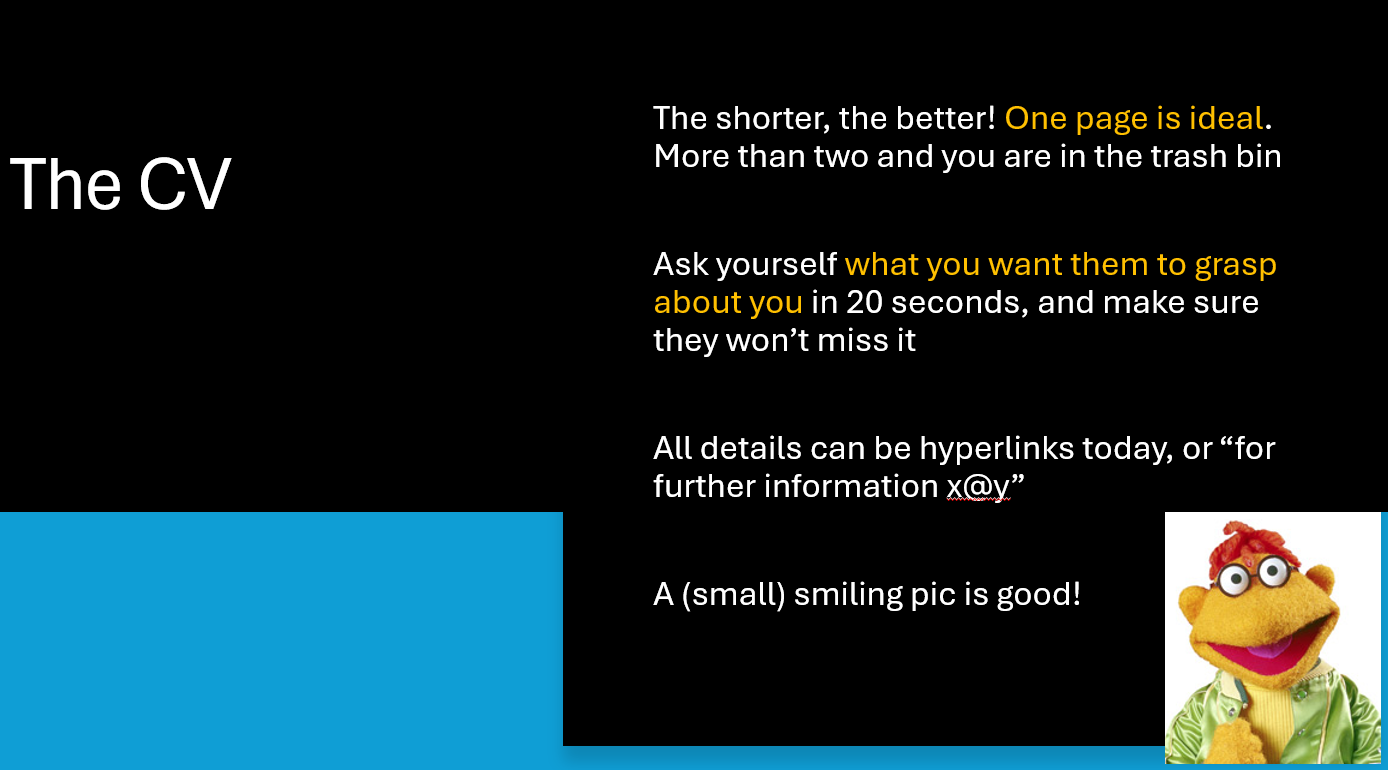
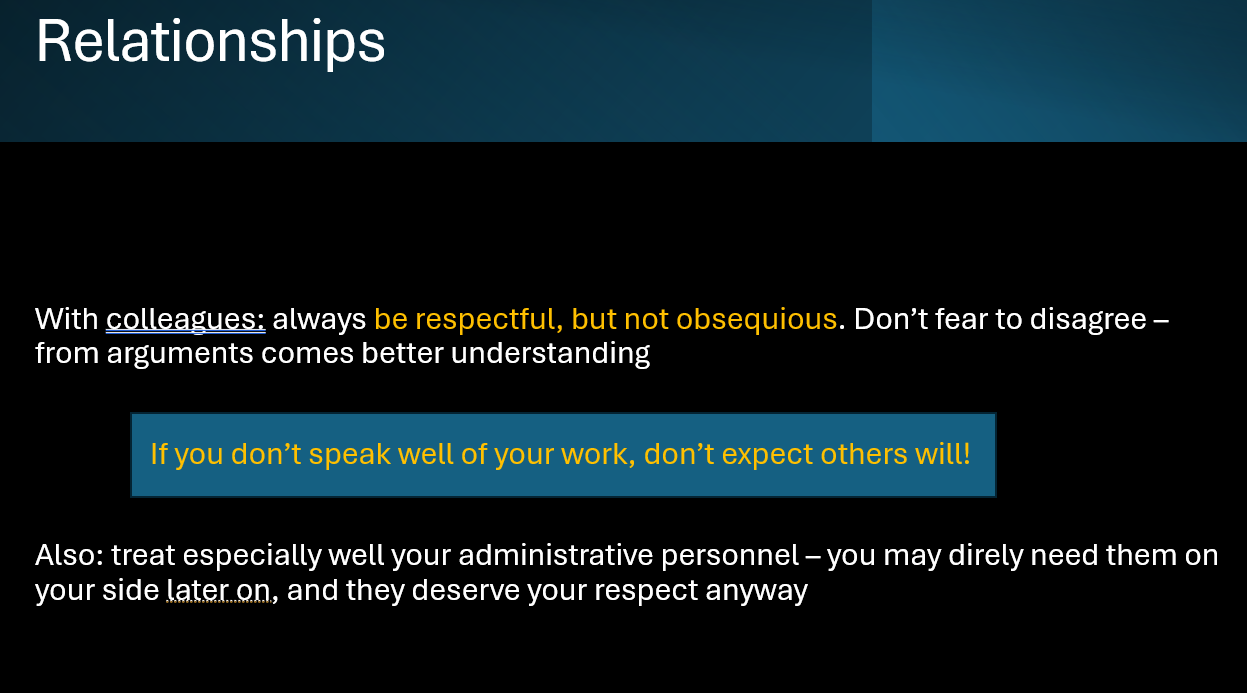
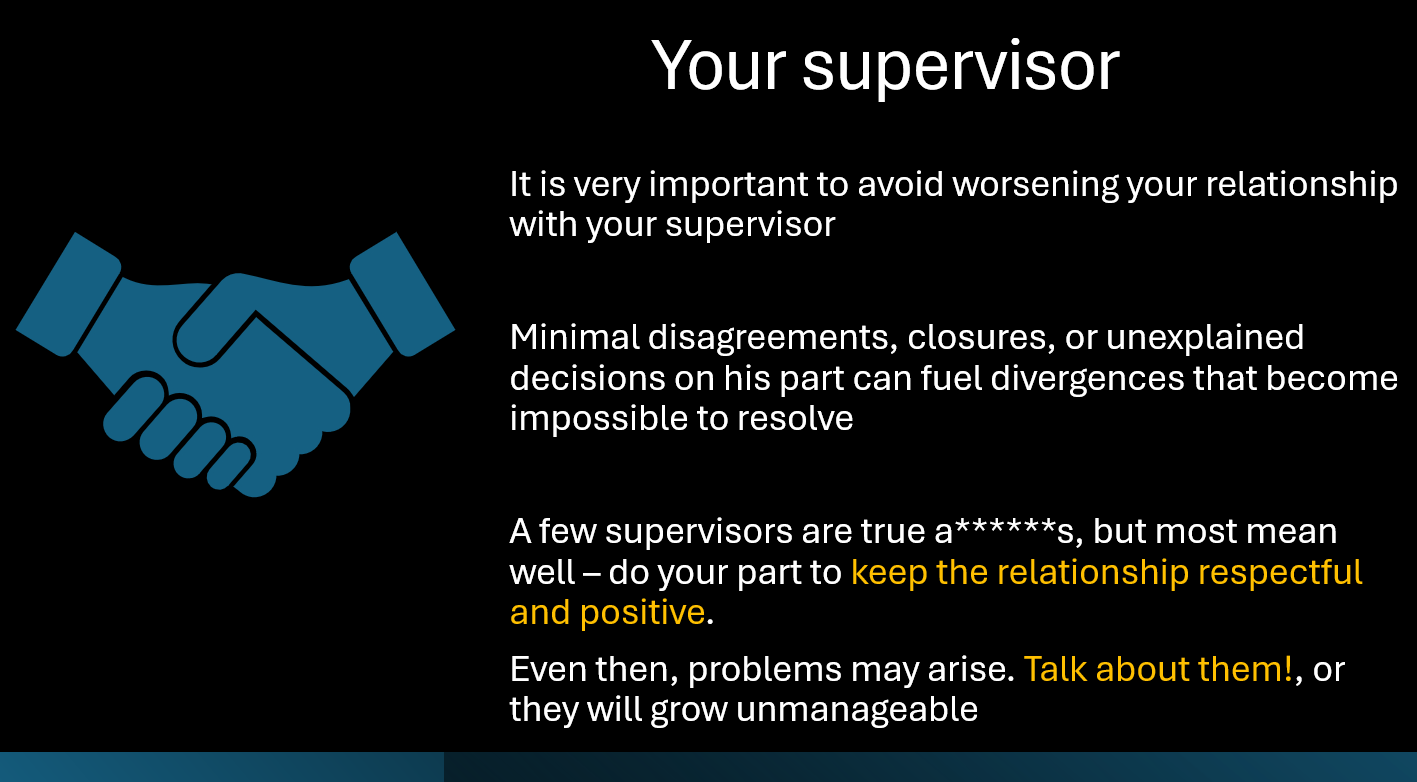
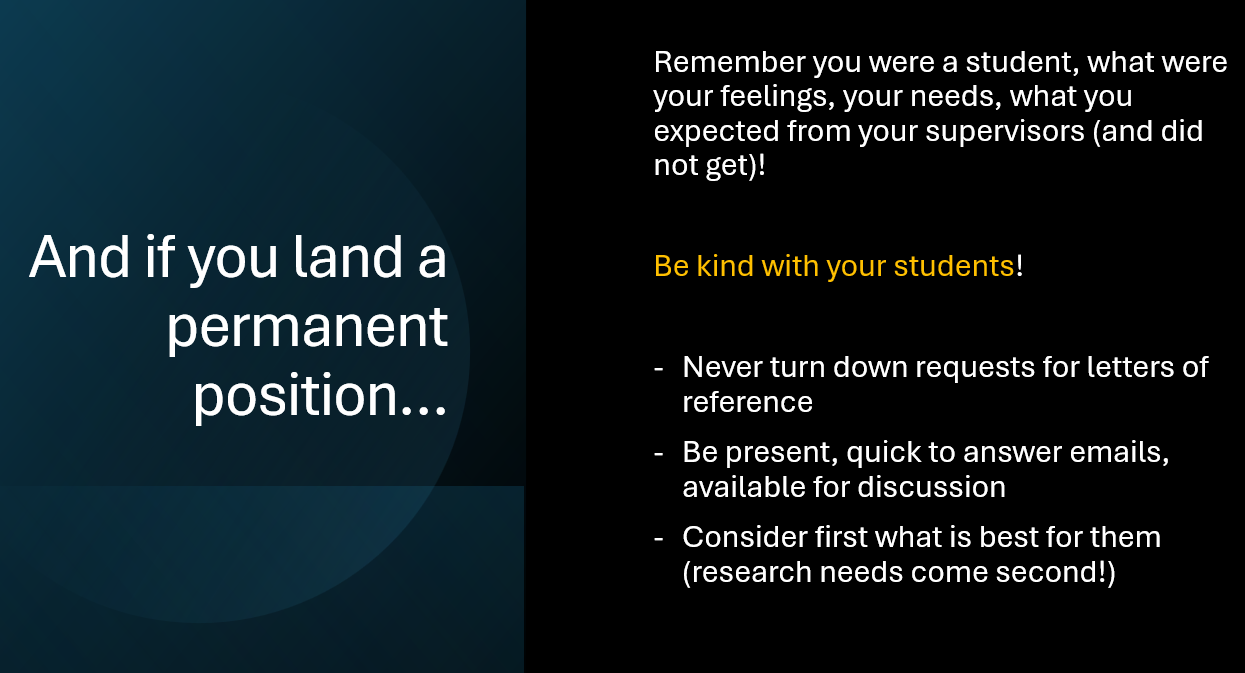
In one of the sessions I gave a talk titled "random tips for aspiring researchers". I am old enough to have collected a significant amount of wisdom on what works and what doesn't in academia (and you can tell I am super-expert in what doesn't work, given my not so brilliant and fast career). Since we learn from our mistakes, why not sharing them, so they can be repeated in a more refined way? Jokes aside, my presentation was judged useful by the audience... Below are just a few among the slides of my talk, to exemplify its contents.
Finally, one prayer - if you wish to know more about USERN, or help us in our action to disseminate and educate about science around the world, please contact me! We need help, as all our activities are performed by colleagues and students who work pro-bono.




Comments