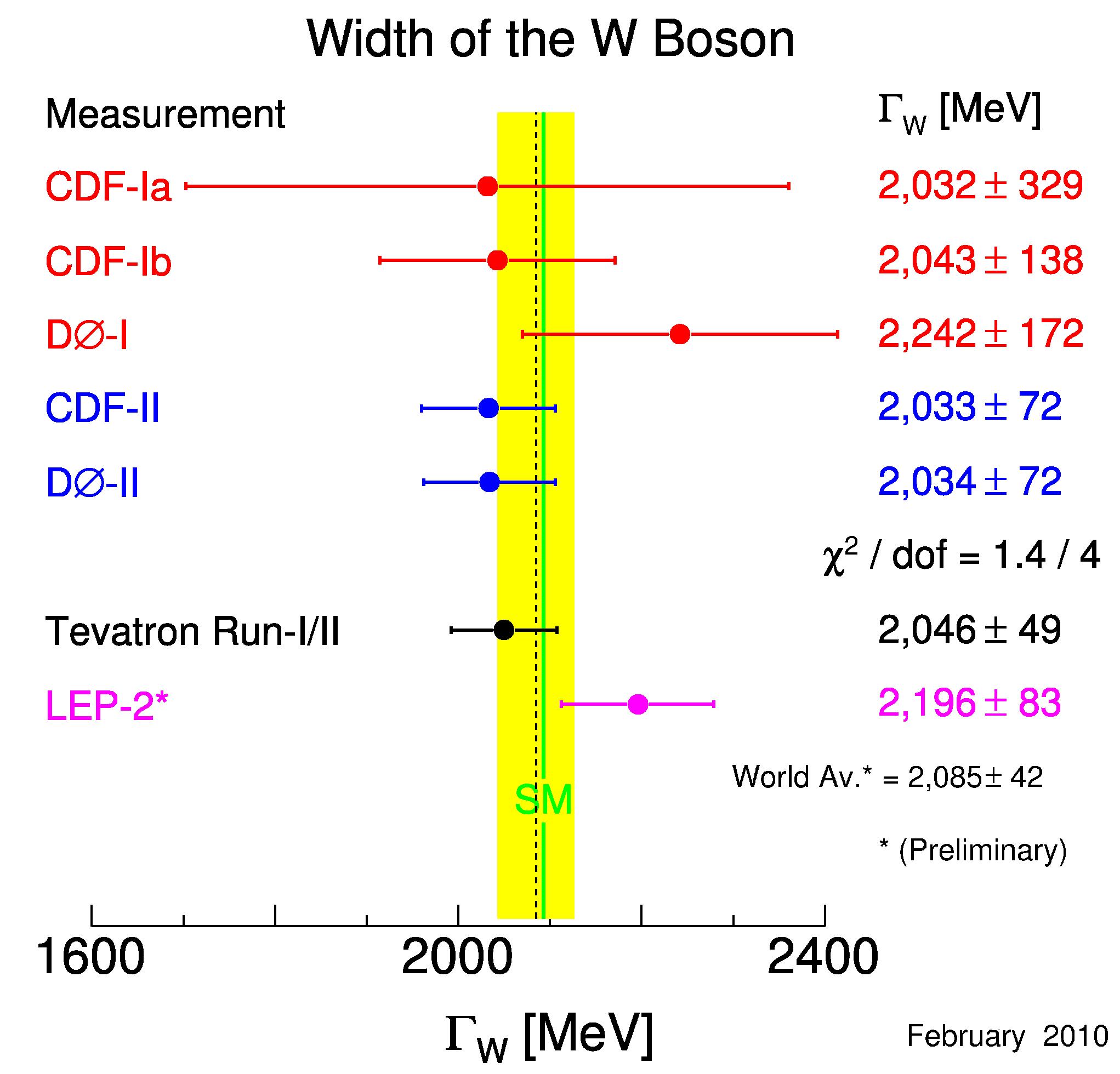
Being still in the middle of a rather long vacation (now in the Italian eastern alps), my blogging power is limited. So today I will just offer you some thoughts on the recent measurements of a fundamental parameter of the Standard Model called "W boson width".
The W boson, like any unstable subatomic particle, has a very short lifetime, which depends on the strength of its couplings to lighter particles, on its own mass (generally the heavier a particle is, the faster is its disintegration), and on the availability of lighter bodies into which to decay without breaking any fundamental rule.
W bosons have been thoroughly studied at the Tevatron collider. Discovered by the UA1 experiment at the CERN SppS proton-antiproton collider in 1984, these particles have since been produced also in electron-positron collisions at LEP II (in pairs), and recently at the Large Hadron Collider. But the CDF and DZERO experiments have some of the most precise measurements of the physics of these particles, thanks to their now very large datasets.
That did it, if only by an inch. Damn!
Two days ago, back from a 4-week vacation to Greece, I approached my faithful and precise scale with a clear, pre-determined thought in my mind: "If I am over 77.5 kilograms, I will start a strict diet to bring me back to below 72!".
This is a good year for summer meteor watching. The moon, just past new, will not interfere with observations of faint meteors. And the Perseid shower, originated from the dust left behind in the orbit of comet Swift-Tuttle, will produce a nice show.
Perseids are a rather stable stream, and they produce a detectable rate of meteors from late July to late August, with peaks in the nights of August 11th and 12th, depending on the exact trajectory that the Earth takes while plunging in the dust-ridden area of the solar system. The rate is usually encoded in the acronym "ZHR", for zenith-hourly-rate. ZHR values of 100 to 150 are common for the two highest-rate nights.
But what exactly should you expect to see ?
CDF and DZERO, the two experiments at the Fermillab Tevatron collider, have studied top quark production since their own discovery of the heavy particle in 1995 (see
here,
here, and
here for a three-post history of the top quark quest).


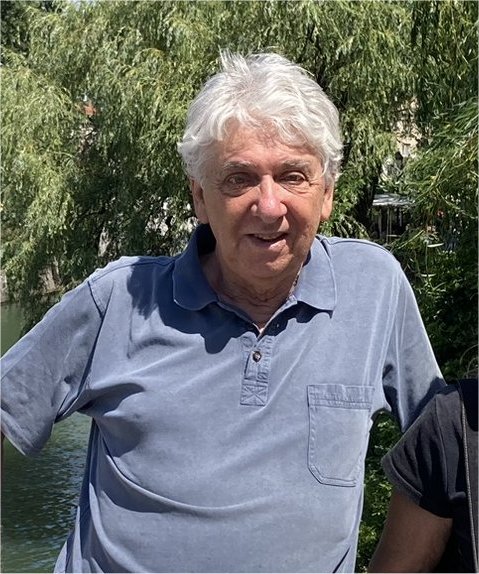 Enrico Stomeo - A Lifelong Passion For Meteor Studies
 Surviving Queues: 1 - At The Airport
 Choosing Your Bets: The Selection Bias