

Fabio Casati and his collaborators at LiquidPublication, an EU-financed research project, want to change how you do science.  Namely by allowing you to do more of it, instead of sifting through journals.

“The more papers you produce, the more brownie points you get,” says Casati. “So most of your time is spent writing papers instead of thinking or doing science.”
No one here at Science 2.0 really noticed the Scienceblogs Pepsigate thing, being busy writing about science, but I lurk in a number of other places and, since Scienceblogs is the Big Kahuna in science blogging, it merited some attention, at least from me.

In the It-From-Bit series I have reported extensively on Verlinde's 'entropic gravity' concept. I have also provided you with an illustrative 'mikado universe' picture of entropic gravity. This got topped off with my own intuitive notion that in an entropic universe, not only gravity, but also accelerated cosmic expansion emerges. As a result, in one fell swoop, entropy eliminates the need for a fundamental force of gravity as well as the need for dark energy. 
The Anatomy Of A Discovery

Petermann Glacier Ice Tongue Calving 2010


Science20.com is a science site.


Now, I could blabber and bluster about how I once advised Margaret Thatcher1.  Which I did.  In a private letter which was answered by the Iron Lady herself in her own handwriting.  I had further communication with her via my local M.P. - the politician, not the policeman!  All of which has nothing whatsoever to do with my reputation in the science community.  Nor should it.

Researchers at the RIKEN Center for Developmental Biology say they have unraveled the mystery of why human embryonic stem (ES) cells and induced pluripotent stem (iPS) cells undergo apoptosis (programmed cell death) when cultured in isolation, a discovery that promises new hope to sufferers of debilitating degenerative diseases.
"All Americans look alike" is a common joke in Asia and a similar sentiment is expressed in virtually every other country populated by a race different than its tourists.   And to some degree it is true.  Most people find it much harder to recognize faces of people from different races than their own.

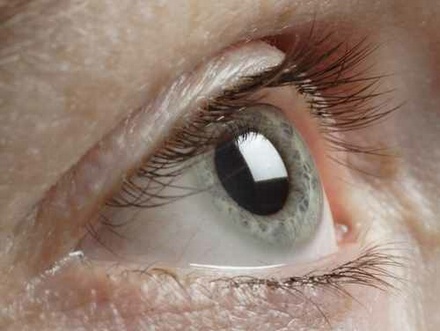
During a 15-month research project funded by the  Economic and Social Research Council (ESRC), Teesside University academic Dr. Kazuyo Nakabayashi will carry out experiments in Japan and the UK and collate behavioral and eye movement data.

The study will involve asking students from different races to look at Oriental and Caucasian faces in photographs and online and will examine the ‘recognition keys’ they use – their eye movement, for example.

