










Kelly Abbott/Flickr, CC BY-NC

By Tim Trudgian, Australian National University

Consider a standard pizza box containing a standard circular pizza. How much more would you be willing to pay for a square pizza that filled the box?

 have to warn everyone that there is going to be a little math at the start, but not much, only one easy equation that you need to have a sense of if you are going to understand what drugs that inhibit enzymes do.  

This equation is universal and can be easily expanded to describe most molecular interactions.  Actually the most basic form of it is the IC50 equation which has been used as a crutch for describing drug interactions for years.  So if nothing else you might get a sense of what researchers are referring to when they get excited about IC50 values. 
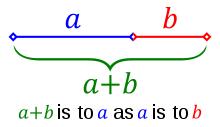
The golden ratio is known as the divine proportion because it is found so often in nature. It has fascinated mathematicians since Euclid. A golden ratio is when the ratio of two numbers is the same as the ratio of their sum to the larger of the two quantities.


Credit: Wikipedia

Represented by the Greek letter phi (φ), its value is 1.61803399.
Good news for Christmas party season: A new compound has been shown to reduce the harmful side-effects of ‘binge drinking’. It also has the potential for new ways to treat Alzheimer’s and other neurological diseases that damage the brain but showing that would take $1 billion in clinical trials and 10 years of approval and then some generic company would just poach it a few years later anyway. If they simply go the alternative medicine route, the inventors could save themselves the double-blind clinical trials and get right to selling it.

Fantasies shouldn't be confused with wishes or behaviors. conrado/Shutterstock

By Christian Joyal, Université du Québec à Trois-Rivières (UQTR)

Can we use unusual sexual fantasies to identify sexual deviancy?

Is there a link between what people fantasize about and how they actually behave?

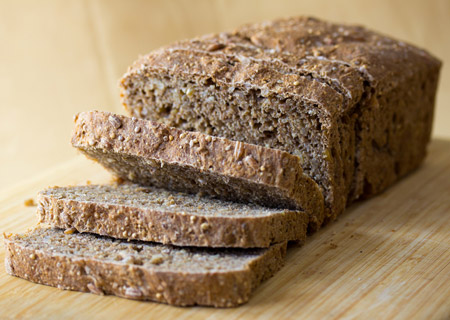
Dietary masochists say you should endure the most difficult brown bread imaginable because 1,000 years ago people had no choice. It's vaguely healthier, we are all told, though if you read more than a few epidemiology studies and saw the lack of methodology you know it casts on doubt almost every health claim made by matching populations to specific foods, not to mention the bizarre beliefs promoted by prominent nutrition 'experts'.

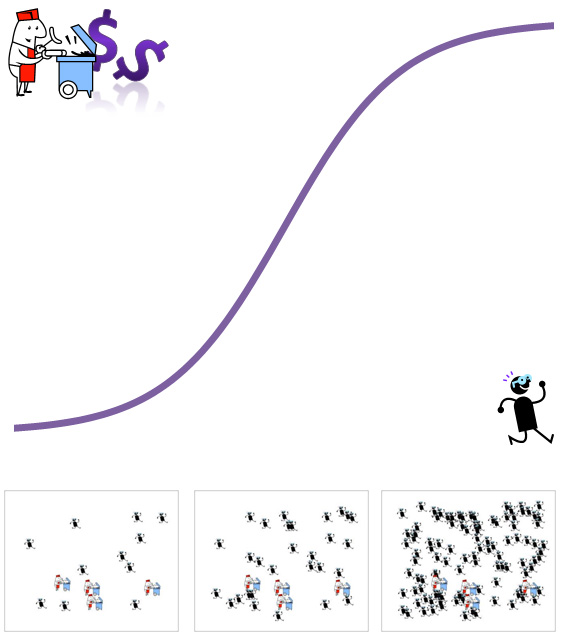
We're being overrun with Big Data and that has created a need to increase computing and networking power to make it possible to manage the vast amount of information available.

Toward that goal, a new generation of Information and communications technology (ICT) systems has been inspired by the operating principles of the brain.

Stemming from the premise that the brain is an ideal model for information processing, in recent years there have been multiple attempts at bio-inspired systems. Some examples are neuronal networks for learning systems or ant algorithms used to trace optimal paths in communication networks.

Drinking 3-5 cups of coffee per day has been linked to protection against Alzheimer's Disease, according to a new review of studies.

The number of people in Europe aged over 65 is predicted to rise from 15.4% of the population to 22.4% by 2025 and, with an aging population, neurodegenerative diseases such as Alzheimer's Disease are of increasing concern.  Alzheimer's Disease affects one person in twenty over the age of 65, amounting to 26 million people world-wide.

Epidemiologists have linked regular, moderate coffee consumption with a possible reduced risk of developing Alzheimer's Disease. An overview of the findings were presented during a satellite symposium at the 2014 Alzhemier Europe Annual Congress.

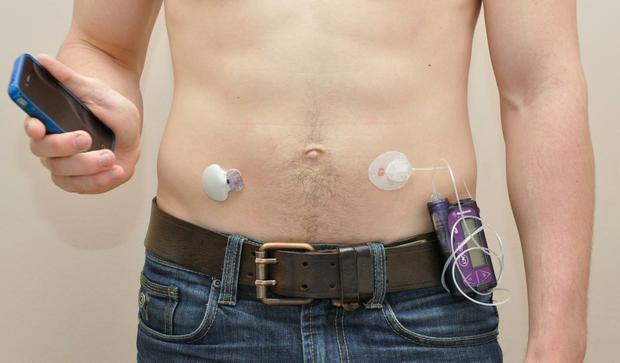
A clinical trial compared three alternative treatments for type 1 diabetes and confirms that an external artificial pancreas improves glucose control and reduces the risk of hypoglycemia compared to conventional diabetes treatment. 

An emerging technology to treat type 1 diabetes, the external artificial pancreas is an automated system that simulates the normal pancreas by continuously adapting insulin delivery based on changes in glucose levels. Two configurations exist: the single-hormone artificial pancreas that delivers insulin alone and the dual-hormone artificial pancreas that delivers both insulin and glucagon.

While insulin lowers blood glucose levels, glucagon has the opposite effect and raises glucose levels.


