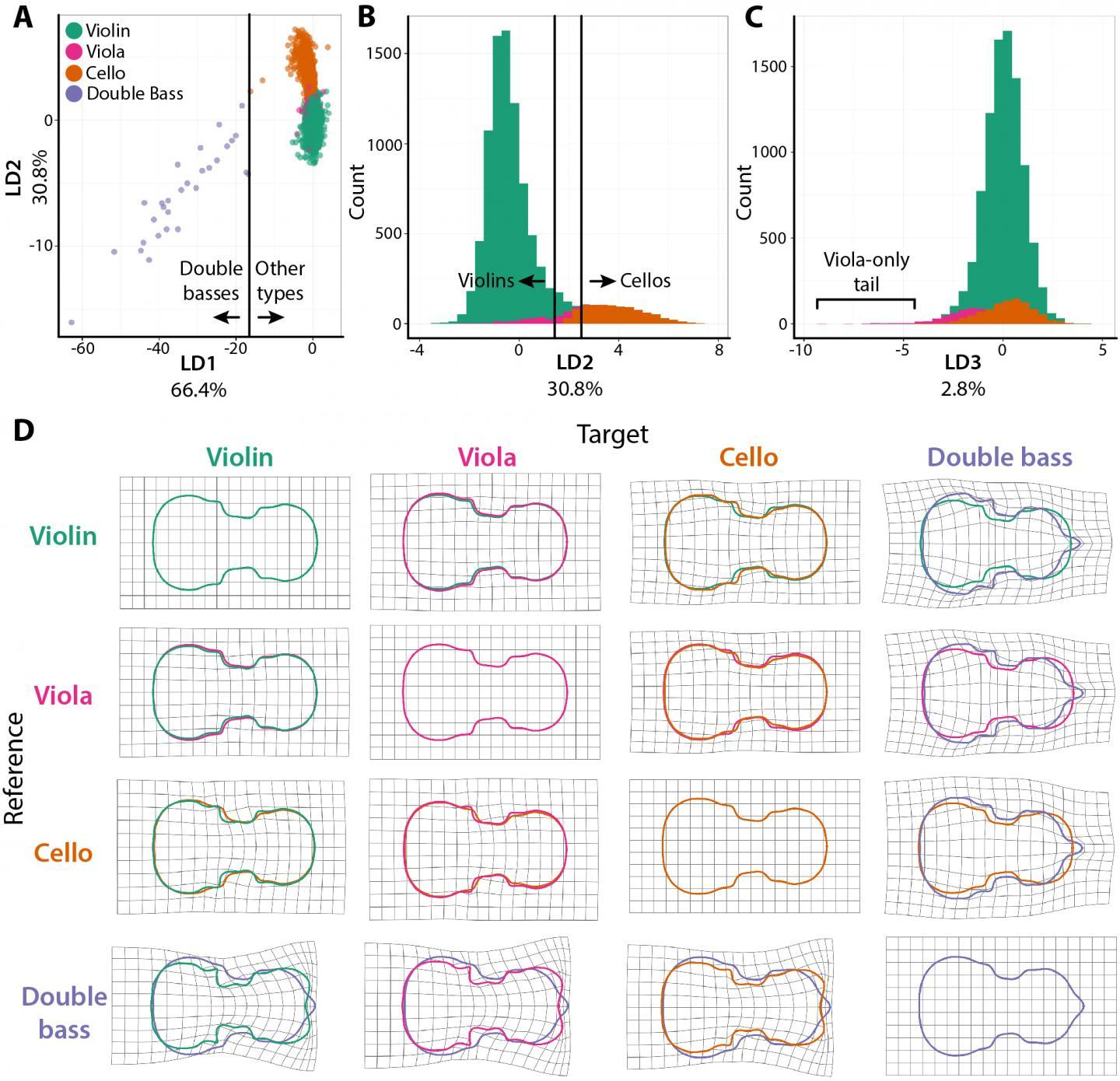



What could the natural diversity and beauty of plant leaves have in common with the violin, one of mankind's greatest musical inventions? More than you think.

Dan Chitwood, Ph.D., assistant member, Donald Danforth Plant Science Center in St. Louis, Missouri
spends most of his time exploring genetic and molecular mechanisms underlying diversity in plant morphology - how leaf shapes are formed and what that means for a plant to grow and thrive. He also studies how leaf shapes change as plant species evolve to adapt in different environments. Research into why a desert-adapted tomato species can survive with little water, for example, sheds light on how leaf architecture affects the efficiency of plant water use. 

Gamma rays are the highest-energy form of radioactive waves known in the universe but how they're made and where they come from have been something of a mystery. 

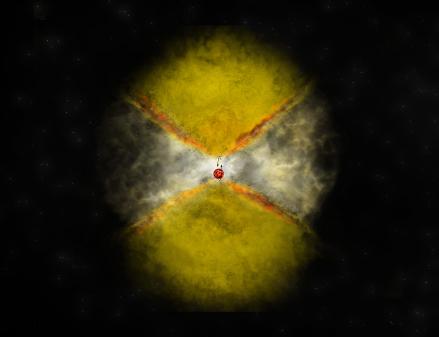
Using highly detailed radio telescope images, a team of astronomers have pinpointed the location where an explosion on the surface of a star, known as a nova, emitted gamma rays.  A nova occurs in a star that is part of a binary system – two stars orbiting one another. One star, known as a dense white dwarf, steals matter from the other and the interaction triggers a thermonuclear explosion that flings debris into space.

It was from this explosion from a system known as V959 Mon, located some 5,000 light years from Earth, that the researchers think the gamma rays were emitted.

"Keeping up with the Joneses" is a colloquialism for developing world desire to have the same or better status in society than peers. If someone gets a new car, you get a new car.

In some people, status is so important they suffer psychological distress if they lack status.

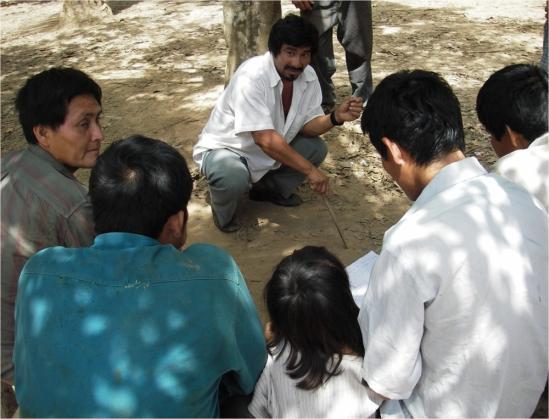
But it isn't just for the middle class in Western nations, say anthropologists at U.C. Santa Barbara, who found that the same need exists among the Tsimane, an egalitarian society of forager-farmers in the Bolivian Amazon. 

Adolescence is often a turbulent time for both genders, marked by biological changes and substantially increased rates of depressive symptoms.

But girls seem to take it a lot harder and a new paper in Clinical Psychological Science believes this gender difference may be the result of girls' greater exposure to stressful interpersonal events, making them more likely to ruminate, and contributing to their risk of depression.

Image: Genetic Literacy Project

By Tabitha M. Powledge, Genetic Literacy Project
I've lost count of how many computers I've built over the years, but I think it is safe to say that the Kano Computer was the easiest build ever. So simple a child could do it. Kano founders, Yonatan Raz-Fridman, Alex Klein, and Saul Klein, wanted to figure out what the next generation’s computer would be like, so they asked Micah, Saul’s seven-year-old son.
The Royal Swedish Academy of Sciences has awarded the 2014 Nobel Prize in Chemistry to Eric Betzig of Janelia Research Campus, Howard Hughes Medical Institute, Stefan W. Hell of the 
Max Planck Institute for Biophysical Chemistry and William E. Moerner of Stanford University “for the development of super-resolved fluorescence microscopy”.

Optical microscopy was once held back by a limitation: that it could never obtain a better resolution than half the wavelength of light. Helped by fluorescent molecules the Nobel Laureates in Chemistry 2014 ingeniously circumvented this limitation and brought optical microscopy into the nanodimension.

Pre-school kids have a lot to learn. They often don't even know how to tie their shoelaces or count to 100. But that is an applications issue. When it comes to skepticism, even kids at age 5 show critical thinking skills. 

A new study published in PLOS ONE finds that by the age of five, children become wary of information provided by people who make overly confident claims. 

Dr. Patricia Brosseau-Liard, a
Concordia University
postdoctoral fellow, recruited 96 four- and five-year-olds and then with University of British Columbia psychologists Tracy Cassels and Susan Birch had the youngsters weigh two important cues to a person's credibility — prior accuracy and confidence — when deciding what to believe. 

The 21st century promises to bring a kind of science warfare only dreamed about in science fiction. Already it's become clear that it is possible to paralyze a large chunk of America and get policymakers in perpetual crisis mode, even with something as well-known as ebola.(1)

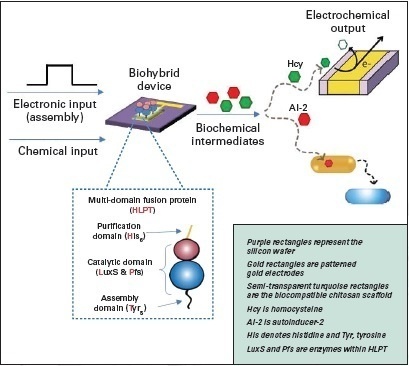
That kind of threat is getting mainstream attention now, but it has long been researched by government agencies that are in the business of predicting threats. And scientists working for them have recently created a hybrid bacteria - a cyborg mix of computer chip and genetically modified organism - that can not only detect infectious diseases but automatically mobilize to defeat them. This ain't your daddy's Deathlok.(2)

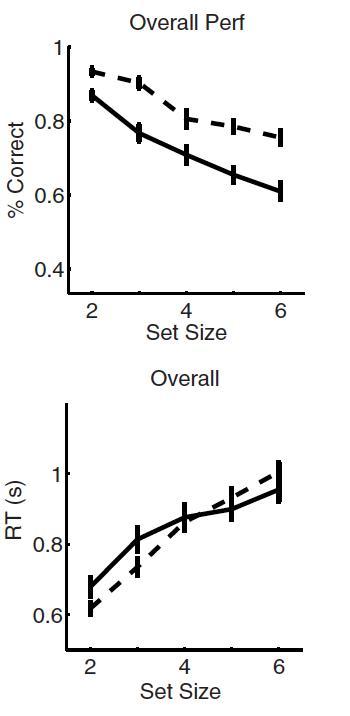
A new study has pinpointed working memory as a cause of learning difficulties in people with schizophrenia.

Working memory is known to be affected in 1 percent of the population who have schizophrenia, but it has been unclear whether that has a specific role in making learning more difficult, said Brown University postdoctoral researcher Anne Collins, lead author of the paper
in the Journal of Neuroscience