
A mutation  in a gene called KNSTRN, which is involved in helping cells divide their DNA equally during cell division, is caused by ultraviolet light is likely the driving force behind millions of human skin cancers, according to new research.

Genes that cause cancer when mutated are known as oncogenes. Although KNSTRN hasn't been previously implicated as a cause of human cancers, the research suggests it may be one of the most commonly mutated oncogenes in the world.

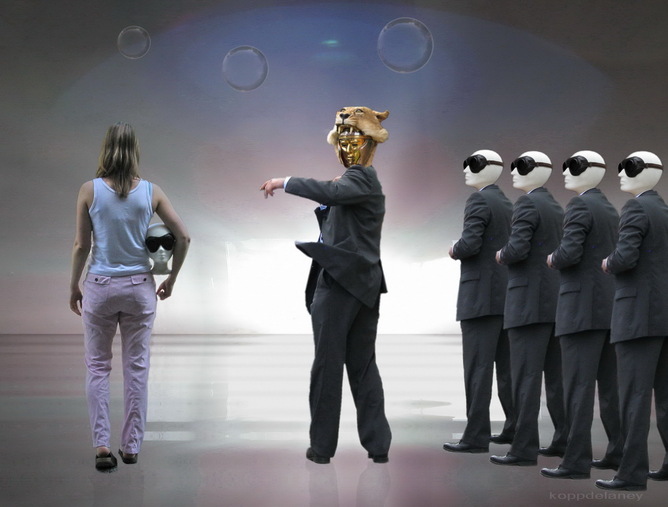
The word morality makes people uneasy – but not ethics. What is the basis of a moral education? Credit: Flood G/Flickr, CC BY-NC-ND

By Patrick Stokes, Deakin University

A newly developed antifungal named isavuconazole is as effective as voriconazole against invasive mold disease in cancer patients with less adverse effects, according to phase 3 clinical data.

With age, our cells gradually lose their capacity to repair damage, even from normal wear and tear. A new paper discusses why this decline occurs in our skeletal muscle. 

A team led by Dr. Michael Rudnicki, senior scientist at the Ottawa Hospital Research Institute and professor of medicine at the University of Ottawa, found that as muscle stem cells age, their reduced function is a result of a progressive increase in the activation of a specific signaling pathway. Such pathways transmit information to a cell from the surrounding tissue. The particular culprit identified by Dr. Rudnicki and his team is called the JAK/STAT signalling pathway.

Scientists can be victims of sexual abuse from their peers just as in any institution. Credit: Minerva Studio

By Margaret C. Hardy, The University of Queensland

The life sciences have come under fire recently with a study published in PLOS ONE that investigated the level of sexual harassment and sexual assault of trainees in academic fieldwork environments.

The hygiene hypothesis and its cousins, like that rural settings make children microbiologically stronger, now has a study that vegetarian activists are not going to like: sleeping on animal fur in the first three months of life has been linked to reduced risk of asthma.  

Previous studies have suggested that exposure to a wider range of environments from young age could be protective against asthma and allergies - urban settings have not found that to to be so. But in a new study, researchers investigated children from a city environment who had been exposed to animal skin by sleeping on the material shortly after birth. 

In order to understand the genesis and treatment of cancer scientists are searching for links between genetic alterations and those diseases. 

Historically, most of those studies have focused on the portion of the human genome that encodes protein – about 2 percent of human DNA overall. The vast majority of genomic alterations associated with cancer lie outside protein-coding genes, in what biologists call "junk DNA" and that colloquially became considered junk to the public, even though that is no more accurate than the Higgs boson being an actual God Particle. "Junk DNA" is anything useless rubbish – much of it is transcribed into RNA, for instance - but finding meaning in the sequences remains a challenge. 

Materials made from nano-particles have long been touted as the future viable solar energy production and better touch screens.

The black box between the present and the future of these wonder-materials is organizing the nanoparticles into orderly arrangements. Nanoparticles of magnetite, the most abundant magnetic material on earth, are found in living organisms from bacteria to birds. Nanocrystals of magnetite self-assemble into fine compass needles in the organism that help it to navigate.

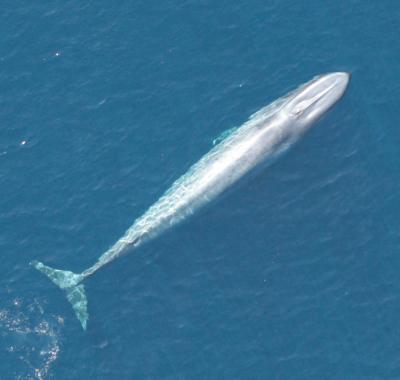
The number of California blue whales has rebounded to near historical levels - and they would be even higher if they didn't run into or get hit by commercial shipping.

Blue whales, nearly 100 feet in length and weighing 190 tons as adults, are the largest animals on earth. And they are the heaviest ever, weighing more than twice as much as the largest known dinosaur, the Argentinosaurus. As a species, they were considered hunted nearly to extinction but new international laws have put enforceable limits on catches of whales and blue whales seem to be the first to have recovered.