

Nerve cells come in very different shapes and a new paper reveals why, in insects, the cell body is usually located at the end of a separate extension.

Nerve cells follow a functional design: They receive input signals over more or less ramified cell branches (dendrites), which they forward to other nerve cells along an elongated, thin cell process (axon). The cell body contains the nucleus with genetic material and other components of the machinery that keeps the neuron alive.

Its location differs significantly between animal classes: in mammals, the cell body is usually found at a central position between the dendrites and the axon, while in insects, it is often "outsourced" to the end of a separate prolongation.

Stegosaurus, a large, herbivorous dinosaur with two staggered rows of bony plates along its back and two pairs of spikes at the end of its tail, lived roughly 150 million years ago during the Late Jurassic in the western United States. Some individuals had wide plates, some had tall ones, with the wide plates being up to 45 percent larger overall than the tall plates.

According to a new study, the tall-plated Stegosaurus and the wide-plate Stegosaurus were not two distinct species, nor were they individuals of different age - they were actually males and females.

The famous Vitruvian Man, drawn by Leonardo da Vinci, pictures the canon of human's proportions - though we did not become bilaterally symmetric all at once.

There are two main points of view on the last common bilaterian ancestor, its appearance and the course of evolution. It is likely that the ancestor of Bilateria appeared at the end of the Vendian period which is the last geological period of the Neoproterozoic Era preceding the Cambrian Period. It lasted from approximately 635 to 541±1 million years ago. The organisms, which lived in the Vendian sea, were mostly radially symmetrical creatures. Some of them were floating in the water, while others were crawling along the bottom or leading sessile benthic life.
As we celebrate Earth Day this week, it is an opportune time to recognize that not all Americans have equally enjoyed the dividends of our nation’s environmental protections.

Decades of research clearly demonstrate that poor and minority communities often experience more environmental burdens and enjoy fewer environmental amenities. These communities tend to host a disproportionate number of landfills, incinerators and other polluting facilities. These are not only unpleasant to live by but also can pose significant health risks.

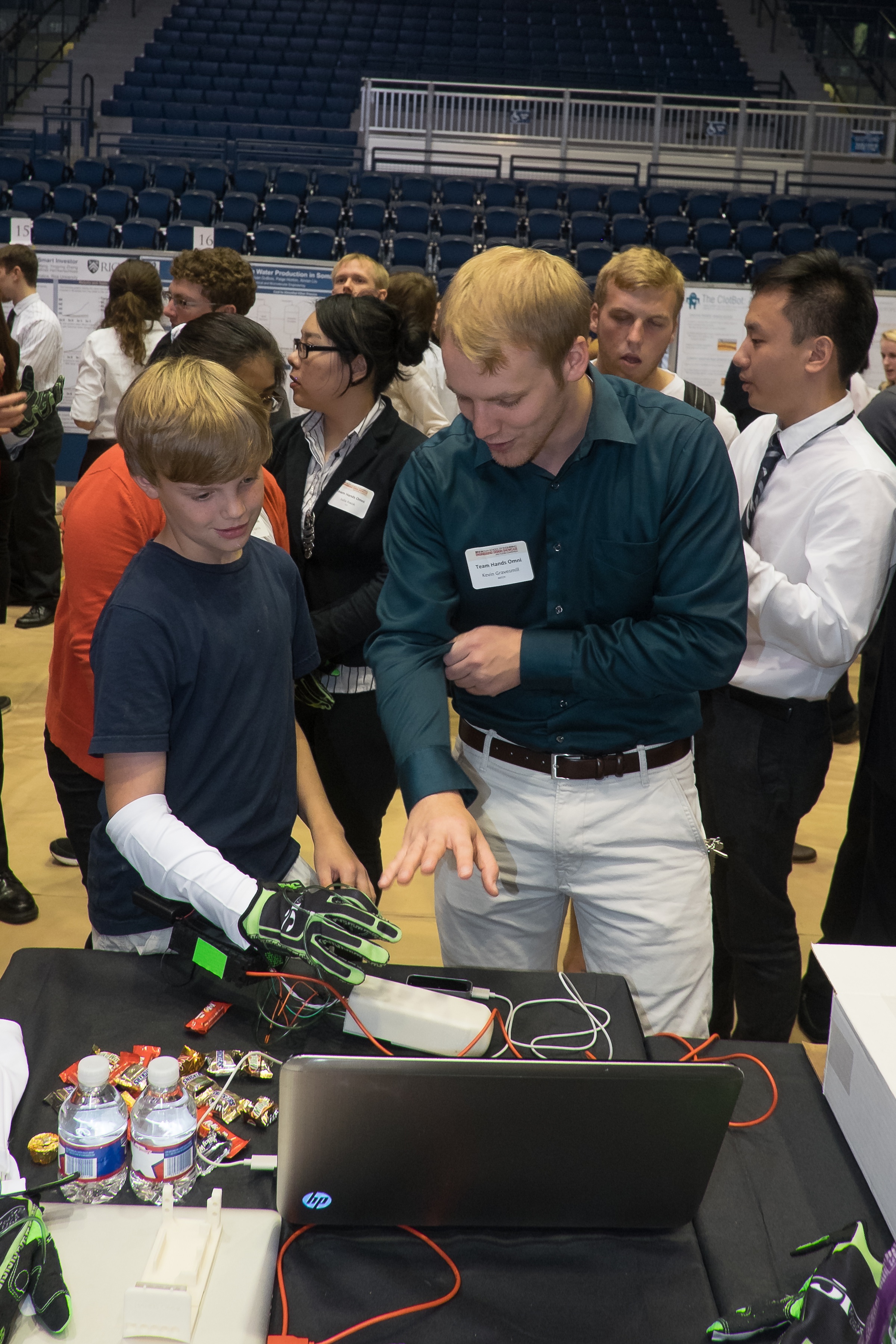
Forget vibrating joysticks on your Xbox, Rice University engineers have invented a glove that allows a user to feel what they're touching while gaming.

The Hands Omni provides a way for gamers and others to feel the environments they inhabit through the likes of three-dimensional heads-ups displays. The prototype glove, developed with Houston sponsor Virtuix and introduced at the George R. Brown School of Engineering Design Showcase, is intended to provide next-generation force feedback to the fingertips as players touch, press or grip objects in the virtual world. The project won the "People's Choice" award at Rice's recent Engineering Design Showcase. 

Invasive plants animals and plants spreading is not new but predicting the dynamics of these invasions is difficult - and of great ecological and socioeconomical interest. Scientists at Eawag and University of Zurich are now using computer simulations and small artificial laboratory worlds, to study how rapid evolution makes invaders spread even faster. 

Today the New York Times published an op-ed by Newt Gingrich where he calls for doubling the budget for the National Institutes of Health here in the US. 

Who can argue with that?
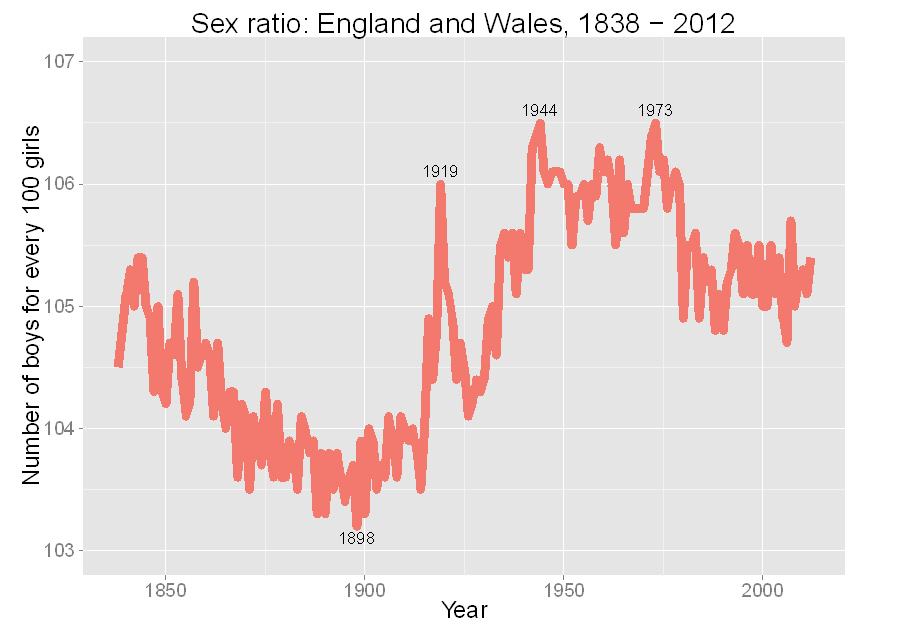
More boys are born than girls: this is a fact. In the western world the ‘sex ratio’ is around 105 boys for every 100 girls, but this changes through history.  And rather remarkably, it peaks at the end of wars: another fact.

So why are more boys born at the end of wars? Now we have to leave the comfort of facts, and are left with contested opinions.

Reliable official statistics on births in England and Wales have been available since the late 1830s, and the graph below shows the sex ratio from then until 2012. There are clear spikes at the end of the two World Wars, but also around 1973, while there is also a steady dip towards the end of the nineteenth century – we’ll come to that later.

Ghana has plenty of water. So why do its people buy plastic pouches from street vendors? Shaun Raviv investigates.

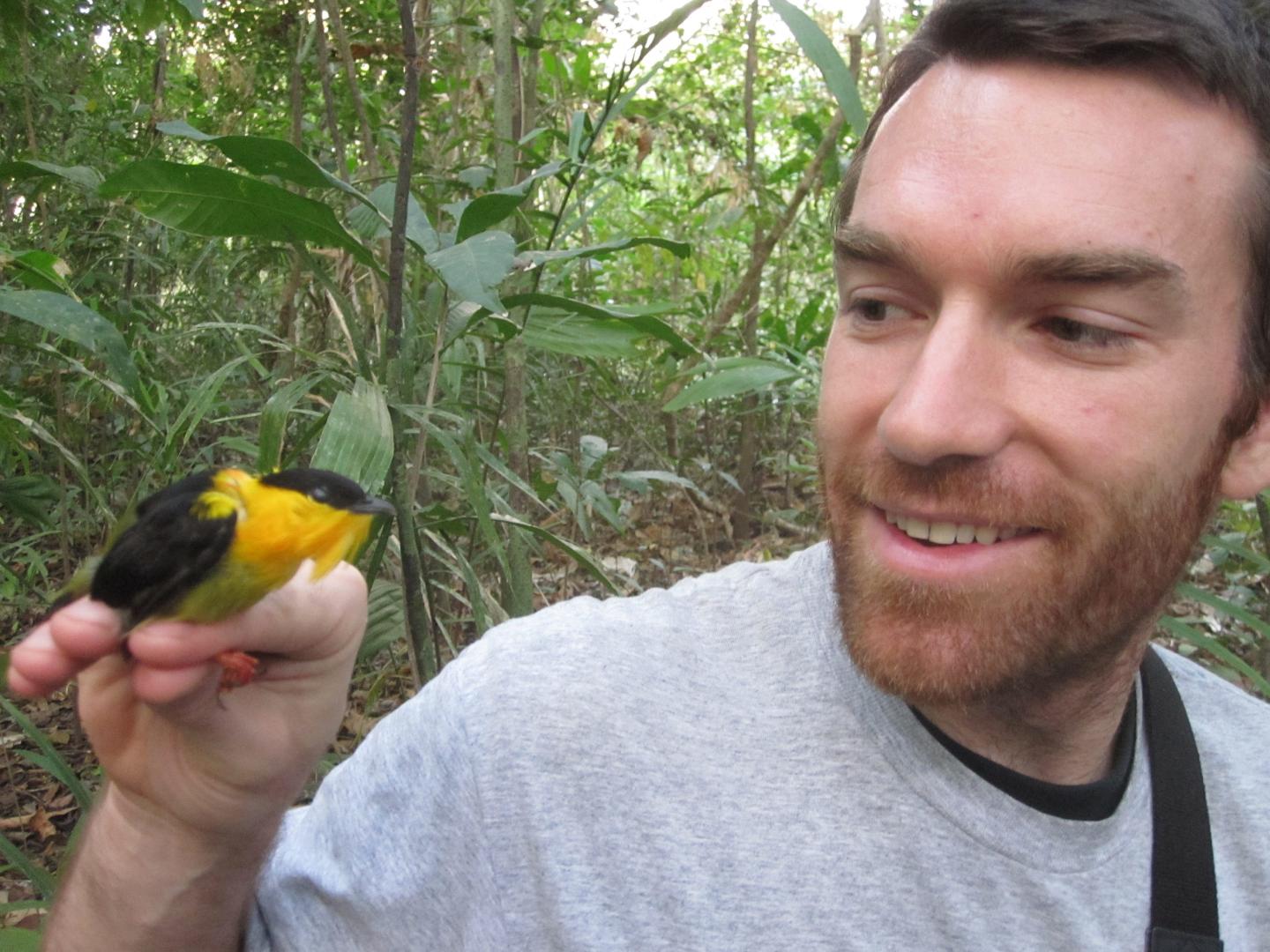
A new study of animal behavior suggests that evolution is hard at work when it comes to the acrobatic courtship dances of  male golden-collared manakins, a tropical bird species.

There are about 60 different species of manakins, most of which perform, to some degree, a physically complex display behavior to both court females and to compete with other males. The new study says the ability to detect testosterone in the body regulates the acrobatic courtship and competitive behavior - bird brawn.