



Wildfires turn millions of hectares of vegetation into charcoal each year but it wouldn't seem like it ends up in the oceans.

Yet researchers have found that this charcoal does not remain in the soil, as previously thought. Instead, it is transported to the sea by rivers and thus enters the carbon cycle. The researchers analyzed water samples from all over the world. They demonstrated that soluble charcoal accounts for ten percent of the total amount of dissolved organic carbon. 

Pharmaceuticals don't have a discovery problem, or a financing one, they have a political one that impedes everything else. Politics have a greater direct effect on the pharmaceutical industry than anything else in the US, and correspondingly drug companies makes considerable investments in election campaigns, just like unions and any other special interest reliant on government.

The November elections kept the face of Washington the same as 2010, with President Obama in the White House, Democrats still in control of the Senate and Republicans still controlling  the House of Representatives - but that means the pharmaceutical industry will be impacted in a variety of ways. 

A new study has identified hundreds of previously unrecognized small aftershocks after Utah's deadly Crandall Canyon mine collapse in 2007, which suggest that the collapse was perhaps bigger than previous estimates.

Six coal miners died in the Aug. 6, 2007 mine collapse, and three rescuers died 10 days later. The mine's owner initially blamed the collapse on an earthquake, but the University of Utah Seismograph Stations said it was the collapse itself, not an earthquake, that registered on seismometers.

Some breast cancer patients report difficulties with memory, concentration and other cognitive functions following cancer treatment.

Determining whether that is psychosomatic or a sign of underlying changes in brain function has been a focus among scientists and medical doctors.  

A new paper found a significant correlation between poorer performance on neuropsychological tests and memory complaints in post-treatment, early-stage breast cancer patients — particularly those who have undergone combined chemotherapy and radiation.  

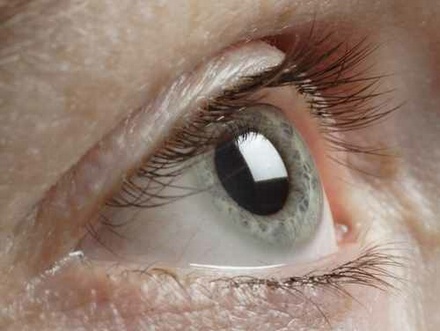
Are the eyes more accurate than the nose and tongue in determining the taste of food? 

Some people can actually see the flavor of foods, and the eyes have such a powerful role that they can even trump the tongue and the nose. The popular Sauvignon Blanc white wine, for instance, gets its flavor from scores of natural chemicals, including chemicals with the flavor of banana, passion fruit, bell pepper and boxwood. But when served a glass of Sauvignon Blanc tinted to the deep red of Merlot or Cabernet, people taste the natural chemicals that give rise to the flavors of those wines.

Genital warts prevalence in Australian women plummeted 59% since a nationally funded quadrivalent human papillomarivus (HPV) vaccination program
 for teen and pre-teen girls was introduced in 2007, says a paper in BMJ.

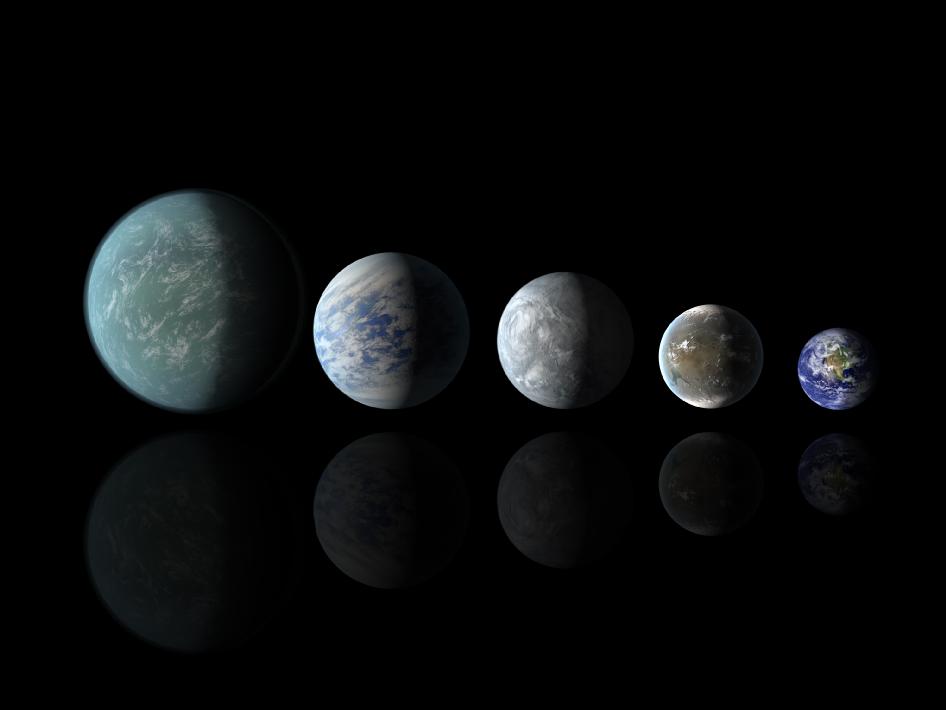
The Kepler mission revealed the existence of potentially habitable planets slightly bigger than Earth. 

The spacecraft named for Johannes Kepler was launched in 2009 and now it has found two new planetary systems, Kepler-62 and Kepler-69, about 1,200 light years from Earth that include three super-Earth-size planets in the "habitable zone," the range of distance from a star where the surface temperature of an orbiting planet might be suitable for liquid water. 

The Kepler-62 system has five planets; 62b, 62c, 62d, 62e and 62f. The Kepler-69 system has two planets; 69b and 69c. Kepler-62e, 62f and 69c are the super-Earth-sized planets.
When we say "off the grid," we often mean off the power grid.
In quantum physics, objects can be in more than one place at a time and future events can change the past - don't get caught up too much in that or you won't sleep at night.

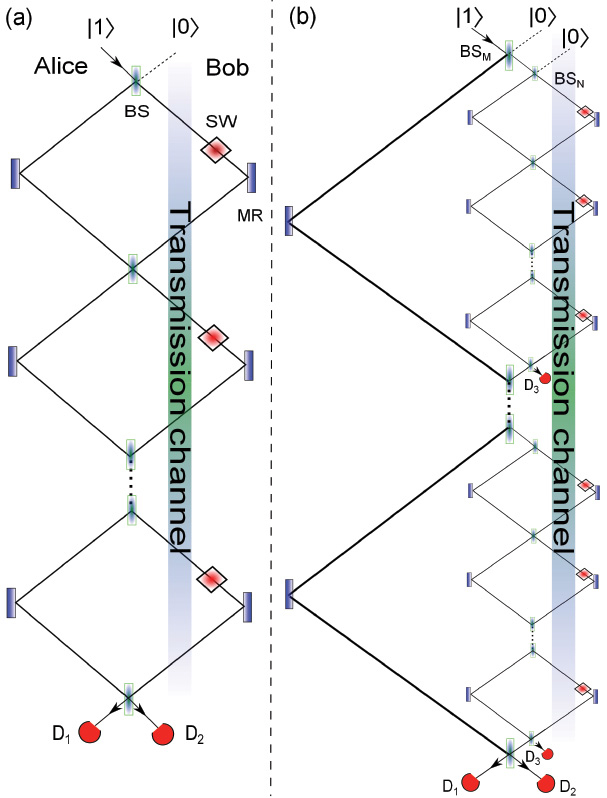
A new paper says quantum physics can be even spookier. Using the “chained” quantum Zeno effect, the researchers write that they have discovered a form of "almost psychic communication" in which information can be exchanged between two parties without photons, or any physical particles, traveling between them.

With 25,000 journals in existence today, thanks in large part to the open access movement which charges a fee to print a study, keeping up with current scientific literature is a daunting task. Hundreds to thousands of papers are published each day.

Researchers from North Carolina State University have developed a text-mining algorithm to prioritize research papers to read and include in their Comparative Toxicogenomics Database (CTD), a public database that manually curates and codes data from the scientific literature describing how environmental chemicals interact with genes to affect human health.


