


At some point everyone has heard the question: "Which came first, the chicken or the egg.".  What is surprising about this question is that it can still produce any debate.

It is surprisingly obvious yet one wonders what has contributed to its longevity and its countinued appearance in various arguments.

Why obvious?  Well, let's consider the premises.  Unless one is predisposed to believing that animals simply appear, then we must reject the premise that a chicken can exist as a fully formed adult without any previous existence.  As a result, the only element left to examine is the egg.  Yet, an egg doesn't spring into existence fully formed either.

Animal and dairy scientists  presenting at the Lactation Biology Symposium in Phoenix, Arizona have discovered that drinking milk at an early age can help mammals throughout their lives. The presentations focused on epigenetics, or how gene expression changes based on factors like environment or diet. Epigenetic changes modify when or how certain traits are expressed. 

But understanding exactly how milk affects the body is a complicated story of hormones, antibodies and proteins, as well as other cells and compounds researchers have not yet identified.

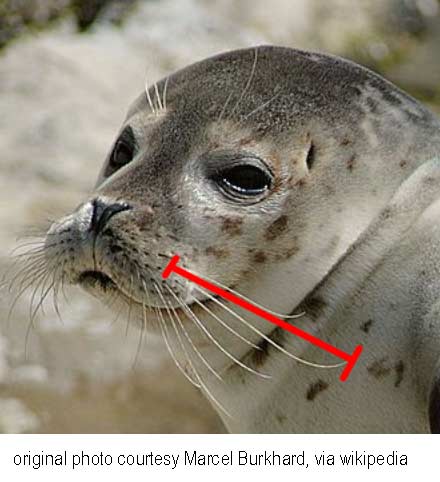
In order to clear any doubts regarding the comparative growth rates of the whiskers of harbor seals (Phoca vitulina) and Steller sea lions (Eumetopias jubatus), researchers at the Institute of Marine Science, University of Alaska Fairbanks, and the Mystic Aquarium, CT, U.S.A. performed a series of experiments in 2001.

The whiskers of participant seals and sea lions were stable-isotope-labeled with Carbon 13 and Nitrogen 15, and whisker growth rates were measured over a period of  more than two years.

The results:

Health plans that offer low premiums and high deductibles believe that patients with deductibles of $1,000 or more for individual coverage (or twice that for family coverage) will shop around for the best price to get their health care.

For an administration that promised to 'restore science to its rightful place' and that is run by a man who calls himself 'scientist in chief' there is sure a lot of anti-science activity going on.

A model based on global population data spanning the years from 1900 to 2010 has caused a research team to predict the opposite of what Doomsday Prophets of the 1960s and beyond insisted would happen -  the number of people on Earth will stabilize around the middle of the century and perhaps even start to decline. 

The results coincide with the United Nation's downward estimates, which claim that by 2100 Earth's population will be 6.2 billion, if low fertility and birth rate continues on its current path, below the 7 billion we are at now. 

NASA's Hubble Space Telescope has found the farthest supernova so far. Supernova UDS10Wil, nicknamed SN Wilson after American President Woodrow Wilson, exploded more than 10 billion years ago.

SN UDS10Wil is a Type Ia supernovae. These beacons can be used as a yardstick for measuring cosmic distances. One of the debates surrounding Type Ia supernovae is the nature of the fuse that ignites them. This latest discovery adds credence to one of two competing theories of how they explode. Although preliminary, the evidence so far favors the explosive merger of two burned out stars; small, dim, and dense stars known as white dwarfs, the final state for stars like our Sun.

If objects from space kindled life on Earth, how did it happen?

The terrestrial or extra-terrestrial case for important ingredients that led to the building blocks of life is a hot debate. A new paper says that  adenosine triphosphate, similar to what is now found in all living cells and vital for generating the energy that makes something alive, could have been created when meteorites containing phosphorus minerals landed in hot, acidic pools of liquids around volcanoes, which were likely to have been common across the early Earth.

Building on work done by Dominic ffytche et al in 2000, which delineates more than a dozen types of hallucinations, particularly in relation to people with Charles Bonnet syndrome (a condition that causes patients with visual loss to have complex visual hallucinations), a new paper in Brain outlines  case studies of hallucinations of musical notation, and commented on the neural basis of such hallucinations.

While ffytche believes that hallucinations of musical notation are rarer than some other types of visual hallucination, Professor Oliver Sacks M.D. details eight examples of people who have reported experiencing hallucinations of musical notation, including:

The T2K Collaboration released today an analysis of their data in the Cornell Arxiv. T2K searches for electron neutrinos appearing in a muon neutrino beam produced by the J-PARC accelerator facility in Tokai-Mura, using a near detector located 280 meters downstream of the proton target, and a far detector (SuperKamiokande) at 295 km from the source.

The appearance of electron neutrinos in a muon neutrino beam is a very important oscillation signal of neutrinos, that allows the measurement of the parameter theta_13, one of the so far less-well known parameter of the neutrino mixing matrix.


