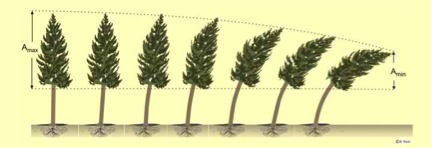




The earth has abundant energy sources, if only we would bother to tap them. Wind power has had its financial and ethical ups and downs, with wind farms using gargantuan, expensive wind towers decorating or despoiling the scenery,depending on your esthetics:
Wind power resources on the eastern U.S.continental shelf are estimated to be over 400 GW [gigawatts], several times the electricity used by U.S. eastern coastal states…. The furthest advanced of a handful of proposed U.S. offshore wind developments is in Nantucket Sound,off the Southern coast of Cape Cod, Massachusetts.

Over 200 million years ago, a mass extinction wiped out an estimated 76 percent of marine and terrestrial species. It marked the end of the Triassic period and the onset of the Jurassic, clearing the way for dinosaurs to dominate Earth for the next 135 million years. 

It's not clear what caused the end-Triassic extinction, although most scientists agree on a likely scenario; over a relatively short time period, massive volcanic eruptions from a large region known as the Central Atlantic Magmatic Province (CAMP) spewed forth huge amounts of lava and gas, including carbon dioxide, sulfur and methane. 

An innovative new process releases the energy in coal without burning, while capturing carbon dioxide, the major greenhouse gas that is the target of emissions reduction goals. How close is it to commercial use?  It has passed an important milestone - a successful 200-hour test on a sub-pilot scale version of the technology using two inexpensive but highly polluting forms of coal.   

On Wednesday, March 19th, a group of researchers organized by the Society for Neuroscience descended on Capitol Hill to let Congress know how important it was to reverse the budget cuts inflicted by the sequester and increase funding to the NIH and NSF. Biomedical research is important to the long term health and prosperity of Americans, they said. It creates jobs. It can spark innovative new business sectors. It contributes to the welfare of our soldiers. It distinguishes us internationally. It alleviates the economic burden of sad, costly and chronic health issues. In fact, it is the only hope against increasingly recognized but painfully untreatable disorders like autism, Alzheimer’s, MS and PTSD.

Consumption of extra virgin olive oil has been linked to reduced risk of Alzheimer's disease (AD) and its benefit may lie in one component of olive oil that helps shuttle the abnormal AD proteins out of the brain.

A team of scientists has uncovered how some sea snakes have developed 'shrunken heads' - literally smaller physical features than their related species.

A large head would seem to be a welcome trait for sea snakes, which typically have to swallow large spiny fish. However, there are some circumstances where it wouldn't be very useful: sea snakes that feed by probing their front ends into narrow, sand eel burrows have evolved comically small heads. 

Hunting in Africa has halved the number of primates, according to estimates, but that is not the extend of the problem. Primates help with dispersal of seed and the reduction in primates has led to a reduction in the numbers of fruit trees, say biologists from Lund University in Sweden.

Felling and clear-cutting is not the only problem in Africa; the researchers studied rainforests in Nigeria, where the local population hunts for food, and found that the animals that are hunted include almost all mammals, including gorillas and chimpanzees and some small species of monkey.

In my previous blog post, Introduction to the 555 Timer IC , you learned how to build an optical Theremin using a 555 Timer. The original Theremin used radio frequency interference caused by the movement of the player's hand to change the pitch of the instrument. The optical Theremin depends on the intensity of light that falls on a photo resistor also controlled by the movement of the player's hand.

The amount of light that fell on the photo resistor changed the resistance in the circuit. When more light fell on the photo resistor, it reduced the resistance in the circuit and this made the pitch higher. Less light increased the resistance and made the pitch lower.

Thanks to a supersensitive space telescope and some sophisticated supercomputing, scientists from the international Planck collaboration have made the closest reading yet of the most ancient story in our universe: the cosmic microwave background (CMB).

Today, the team released preliminary results based on the Planck observatory's first 15 months of data. They show that the universe is 100 million years older than we thought with more matter and less dark energy.  

Decoding the Cosmos

The mission of the ESA Planck satellite is to observe the Universe of the past, seeing back in time, right after the Big Bang.

The image that the Planck scientists revealed today is that of the Universe as a child, dating back to about 380,000 years after the Big Bang, when its temperature was similar to that of the most external layer of a star today.

