

A radiotracer has shown that researchers who used electricity on certain regions in the brain of a patient with chronic, severe facial pain led to release of an opiate-like substance that's considered one of the body's most powerful painkillers.  

In their current study, researcher intravenously administered a radiotracer that reached important brain areas in a patient with trigeminal neuropathic pain (TNP), a type of chronic, severe facial pain. They applied the electrodes and electrically stimulated the skull right above the motor cortex of the patient for 20 minutes during a PET scan (positron emission tomography). The stimulation is called transcranial direct current stimulation (tDCS).

Reconstructions of atmospheric CO2 concentrations and sea level over the past 40 million years show that greenhouse gas concentrations similar to the present (nearly 400 parts per million) were associated with sea levels at least nine meters above current levels. 

They determined the 'natural equilibrium' sea level for CO2 concentrations ranging between ice-age values of 180 parts per million and ice-free values of more than 1,000 parts per million.  Of course, it takes centuries for equilibrium to be reached so they don't try to predict any sea level value for the coming century but it can help illustrate what sea level might be expected if climate were stabilized at a certain CO2 level for several centuries. 

A team of archaeologists has made discoveries of extensive water management and agricultural production in and around the ancient desert city of Petra, located in present-day Jordan. 

Successful terrace farming of wheat, grapes and possibly olives resulted in a vast, green, agricultural "suburb" to Petra in an otherwise inhospitable, arid landscape. This terrace farming remained extensive through the third century and surface finds plus comparative data shows this type of farming continued in some extent until around the end of the first millennium, between 800 and 1000 A.D. 

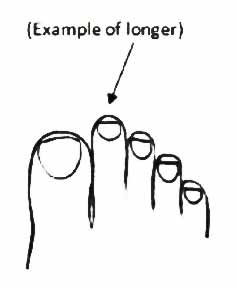
A growing body of scientific studies have examined the implications of finger length ratios. But until recently up to 50% of humanoid distal appendages may have been largely overlooked – for what of toe-length ratios?

Progress towards rectifying this digital imbalance has been made with a recent study from the Department of Psychology, Penn State University, Harrisburg, US. Professor Marissa Harrison has published one of the very few studies to investigate :
I. Preface


I recently posted an article (Part I) in which I proposed a hypothetical scenario, in which an individual who is offered marijuana takes time out to research the drug exclusively through recent articles on PubMed to see if its a good idea or bad idea. It was meant more as an intellectual exercise, not a commentary or piece of advocacy for either side of the legalization debate (although the commentary after quickly delved into that debate). I wrote the article for the following reasons:
Occasional readers of this blog, I reckon, have time and again been left wondering what is the matter with these lower mass limits on new particles that physicists so copiously produce with their subnuclear physics experiments. How are they determined ? Why always lower mass limits and (almost) never upper limits ? And why do we care ?
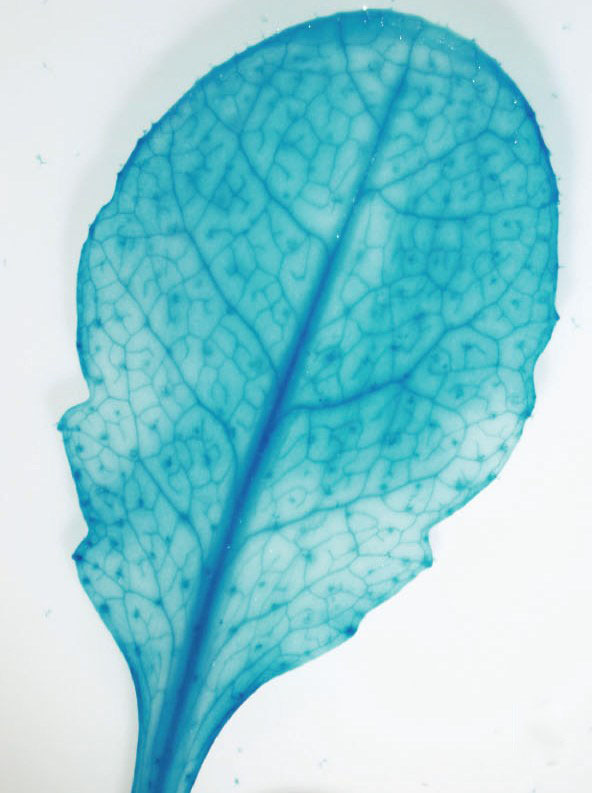
Galactan is a polymer of galactose, a six-carbon sugar that can be readily fermented by yeast into ethanol and is a target of interest for those researching advanced biofuels produced from cellulosic biomass.

Galactans are polysaccharide components of pectin, the sticky sugar substance that binds together the individual cells in plant cell walls (and is used to make delicious jellies and jams). The β-1,4-galactan component of pectin is especially abundant in the “tension wood” that forms in cell walls in response to mechanical stress from wind or snowfall. An international collaboration has identified the first enzyme capable of substantially boosting the amount of galactan in plant cell walls.
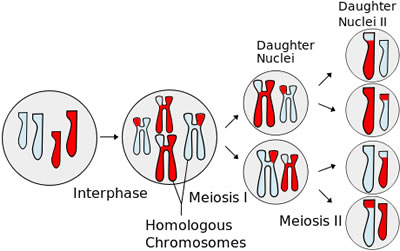
Sex is not just an activity confined to higher animals such as mammals and not just for reproduction. The changes in offspring that result during reproduction are integral to the continuing adaptation and evolution of millions of species of plants, fungi and other organisms throughout the food chain. 
Disclaimer: I have never smoked pot. Not interested. But, I have been very interested in the decades-old debate about it. On one side you have people who claim it as a benign, useful substance that should be legal. On the other side, you have people who claim it is a dangerous and destructive and should be banned. I was surprised to realize to myself recently that I couldn't articulate a good argument for either side. I didn't know enough. 
So I wanted to do an experiment. But not that kind of experiment.
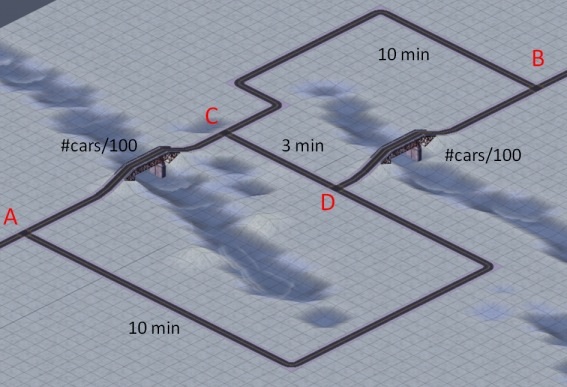
Why do people skip the queue, obstruct, cause traffic jams, and create delays for everyone? Who are these anonymous creatures lacking cooperation skills? And more importantly: are you sure others don't classify you as such?


